
Agentic commerce is a way of shopping where an AI agent finds and compares products for the consumer and, in some cases, completes the payment. As of October 13, 2026, Google runs checkout buttons in AI Mode and Gemini as early access, OpenAI offers checkout inside ChatGPT through merchant integration, and Naver's shopping AI agent (Naver is Korea's largest search engine) launched officially in July. Agents read product information to pick candidates. So sellers need to organize attributes, price and stock data separately from what people see on screen.
What agentic commerce is
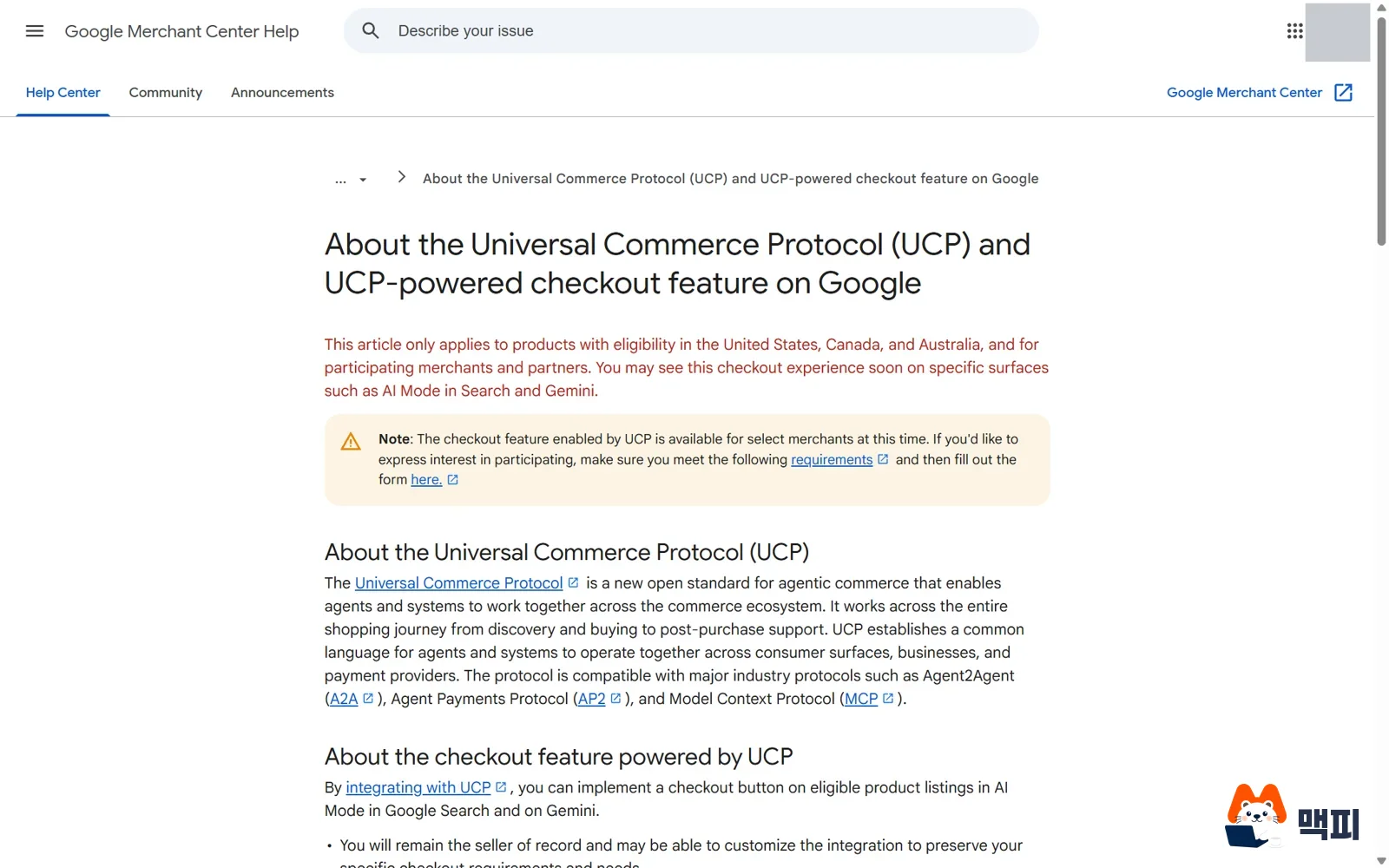
In traditional shopping, the consumer searches, opens several pages, compares prices and specs, and pays on their own. In agentic commerce, the consumer states conditions such as "a waterproof running jacket under 100,000 KRW", and the agent reads product information, narrows the candidates and recommends. Google introduces the Universal Commerce Protocol (UCP) for this flow as "an open standard for agentic commerce". It describes UCP as a specification that lets agents and seller systems exchange information the same way from discovery to purchase and post-purchase support.
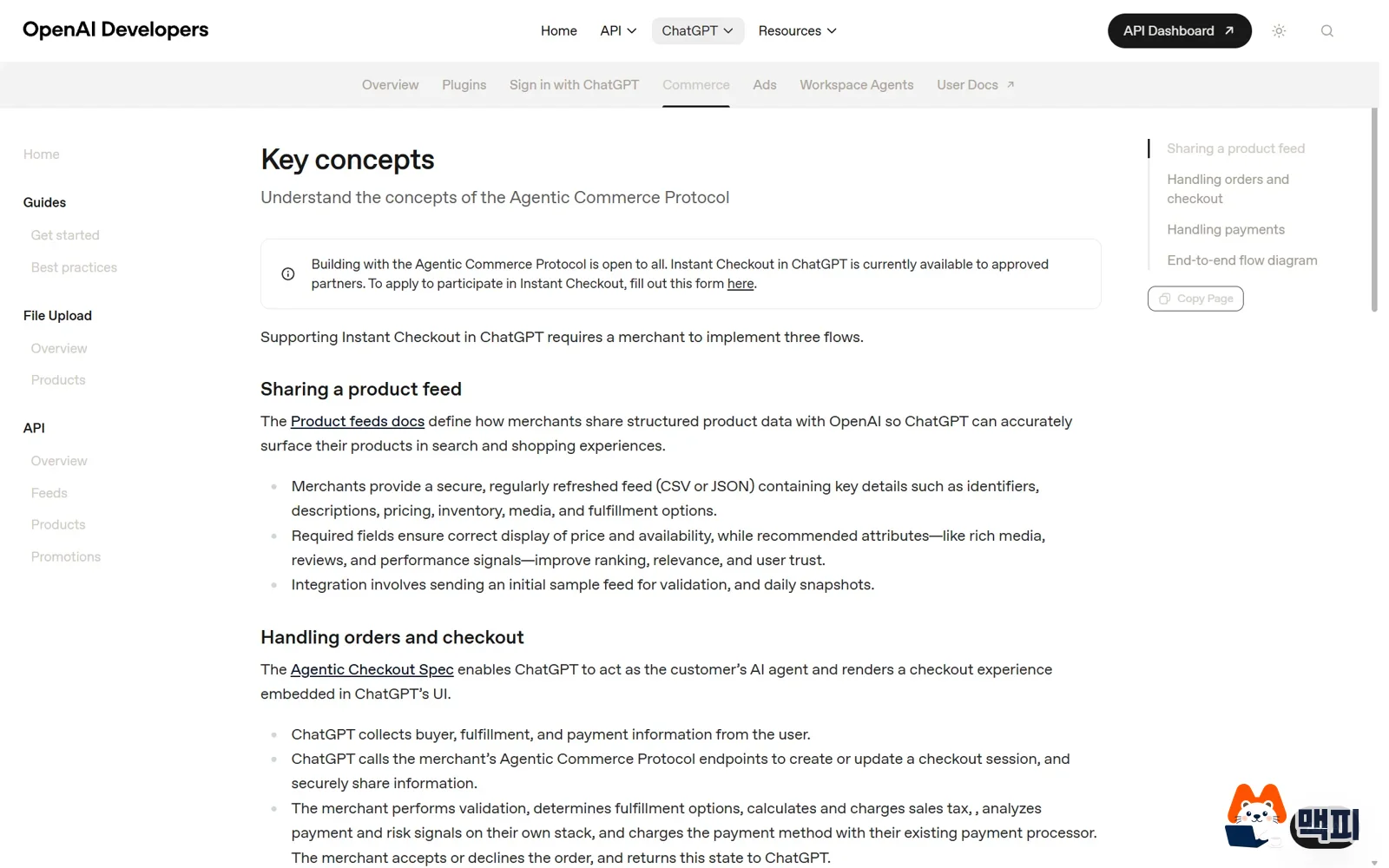
This model runs on structured product information supplied by the seller. Google shows the checkout button only for product listings that have the native_commerce attribute, and OpenAI explains that the required feed fields make price and stock display accurately.

How Google, ChatGPT and Naver agent shopping differ
The three services move in the same direction, but sellers must prepare different things. Google and OpenAI require sellers to integrate product data and checkout directly. Naver's AI agent inside its shopping app compares products and recommends them.
| Service | What the agent does | What the seller prepares | Current scope |
|---|---|---|---|
| Google AI Mode and Gemini | Shows a Buy button on product listings and completes payment inside Google | native_commerce attribute in Merchant Center, Google Pay & Wallet Console account, technical implementation | Early access, eligible products in the US, Canada and Australia |
| ChatGPT Instant Checkout | ChatGPT acts as the customer's agent and shows the checkout screen inside the chat | CSV or JSON product feed (daily snapshot), implementation of 3 checkout flows | Merchant integration required, Stripe's shared payment token is the first compatible implementation |
| Naver Shopping AI Agent | The shopper states conditions in conversation, and the agent compares, analyzes and recommends multiple products | The agent reads product information inside the shopping app as comparison targets | Officially launched on July 1, 2026 |
According to Google's documentation, the Google Merchant Center Help page says the Buy button appears only on product listings that use the native_commerce attribute, and the seller remains the party that fulfills the order. It applies to eligible products in the US, Canada and Australia, so Korean online stores cannot apply right now.
In its commerce guide, OpenAI explains that to support Instant Checkout, sellers must implement three flows, and that the actual checkout state and payment processing happen in the seller's system. The product feed is a CSV or JSON file that is refreshed regularly. During integration, it is validated with a sample feed, and then a daily snapshot is provided.
Naver officially launched its AI agent inside the shopping app on July 1, 2026, after a beta of about 4 months. In June, daily users rose more than 50% and transaction value through the agent rose more than 2.7 times compared with March, right after the beta began. More than 70% of users type specific questions of 15 characters or more. For Korean sellers, this agent differs from the Google and OpenAI integrations, which are limited to overseas markets, because it is already running as a domestic service.
How to prepare product pages that agents can read
Preparation starts with making sure agents can read values accurately. Checkout integration needs approval, but organizing product information can be done right now, and it also helps search visibility.

- Write attributes as text. Put material, size, weight, color, options and usage situations in body text or a table, not in images. Replace vague phrases like "light jacket" with comparable values like "weight 280g, waterproof fabric".
- Mark price and stock with structured data. Google's merchant listing documentation requires the product name and image, a purchasable Offer, a price greater than 0 (price) and an ISO 4217 currency code (priceCurrency). It classifies stock status (availability) as a recommended property. The product structured data documentation says that providing both structured data and a Merchant Center feed helps you meet more eligibility requirements and aids validation.
- Keep product page and feed values consistent. If price, options or shipping terms differ between the page and the feed, the agent cannot know which one to trust. When you make a change, update both places together.
- Check your crawler blocking settings. Google uses robots.txt to define which URLs crawlers may fetch, so confirm that your product pages are not caught by a Disallow rule.
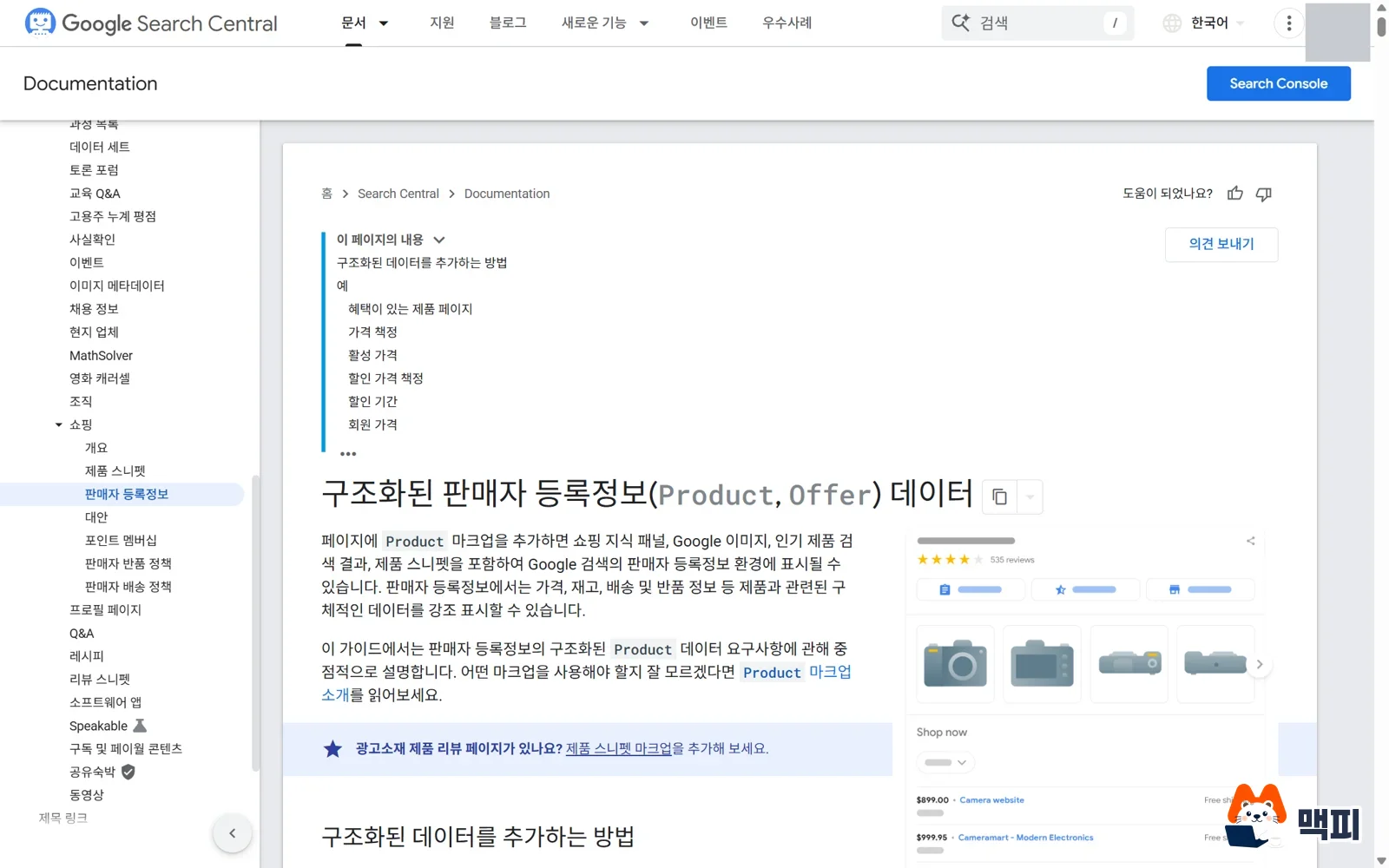
After you apply the changes, enter the product page URL in the Rich Results Test and check that the Product item is recognized without errors. Also compare the price and stock values against the live page.
What Korean store operators should do now
Google UCP supports only a limited set of countries, and ChatGPT checkout needs integration development. So the part a Korean store can work on right now is organizing product information. Naver's agent is a service where more than 70% of users type specific questions of 15 characters or more. For example, the question "waterproof backpack for commuting, fits a 15-inch laptop" contains the use case, waterproofing and storage size together. The product name and detailed specs must state these values as text so the question and the product can be matched.
If you have many products, start with an attribute table for your top sellers by revenue, and check that page and feed values match. For checkout integration, watch the seller center announcements and review it when Google and OpenAI expand their supported regions.
Frequently asked questions
Are agentic commerce and GEO optimization the same thing?
They overlap, but the scope differs. GEO (in Korean) (refining content so it gets cited in generative AI search answers) focuses on being shown in answers. Agentic commerce refers to the whole purchase process in which an agent handles product comparison and even payment.
Can Korean stores enable checkout in Google AI Mode right away?
The Google Merchant Center Help page lists eligible products in the US, Canada and Australia as the target, and it runs as early access. It is more practical for Korean sellers to organize product data quality first, until an announcement on expanded coverage appears.
Will AI agents recommend my product right away if I add structured data?
Structured data is a condition for letting agents read values accurately. It is not a mechanism that guarantees recommendation. Google's documentation only says that product information may be displayed in a richer way.
Found this useful? Share it
Related posts
Related projects
Get new posts by email
Insights on marketing, analytics, and dev, delivered to your inbox.