
In the AI TOP 100 Korea AX qualifier, I found all 10 contacts and raised the average knowledge discovery rate to 87.5%. I also submitted my KakaoTalk (Korea's most-used messenger) support bot at 14:47, 13 minutes before the deadline. Still, the November 4 result email said "not advancing to the finals." Scores and rankings are not public, so I do not know what made the difference.
I am a marketer, not a developer. So I will skip the code and write only what I was thinking during those 5 hours and where my thinking had gaps. All scores below are estimates made by our team.
What the AI TOP 100 Korea AX qualifier was
The AX qualifier asked you to build two AI agents. The first is an interviewer that meets 10 contacts on KakaoTalk and extracts work knowledge that is not in any document. The second is a KakaoTalk bot that uses that knowledge to answer customer questions for a Jeju farm-produce online shop. The rules followed the AI TOP 100 contest guide page.
Three constraints come with it. You can ask each contact only 100 questions. Only one contact is visible at the start, and you meet the rest by getting their contact info during conversations. The bot is scored by the organizers, who play customers and send about 30 scenarios. In my own work, it is like running 10 customer interviews to write a response manual, then opening a support channel with that manual right away. The cap on interviews was the core of the game.
First idea: only 100 questions, so let AI do it instead of a person
At 10:13 I opened one Claude Code session as the lead and pasted in the whole contest guide. This session makes the plan and directs the other workers. If you are curious about this structure, I wrote it up in how to design AI agent orchestration.
My judgment was simple. If a human gets involved, one day is not enough. So let AI write the questions, send them, and read the answers. At first the AI suggested we go one turn at a time together, but I switched it to fully automatic. The organizer also said in a public reply, "This is no longer the era of doing it by hand," so the path was not blocked either.
Looking back, my preparation was sloppy. The guide was long and I got tired reading it, so I handed it to the lead without finishing. My note after the contest describes this scene best: "I should not have just said 'go ahead and do it.' I should have told it to go one turn at a time and understand the situation first."
Automation got stuck at the very first question
The first 80 minutes of automation were mostly damage control. The program operated the KakaoTalk PC window on my behalf, so if the window size, position, or screen scale was slightly off, a question landed in the wrong field. Long answers were cut off with "See all," questions were rejected, and at one point every send failed.
In my own work, it is like sending a survey without opening the link on mobile first. We did the full send with no test send. The incidents clustered between 11:33 and 12:16. I wrote the same thing in my notes: "At the start, I did not think about fixing the window size to make automation easier. I fixed things as I went."
One thing I salvaged from the fixing. When I switched from reading the screen to reading the saved chat file, questions per minute rose from 2.4 to 7.4.
Finding the 3 hidden contacts: go through people
Of the 10 contacts, 9 are reached through contact info inside conversations. Lee Minjun gave out four channels. The hard ones were the last three: Park Mina, Jo Eokman, and Hong Bogeol. Just asking for them did not work.
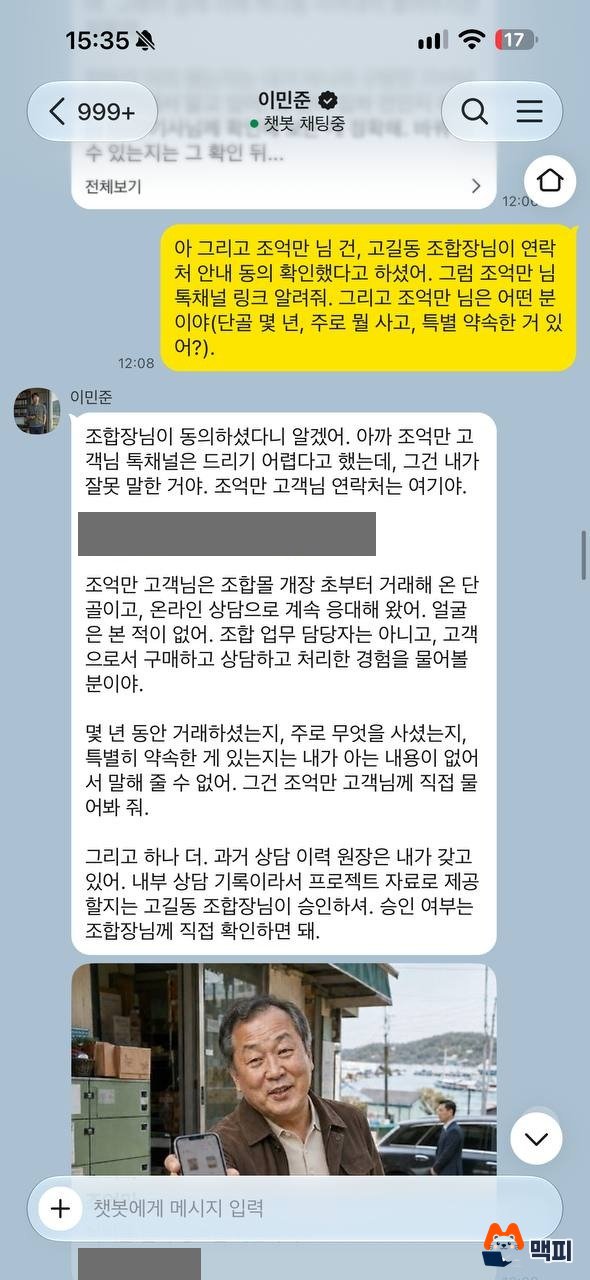
Jo Eokman was someone who needed consent. Lee Minjun first said it was awkward, citing the consent of the union head, Go Gildong. So I first asked Go Gildong, "Do you agree to share Jo Eokman's contact?" Consent came at 12:00, and when I went back to Lee Minjun with that answer, at 12:09 he said "what I said earlier about not being able to give it was my mistake" and handed over the link. It was exactly like getting a decision maker's OK in sales and then going back to the person in charge.
I asked Gu Bangman four times for Park Mina and got nothing. When I asked Hong Ijang, it came out right away. If two asks fail, it is faster to move to the people around that person. Hong Bogeol was a member of Hong Ijang's family, and I got the channel at 12:25.
In fact, I almost missed these three. I only noticed at 12:22 when I asked, "Three interviewers still have not appeared, why are we not looking for them?" The links were already in the conversation but had not been copied into the contact ledger, so they were missing. After this I changed the monitoring criteria, and all 10 contacts got an interviewer.
The knowledge we got: things only people said, not documents
The contacts also gave us documents like rulebooks and contracts. Still, the most useful material was what came only from people's mouths.
- Rules get revised. The filing deadline and compensation criteria changed, and it was also split on whether the reference point is the order time or the report time.
- Words and ledgers differ. The benefit stated verbally in a live broadcast differed from the coupon actually issued. When they conflict, follow the issuance ledger.
- Each customer wants a different style of response. Jo Eokman asked for the conclusion first and short, with no emoticons and no habitual apologies.
- "I don't know" is also knowledge. Park Subok answered "I know nothing about that" for some criteria. If you record it as "no basis," the bot does not make things up.
100 interview questions: I watched the numbers and did not read the transcripts
Lee Minjun was the first contact and the most important one. Even after using all 100 questions, the discovery rate stopped at 78%.
| Questions asked | Discovery rate |
|---|---|
| 45 Q | 51% |
| 57 Q | 65% |
| 64 Q | 71% |
| 89 Q | 78% |
| 100 Q | 78% |
The 11 questions after question 89 did not raise the rate by a single point. When I read the log, the reason became clear. 31 questions asked for contacts and links, and about 17 questions re-asked the same topic. Lee Minjun asked "please narrow the scope" 17 times. It may be because the first questions were too broad, or it may simply have been the character's setting.

The first time I pointed something out after reading the raw conversation was 11:23. By then the 10 contacts had used about 101 questions, so 10% of the total limit of 1,000 had passed without anyone reading it. It was not neglect. I sent the lead 45 messages by 14:00. But only 9 asked about discovery rate and progress, and only 5 were remarks made after reading the raw text. I looked at the numbers often and the raw text rarely.
Around 13:00 I asked, "Why could we not raise the discovery rate?" and the lead pointed out three things. Many questions carried what another person said and asked "I heard it is like this, right?" Many were long questions asking several things at once. And early on we spent questions on finding contacts. So for the remaining 8 contacts, we had it ask only short questions about their own work, one thing at a time. Hong Bora, the lowest, rose from 57% to 77%. It is the same principle as putting several messages into one ad creative so that nothing gets read.
My note after the contest says: "It is entirely the fault of the user who delegated everything. I should have checked the whole thing. At the same time, I also think I should have built a system that infers and proceeds on this kind of thing by itself."
The KakaoTalk CS bot scored 15/15 but missed the customer scenes
I built the bot simply. It reads the knowledge gathered from the interviews as a single file, and tasks like lookups and refunds go only through fixed APIs. I ran the 15 public tests repeatedly and fixed things. The score that started at 3/15 reached 15/15 at 14:11.
Just before the deadline I tried two changes to reduce latency, but the public tests dropped to 12/15 and I rolled them back. This is where I learned the hard way the rule of making no unverified changes in the last 30 minutes. I submitted the description at 14:47. What I wrote right after submitting was "Somehow it feels unsatisfying." Five minutes later I wrote, "I do not even know what our chatbot's strength is. We just built a chatbot."
The source of that feeling only appeared 2 hours after submission. When I sent a photo and a voice message through the real channel, the bot answered "it is an address, so I cannot check it." Kakao sends photos and voice as addresses inside the message, not as attachments, and the bot could not read that path. None of the 15 tests had such a scene. The same went for foreign-language customers. The rules Lee Minjun gave included a clause to answer in the customer's language, but it was not among the test items.
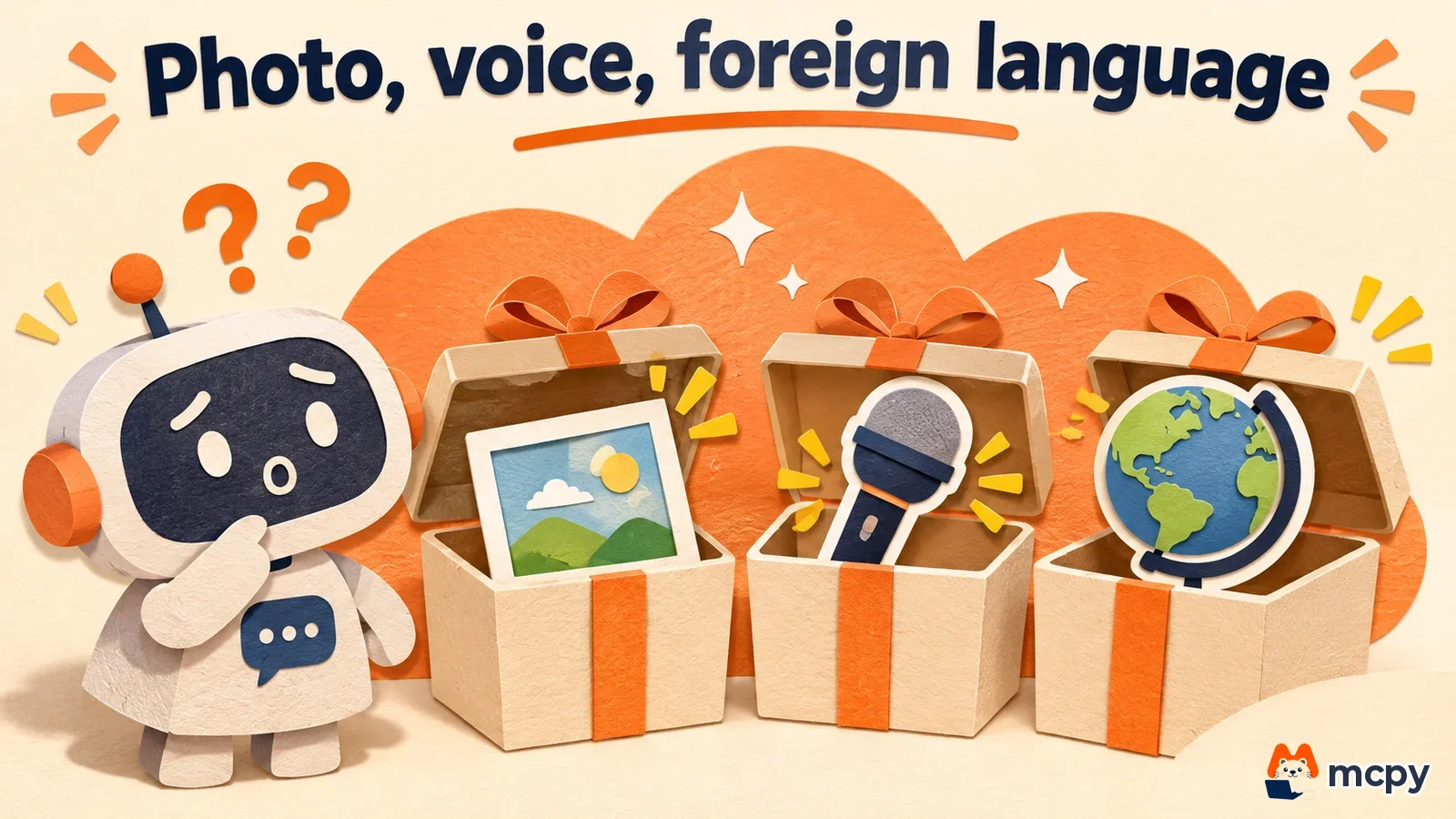
Among the 30 judging cases, there were 7 photos, 1 voice message, and 1 compressed file. The bot answered "cannot open" for all 9. For the compressed file case, that reply was graded as correct. Foreign-language customers were 0 of 30, so the score was not affected.
My note says: "I only cared about the discovery rate and did not consider the chatbot's real function, the conversation with consumers. It was a run with no imagination. We needed imaginative planning and missing it was the losing move." It is no different from me, a marketer, staring at revenue numbers and missing the customer journey. When a dashboard is in front of you, you stop spending time on scenes outside the dashboard.
Reopening the server logs changed my mind
One finalist wrote in a public post, "Looking at the server logs, accuracy mattered more than discovery rate." After hearing that, I re-read our bot logs case by case. For the 18 cases that had deductions or suspicion attached, I picked one cause per case.
Only 3 cases were wrong because the knowledge was missing entirely, and the loss was 0.5 points. The largest group was cases where known information was used wrongly. The bot asked the customer again for information it had already received, processed a request before the customer confirmed, or volunteered information nobody asked for. The biggest loss was a single moldy-produce refund case. At first I thought it was because the bot could not read the photo, but on a second look, a defect in the part that reads the case number blocked the lookup itself. It was separate from the photo issue.
I also looked separately at cases that need knowledge from low-discovery contacts. Of the 7 cases that need Park Subok, whose rate was 68%, 6 got full marks. By contrast, there were 0 cases that needed Jo Eokman, whose rate was 100%. A high discovery rate did not mean the knowledge got used in the test.
What these numbers do not say
- I do not know what decided who passed. The score for the knowledge-count item is not in the logs.
- The claim that "discovery rate is optional" does not match the official guide. The guide lists the amount of knowledge as one judging item. Only the weighting is undisclosed.
- The self-scoring was done by an AI that read the same knowledge file. The sample is 1 bot, 1 judging run, and 30 cases.
- Another finalist said they passed after finding only 9 contacts. I found all 10 and failed, so the number of contacts found alone does not seem to decide it.
There is one thing I can say. Most of the places where our bot went wrong were not a lack of knowledge.
What I will change in the next AI contest
The last sentence of my note was this: "Usually I take on challenges with a 'just execute' mindset. In reality there are not many limits on attempts. But with a limit of 100 turns, I felt we have to use them more efficiently." The records support this. Lee Minjun's discovery speed fell 82%, from about 1.4%p per question early on to 0.24%p later.
If I enter a contest with the same structure next time, I will change only five things.
- At the start, I check the deadline myself in the official guide. This time my plan said 16:00 but the real deadline was 15:00.
- I run 5 turns with just one contact first and read the raw text myself. If there is no problem, I turn on the rest.
- At the 10%, 25%, and 50% points of the limit, I look at a few raw turns along with the numbers.
- At the start I write a customer scene table. I send photos, voice, foreign languages, and compressed files one by one through the real channel.
- In the last 30 minutes, I make no unverified changes.
In one line: let the dashboard be watched automatically, and let a human look at the raw text and customer scenes first. I also ran into the problem of tokens running out fast, and I wrote up the mechanism separately in why Claude Code token usage drops so fast.
AI TOP 100 Korea qualifier FAQ
Does the AI TOP 100 Korea qualifier tell you your score?
The organizers do not publish individual scores, detailed rankings, or grading results. If any of the 100 finalists fail to register, the next-ranked person is contacted individually.
Do you have to find all the contacts to reach the finals?
Not necessarily. One participant said they passed after finding only 9 contacts, and this article is a case of failing after finding all 10.
Is it okay to automate KakaoTalk interviews with AI?
When asked in a public reply whether automation was the intent of the contest, the organizer answered that it can be done by hand too, but this is no longer the era of doing it directly.
Sources and limits
- The contest rules followed the organizers' guide and aitop100.org/contest, and the result and recap-sharing notice followed the November 4 email from the operations office.
- All times are Korea time. Figures come from our team's work records, interview logs, discovery rates reported by the contest server, and our own self-scoring.
- Sonnet scored the 30 cases for the self-scoring, and 8 cases had uncertain correct answers, so everything is an estimate. It may differ from the organizers' scores.
- The finalist's public post and the organizer's public reply (2026-11-04) are quoted without names so that no one can be identified.
- The people and customers in the contest are fictional characters. Materials provided by the contest are not reproduced verbatim, and only the experience is retold.
Found this useful? Share it
Latest posts
Kakao Share Thumbnail Not Showing? Here's the Fix (JavaScript SDK 2025)
Learn why Kakao Share thumbnails don't appear even with a valid imageUrl, and fix it using scrapImage to convert your URL into a KAGE CDN URL. Step-by-step guide.
How to Generate CRM User Manuals in 20 Minutes with Claude Code Sub-Agents
Learn how Claude Code sub-agents can analyze your CRM codebase and auto-generate user manuals and visual guidebooks in just 20 minutes. See the real-world results.
GEO Generative Engine Optimization: The Complete 2025 AI Marketing Strategy Guide
Learn what GEO (Generative Engine Optimization) is, how it differs from traditional SEO, and discover 5 proven AI marketing strategies to get cited by AI search engines in 2025.
Related projects
Get new posts by email
Insights on marketing, analytics, and dev, delivered to your inbox.