
Q. How did early Christianity spread from roughly 1,000 followers to 35 million over 350 years?
Faith alone doesn't explain it. Looking at it as marketing: universalism opened the addressable market, a plague survival rate of roughly 30% versus 10% proved value, eliminating circumcision removed entry friction, the Roman road network was piggybacked for free distribution, martyrdom was used as proof-based promotion, marginalized segments like women were targeted with tailored messages, dedicated personnel and retention rituals kept people in, and every member was turned into an evangelist while birth-rate growth compounded the numbers. Roughly 40% compounding every decade for 350 years. (Historical figures are academic estimates.)
3 lines you can use right now
- Cut entry friction to zero first.
- Prove value with numbers, not slogans.
- Growth is not a single move. It is the product of acquisition multiplied by retention multiplied by reproduction.
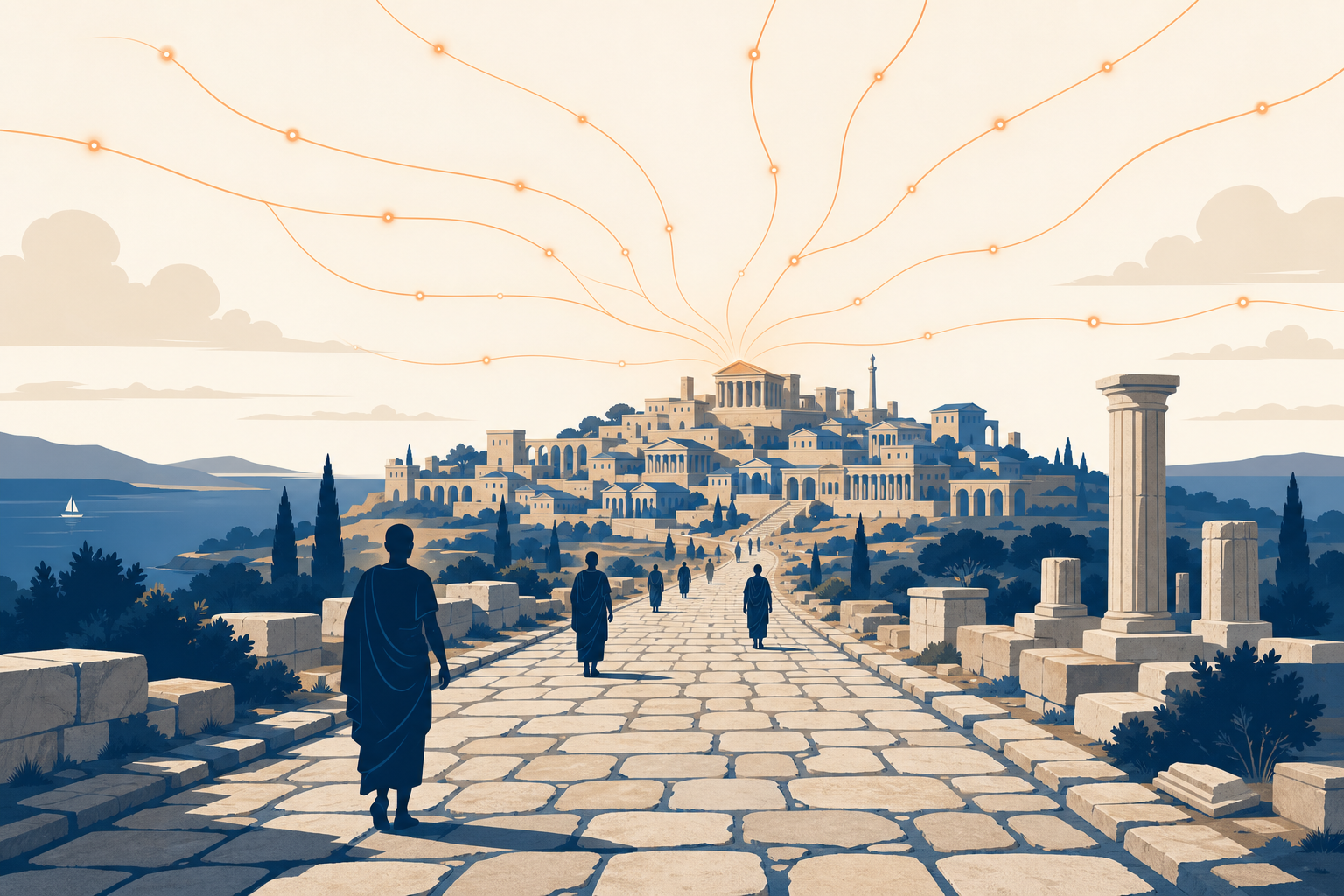
A message beginning at one point and spreading through a network.
At Jesus's death there were about 1,000 followers. 350 years later: 35 million
Start with the numbers. At the time of Jesus's execution the people who followed him numbered perhaps 1,000 at most. By 380 CE, when Rome made Christianity its state religion, there were roughly 35 million believers.
In writer Tomas Pueyo's calculation this represents roughly 40% growth every 10 years, compounding without interruption for 350 years. Compounding is relentless: 40% per decade means the population doubles in a single generation.
Calling it "God's will" ends the analysis. But seen through a marketer's eyes, something else becomes visible. Growth at this scale doesn't happen by luck.
Opening the addressable market, layering on powerful value, shaving entry friction, distributing cheaply, keeping people who joined from leaving, and turning those people into recruiters for the next wave, every growth lever was pulled simultaneously, and they reinforced one another.
Pueyo summarizes the whole thing as "Christianity went viral." I want to break that down into the marketing framework we use every day.
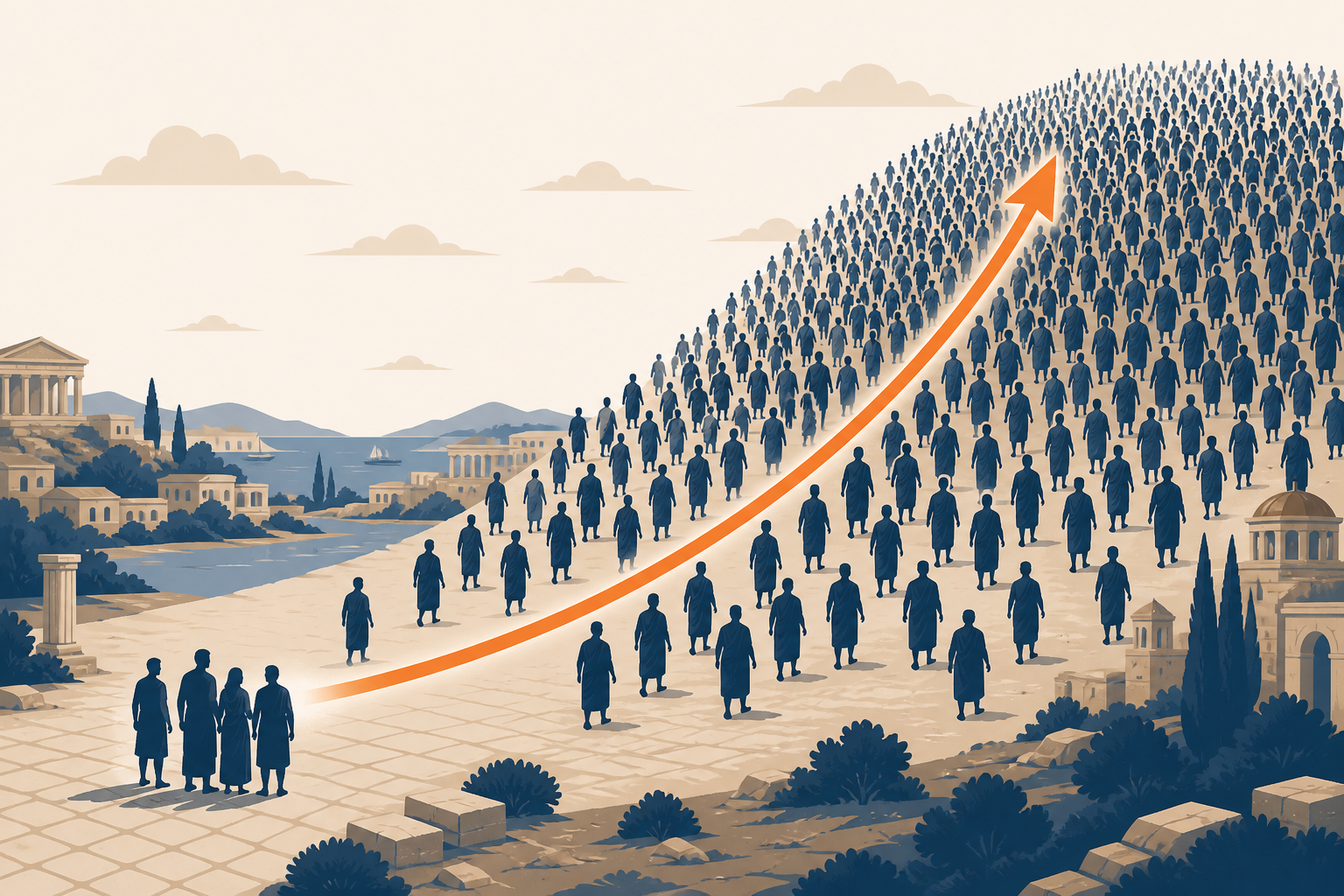
Roughly 40% per decade for 350 years. Not a single clever move but the product of every lever. (Figure: Tomas Pueyo)
One council that abolished circumcision expanded the market to all of humanity
The first question is "who was this designed to be sold to?" Early Christianity's decisive move was universalism. Anyone could become a believer regardless of ethnicity, class, or gender.
Religions of the time were mostly walled off by ethnic lines. Tearing down those walls meant, in marketing terms, raising the addressable market ceiling to all of humanity.
But opening a ceiling alone doesn't bring people in. The real barriers were elsewhere. Following Jewish tradition required adult male converts to undergo circumcision and comply with strict dietary laws (kosher).
From a Gentile's perspective these were enormous friction points encountered at the moment of conversion. At the Council of Jerusalem around 50 CE, both requirements were waived for non-Jews.
That single decision removing one barrier expanded the market from "Jews" to "the entire Mediterranean world." Don't stop there, though. Removing friction doesn't mean free operations.
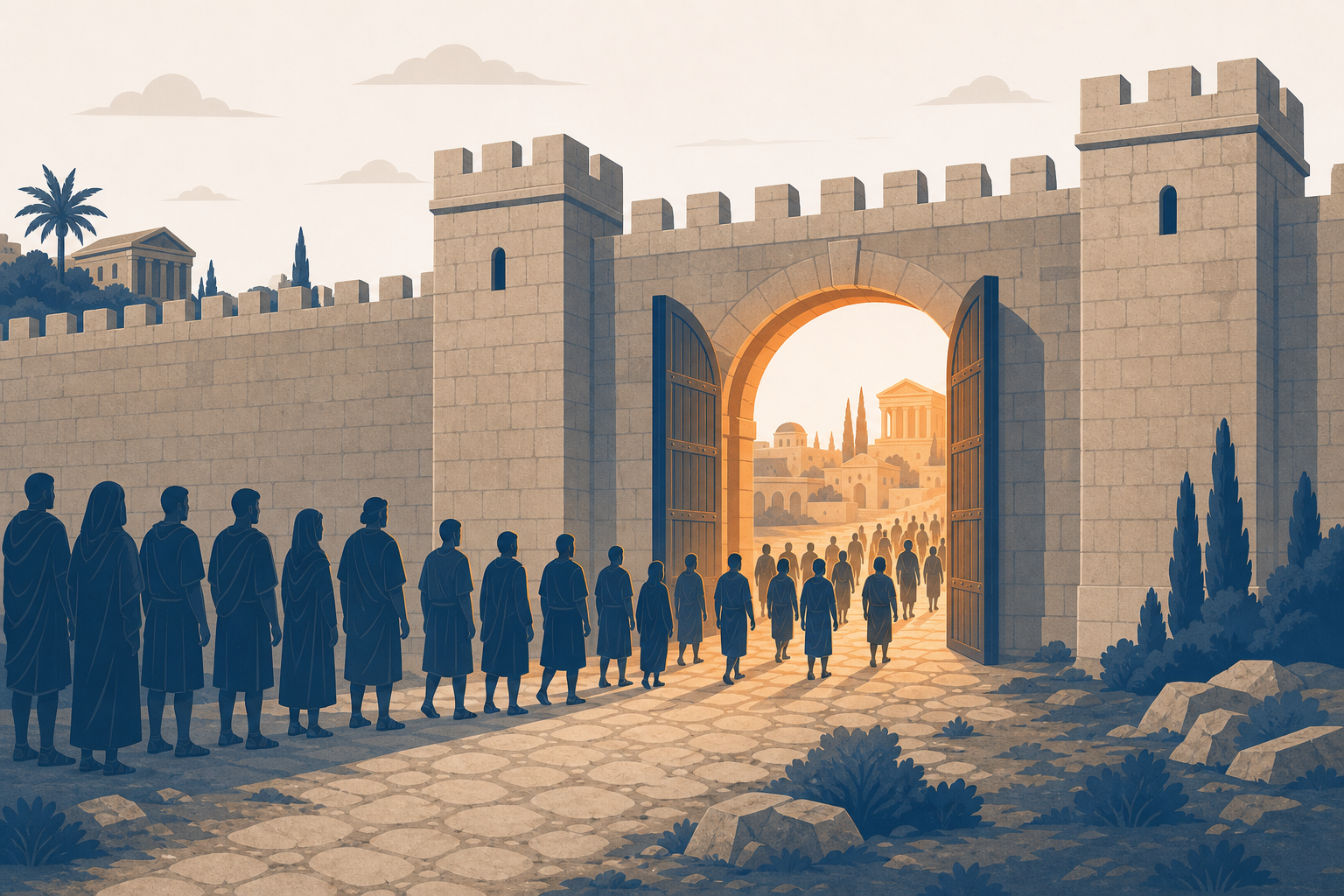
The single decision removing circumcision and dietary rules expanded the market from Jews to all of humanity.
Christianity cut entry cost (circumcision) to zero but kept lifetime costs intact: tithes, abstinence, moral conduct. Those costs were justified by an exchange with eternal reward (heaven) and punishment (hell).
Lower the entry threshold, then maximize lifetime value (LTV) once someone is in. That is essentially a high-LTV subscription model. The practical translation is this.
Entry friction and post-conversion cost must be designed separately. Cut onboarding, payment steps, and lock-in terms to near zero; grow LTV separately after proving value.
The free-trial-to-paid-conversion structure in every SaaS product today follows the exact same logic as that council decision 2,000 years ago. And the trap is the same. One piece of entry friction blocks the entire funnel.
Without removing the circumcision requirement, universalism as a grand strategy would have remained just that, a strategy.
During a plague, one group lost 30%. The other lost 10%
Once a product is designed for everyone, the next question is "is it actually good?" The value Christianity offered was not abstract comfort.
Greco-Roman society was harsh, and the Christian community filled real gaps in it: an obligation to help one another, nursing care for the sick, a quasi-family community structure. That value was most dramatically revealed in plague.
According to estimates cited by Pueyo, during a plague pagans lost roughly 30% while Christians lost roughly 10%. The gap was not made by miracles. It was made by care.
Bringing water and food to neighbors and refusing to abandon the sick, that basic nursing alone split the survival rates. This meant the community functioned as a social-insurance network, and simultaneously it was the most powerful marketing imaginable.
"Being with these people is more likely to keep you alive" was demonstrated in plain sight.
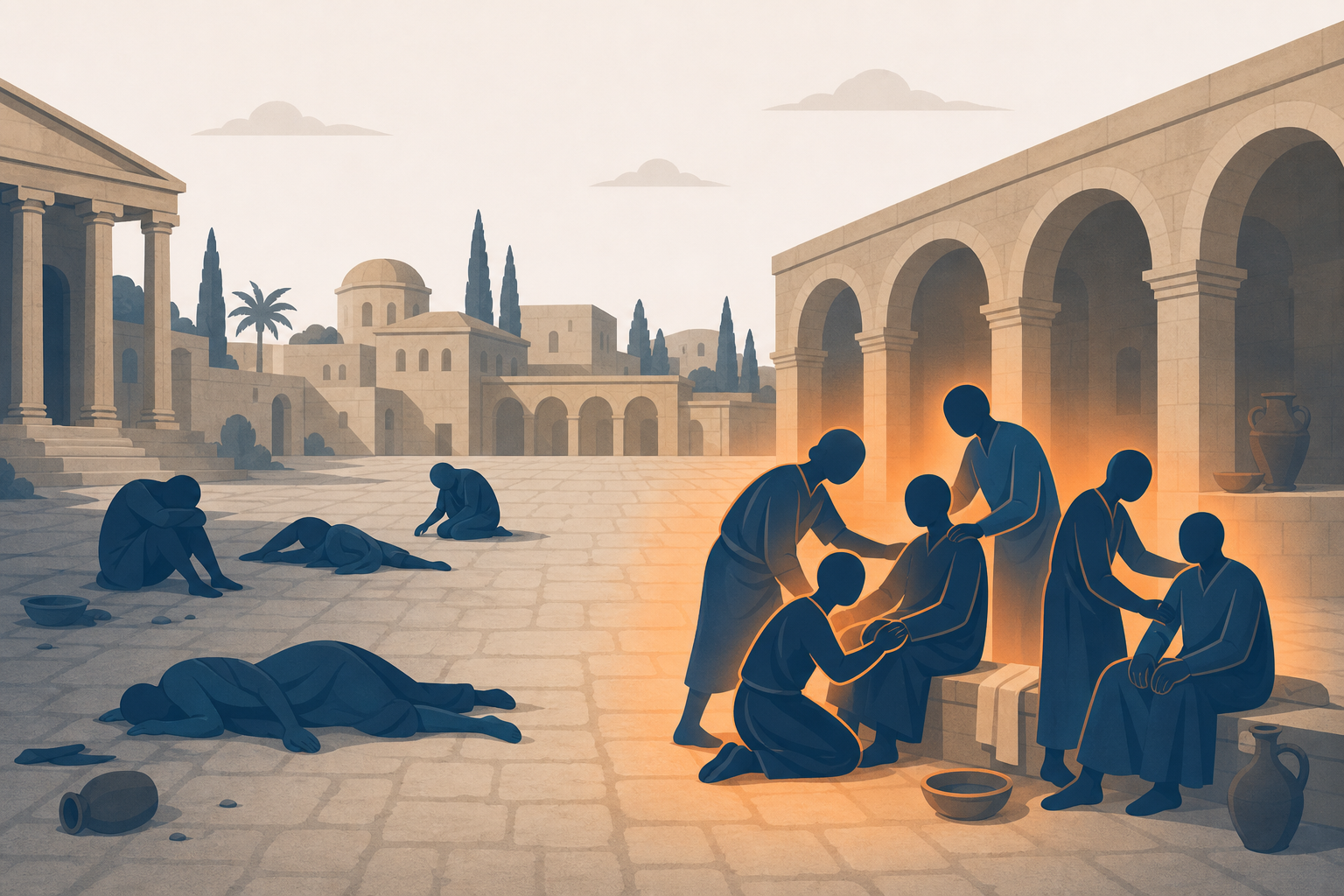
Survival rate 30% vs. 10%. The most powerful value proof is a visible outcome, not an emotion. (Figures: Tomas Pueyo, academic estimates)
There was one more dimension. Unlike the capricious gods of polytheism, Christianity gave measurable feedback. Through confession and penance, "my moral progress" could be reviewed with a priest.
A product where you don't know how you're doing versus one where progress is shown on a gauge. The latter retains people. The implication is sharp. Talking about value is weak. One result proven by numbers beats a hundred lines of messaging.
That is why our product's value also needs to be expressible as "here's how much it changes things" rather than just "it's good."
A message that piggybacked on roads someone else built
Even a good product needs a way to spread. Christianity did not build its own distribution channels. It rode the existing Roman infrastructure.
The empire's road network, Mediterranean trade routes, letters moving through the Roman postal system, and the safe travel of Pax Romana, missionaries and correspondence traveled on all of it.
Diaspora Jewish communities concentrated across Mediterranean cities became hubs for reaching many people at once, what we would call super-spreader nodes today. And the "house church" model, gathering in homes instead of expensive temples, made peer-to-peer evangelism natural.
The cheapest distribution is riding a network someone else paid to build. Before constructing a new channel, look for one that already has people. Today that means getting onto existing search traffic, platforms, and communities before launching a new app. And what was being carried on the channel was not advertising. It was proof.
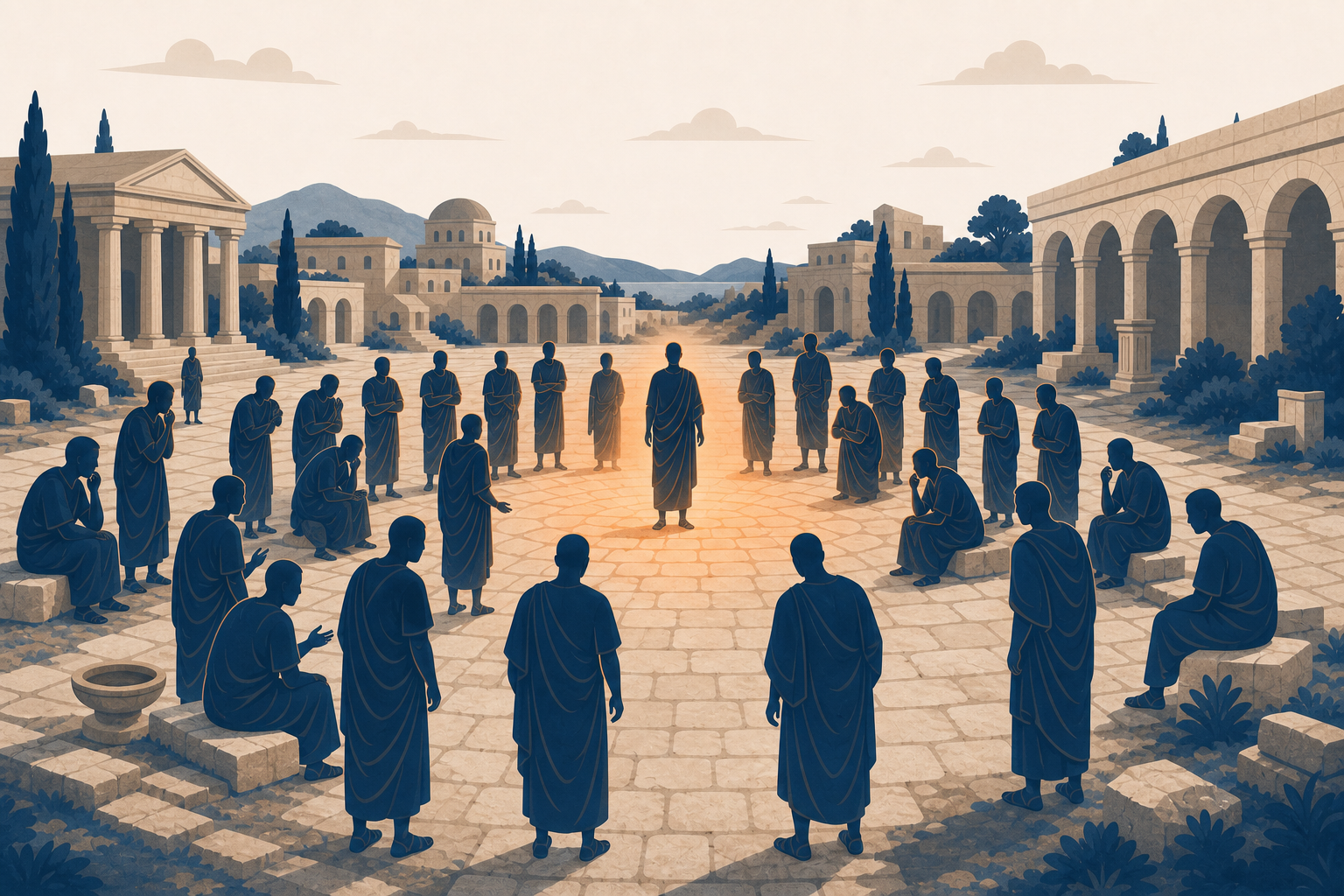
Not advertising. Proof. Unshakeable conviction moves people more than ads.
Persecution backfired. Martyrs accepting death with composure were an unambiguous, unbuyable trust signal that said "these people genuinely believe this." Rome eventually recognized that public executions were functioning as propaganda and pulled back from organized persecution.
Traveling healers staged miracles as a kind of live product demo, and symbols like the cross alongside the codex book format (early bookbinding) became brand assets that carried doctrine consistently. The most powerful promotion is not advertising. It is proof.
The practical translation is asking what your brand's equivalent of "martyrdom and miracles" is: extreme customer loyalty, real-time effect demonstrations, or crisis responses that can be turned into content.
The most overlooked market: women
Universalism opened the ceiling, but actual conversion happened through different messages to different segments. "The same words to everyone" resonates with no one.
The first market Christianity targeted with precision was the most marginalized group of the era: women. Christianity banned divorce, early marriage, and forced remarriage, and offered protections for female inheritance and status.
The effect was so large that one emperor ordered missionaries to stop visiting pagan women's homes. When competitors ask authorities to restrict your sales calls, that is a signal your approach is working.
For enslaved people and the impoverished, the message was that earthly hierarchies are reversed in heaven. For middle elites who were close to power but blocked from full entry, the angle was different again. Same product, different benefits.
Positioning was therefore a dual differentiation: "broader, and simultaneously better." Open to everyone (universal), while superior to existing religions in morality, welfare, and community (differentiated).
The biggest opportunity is often the segment everyone else is ignoring. Use the universal message to build awareness; design conversion differently per segment.
That is the reason to simultaneously check whether you are arbitrarily narrowing your market while also asking whether you are saying the same thing to everyone.

Different segments arriving at the same place for different reasons.
The single command that made every believer a salesperson
If everything up to here was the story of selling a good product well, what comes last is how it became a self-sustaining engine. That is the real core.
The Christian growth engine was not a single mechanism. It was multiple viral loops running in parallel. First: every believer became a salesperson.
"Make disciples of all nations" turned every member into an evangelist. When new customers bring in the next customers, the reproduction number (often written R0, the average number of additional people one person recruits) exceeds 1, and the numbers go exponential.
Second: the population itself was grown. Contraception, abortion, and infanticide were prohibited to drive up the birth rate. Rome's sex ratio was estimated at roughly 130–140 men per 100 women, which implies approximately 20% of female infants were killed. Christianity banned that practice and expanded the population base directly, and also increased child survival through orphan adoption and sick care. The community didn't just recruit from outside; it grew itself from within.
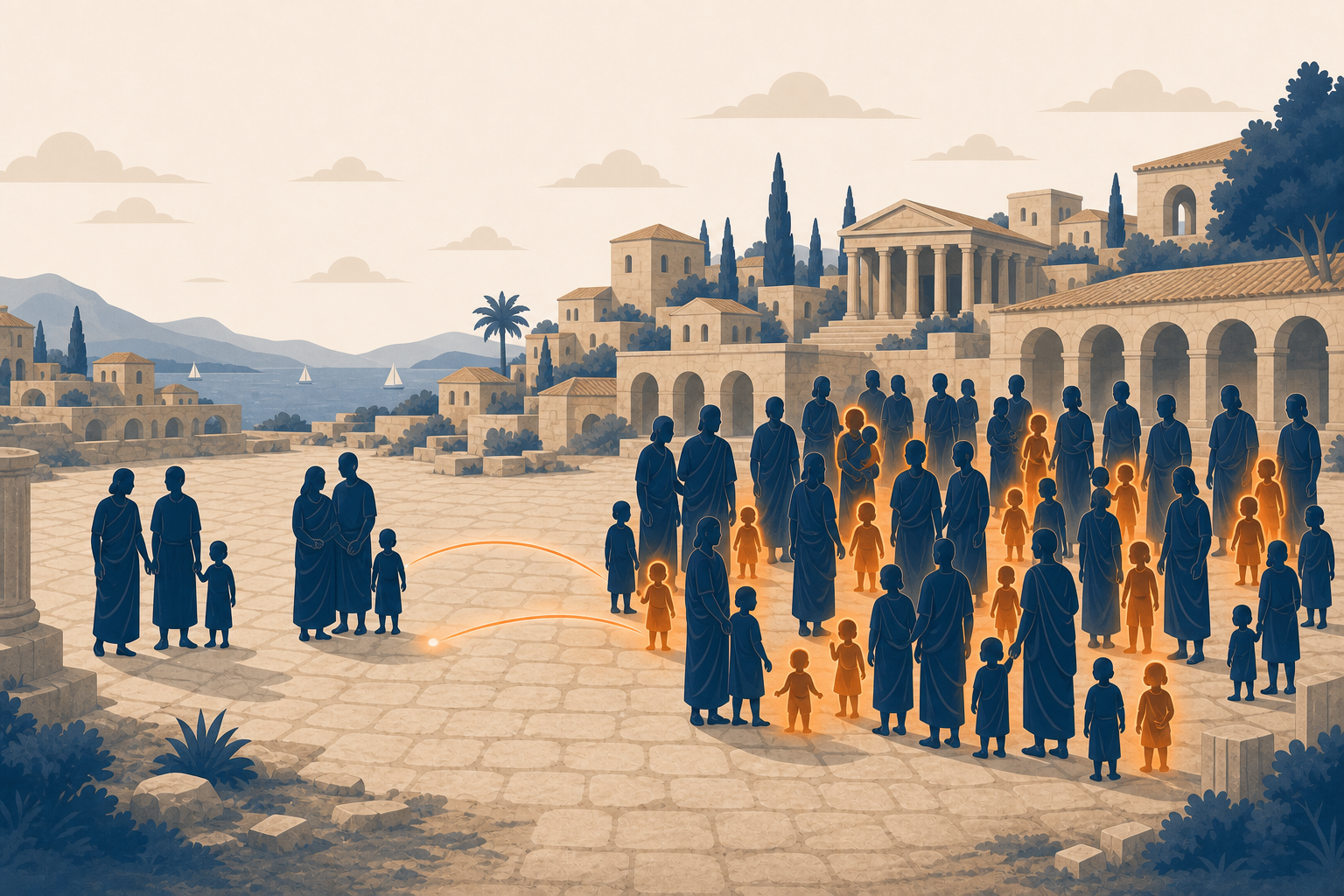
Not just inbound recruitment. The community grew internally, family unit by family unit.
Third: people who joined were kept from leaving. Baptism handled onboarding, and weekly Mass, confession, fasting, feast days, and saints' days packed every week and year and lifetime with a faith calendar.
Rites of passage (baptism, marriage, burial) required priestly involvement throughout an entire life, blocking churn. Higher touch frequency means lower attrition. Operations staffing was engineered to match.
Later mandatory clerical celibacy, beyond its religious rationale, was also a mechanism for eliminating inheritance disputes. Priests couldn't pass property to children, so wealth accumulated in the church, and personnel channeled their energy into growth rather than supporting a family.
Fourth: competitors were absorbed rather than destroyed. Pagan deities were swapped in as saints (the goddess Brigid became Saint Brigid), the Virgin Mary absorbed attributes of fertility goddesses like Isis, solstice festivals became Christmas, temples became churches.
Absorbing the features of competing products to remove the reasons to leave.
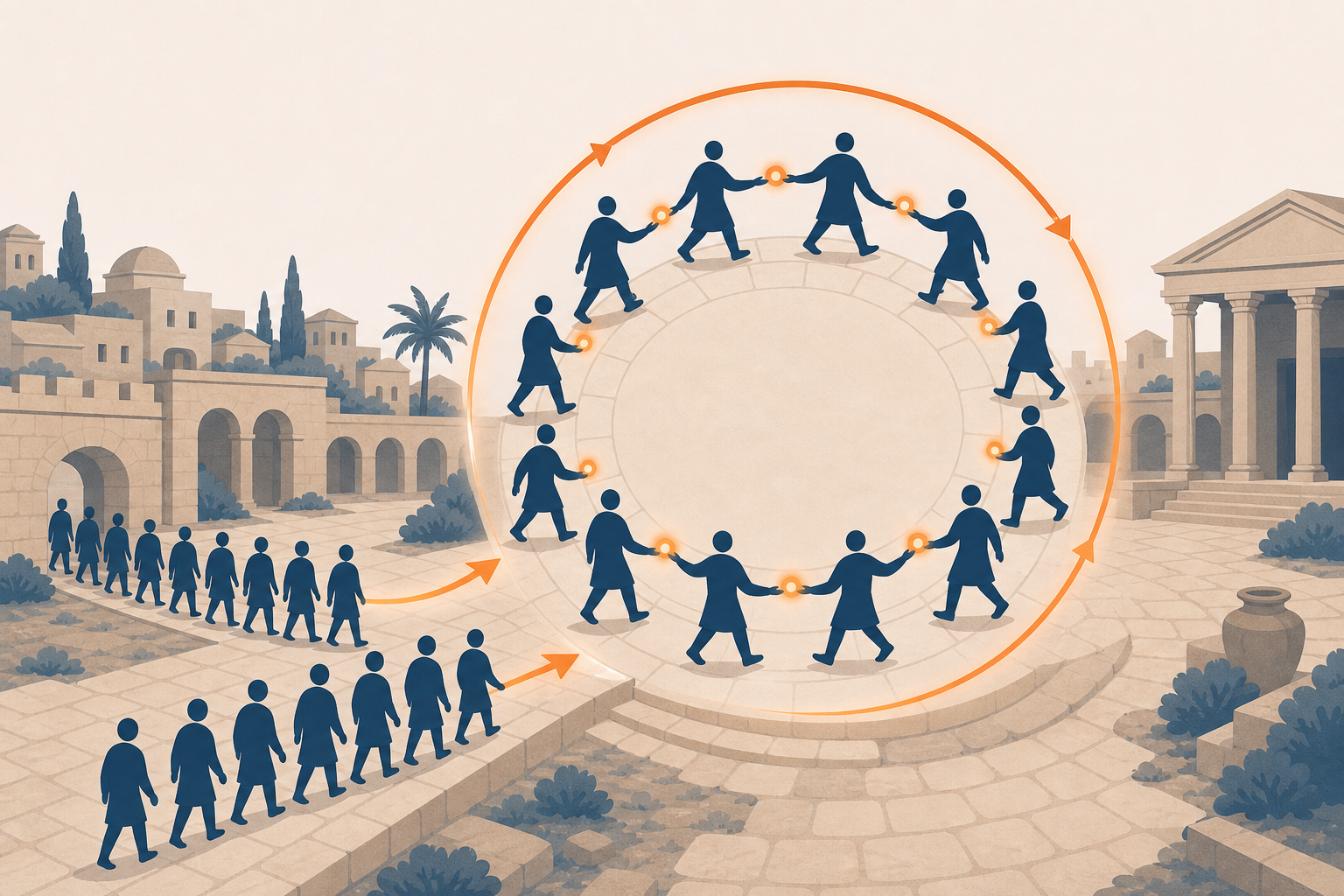
Acquisition (R0), reproduction (birth rate), and retention (ritual) run as a single loop. But over-monetization (indulgences) cracked that loop.
And to be honest, this engine has its scars. In later centuries the church squeezed retention mechanisms for revenue through indulgences, and that over-monetization triggered the Reformation: a massive wave of churn and the creation of new competitors.
The lesson is sharp. The moment retention is milked for money, the mechanism itself becomes a churn trigger.
Don't measure growth as acquisition alone. See it as acquisition times retention times referral, and always watch for the threshold where monetization pressure breaks that product.
The history ends here. Now apply it to your product
If you found the marketing lens on Christianity uncomfortable, set that feeling down. Strip out the structure and the nine levers below are all ones we pull today.
Hold each one up against your own product. If "we got lucky" is what comes out, that's a lever you haven't seen yet.
- Addressable market: Are you arbitrarily excluding a customer segment? If so, raise the ceiling first.
- Value: Is value proven in numbers? If not, change "it's great" to "here's how much it changes things."
- Price/friction: Is there friction in signup, payment, or commitment? Cut entry to zero; delay charging until after value is proven.
- Channel: Are you trying to build a new channel? Ride existing traffic, platforms, and communities first.
- Promotion: Are you trying to speak through ads? Show proof instead (extreme customer loyalty, live demos, crisis responses).
- Segmentation: Are you saying the same thing to everyone? Start with the overlooked segment; design a different benefit for each one.
- People: Is your growth team being pulled into admin work? Structure core people to focus exclusively on growth.
- Process: Is the first experience and the recurring touchpoint designed? Build a weekly return trigger.
- Growth engine: Are you counting only new acquisition? Measure acquisition × retention × referral, and don't cross the line where monetization breaks retention.
If you can only remember one thing, make it this:
Growth is not luck. It is structure. Not a single move, but the product of every lever pulled at once.
Sources
All historical fact claims in this article (growth rate, plague mortality, sex ratio, Council of Jerusalem, martyrdom and miracles, absorption of competing religions, reproduction mechanism) derive from a single source. The very idea of viewing Christianity through a marketing lens is the original author's. The source text directly uses terms like value proposition, friction reduction, demographic targeting, viral growth, "Martyrdom as Marketing," and monetization. What this article adds is reorganizing that lens into the skeleton of addressable market, value, price, channel, promotion, segmentation, people, process, and growth engine; translating into practical product terms; and ending with a 9-item reverse-engineered checklist. It is closer to structured re-presentation than new interpretation.
Key figures: roughly 1,000 followers (after Jesus's death) to roughly 35 million (380 CE), roughly 40% per decade compounding / plague mortality roughly 30% pagan vs. roughly 10% Christian / Rome sex ratio roughly 130–140 men per 100 women (implying roughly 20% female infanticide) / Council of Jerusalem roughly 50 CE / Constantine's Edict of Milan 313 CE, Theodosius's state religion decree 380 CE. All historical figures are academic estimates.
Source: Tomas Pueyo, "How Christianity Went Viral" (Uncharted Territories). Vault reference: 03-reference/marketing/기독교-확산-그로스-마케팅-해부.md.
This article makes no claims about the truth or validity of religion. It is strictly a case study breaking down "the structure by which a message spread from person to person" through a marketing framework. Figures in charts are sourced from the reference above and include historical estimates.
Found this useful? Share it
Latest posts
Kakao Share Thumbnail Not Showing? Here's the Fix (JavaScript SDK 2025)
Learn why Kakao Share thumbnails don't appear even with a valid imageUrl, and fix it using scrapImage to convert your URL into a KAGE CDN URL. Step-by-step guide.
How to Generate CRM User Manuals in 20 Minutes with Claude Code Sub-Agents
Learn how Claude Code sub-agents can analyze your CRM codebase and auto-generate user manuals and visual guidebooks in just 20 minutes. See the real-world results.
GEO Generative Engine Optimization: The Complete 2025 AI Marketing Strategy Guide
Learn what GEO (Generative Engine Optimization) is, how it differs from traditional SEO, and discover 5 proven AI marketing strategies to get cited by AI search engines in 2025.
Related projects
Get new posts by email
Insights on marketing, analytics, and dev, delivered to your inbox.