
Coffee has a grading system. Let's look at how it works — and why sustainability is increasingly central to the world of specialty coffee.
Coffee Grades
Specialty coffee exists because of the sustained dedication of people who prioritize quality at every stage of the supply chain. It's not the work of one person — it requires everyone from farmers to baristas to work in harmony, maintaining uncompromising standards from seed to cup.
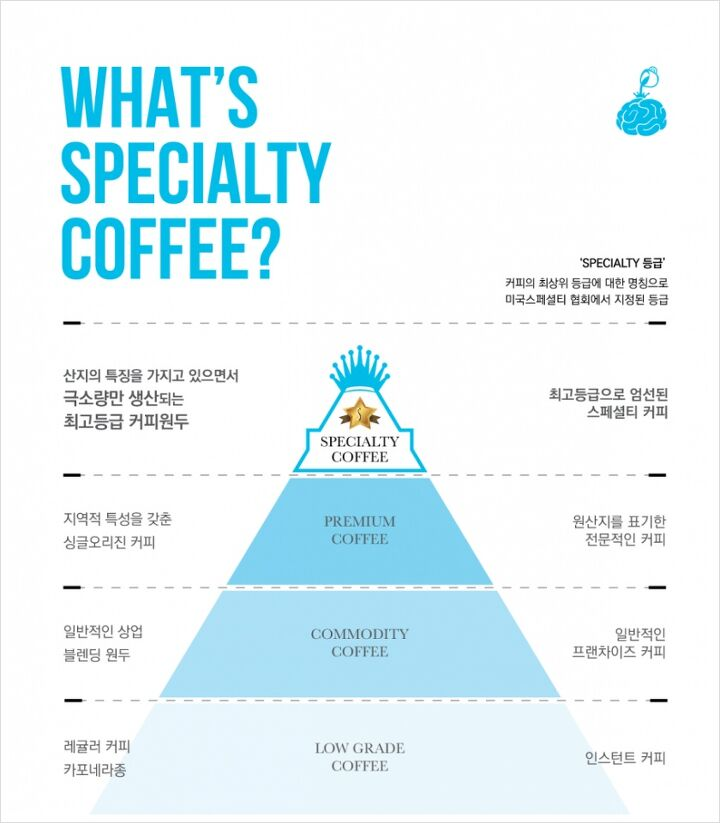
Specialty coffee is not a marketing term like "premium" or "luxury." It's a technical designation. To earn specialty status, a coffee must be evaluated against SCA (Specialty Coffee Association) standards and score 80 or above out of 100.
Characteristics of specialty coffee:
- Grown in specific, ideal microclimates
- Distinctive, complex flavor profile
- Free of primary and secondary defects
- Traceable through every stage of the supply chain
If commercial-grade coffee is like comparing rice by country of origin (Indian rice vs. Korean rice), specialty coffee is like comparing individual farms within a single region.
Sustainability
Sustainable simply means capable of continuing indefinitely. In the coffee world, it's become one of the most important concepts.
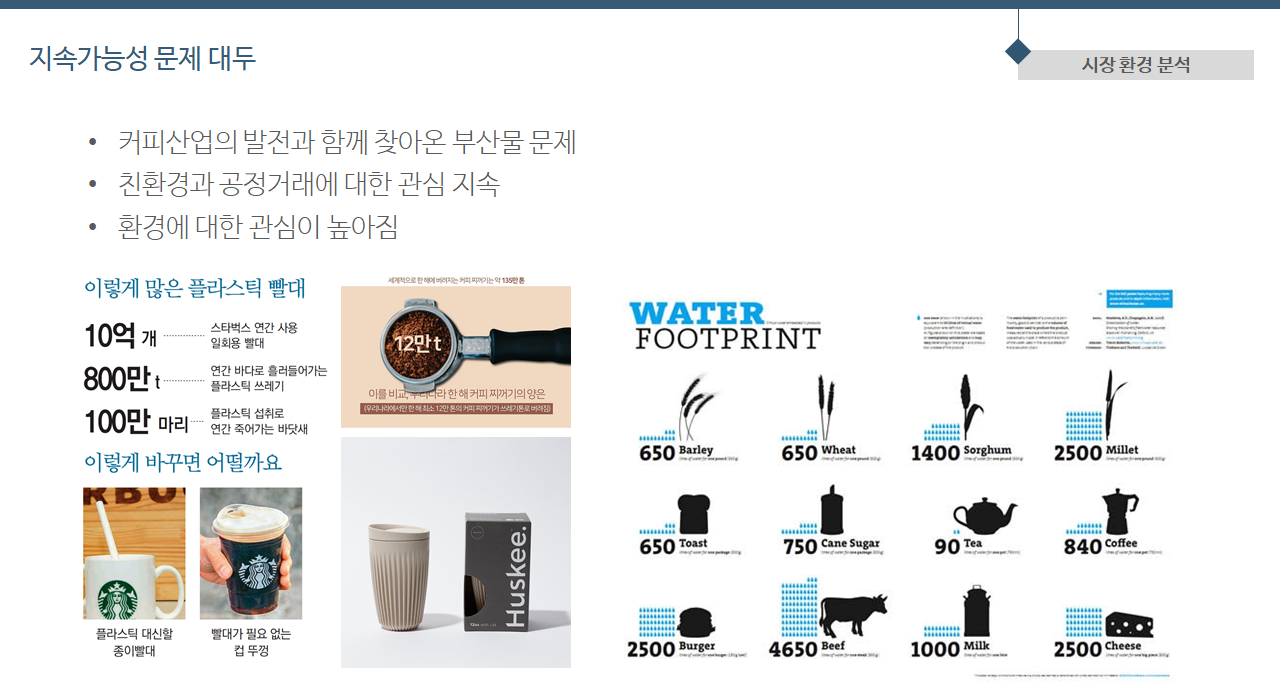
It takes 18,900 liters of water to produce 1kg of coffee — more than beef (15,415L), lamb (10,412L), or pork (5,988L). This makes coffee extremely sensitive to climate change and environmental disruption.
When extreme weather hits Brazil — the world's largest coffee producer — global bean prices can spike dramatically. Conversely, oversupply causes prices to collapse. This volatility destabilizes farmers' livelihoods, pushes labor out of the industry, and ultimately degrades the quality and quantity of coffee available to consumers.
Sustainable coffee was born from the idea that:
"Producers should be able to farm with confidence, and consumers should pay fair prices for coffee they can trust."
Beyond fair pricing, traceability has become equally important — knowing which farm grew the beans, what score they received, how they were processed, and what the farmer was paid. This transparency creates accountability, pride among farmers, and incentives to protect both quality and the environment.
The virtuous cycle of specialty coffee — where revenue flows back into community development and environmental stewardship — is what makes sustainable sourcing more than just a trend.
Next Chapter
Now that we understand where coffee comes from and how it's evaluated, let's talk about something that makes up 98% of your cup: water.