
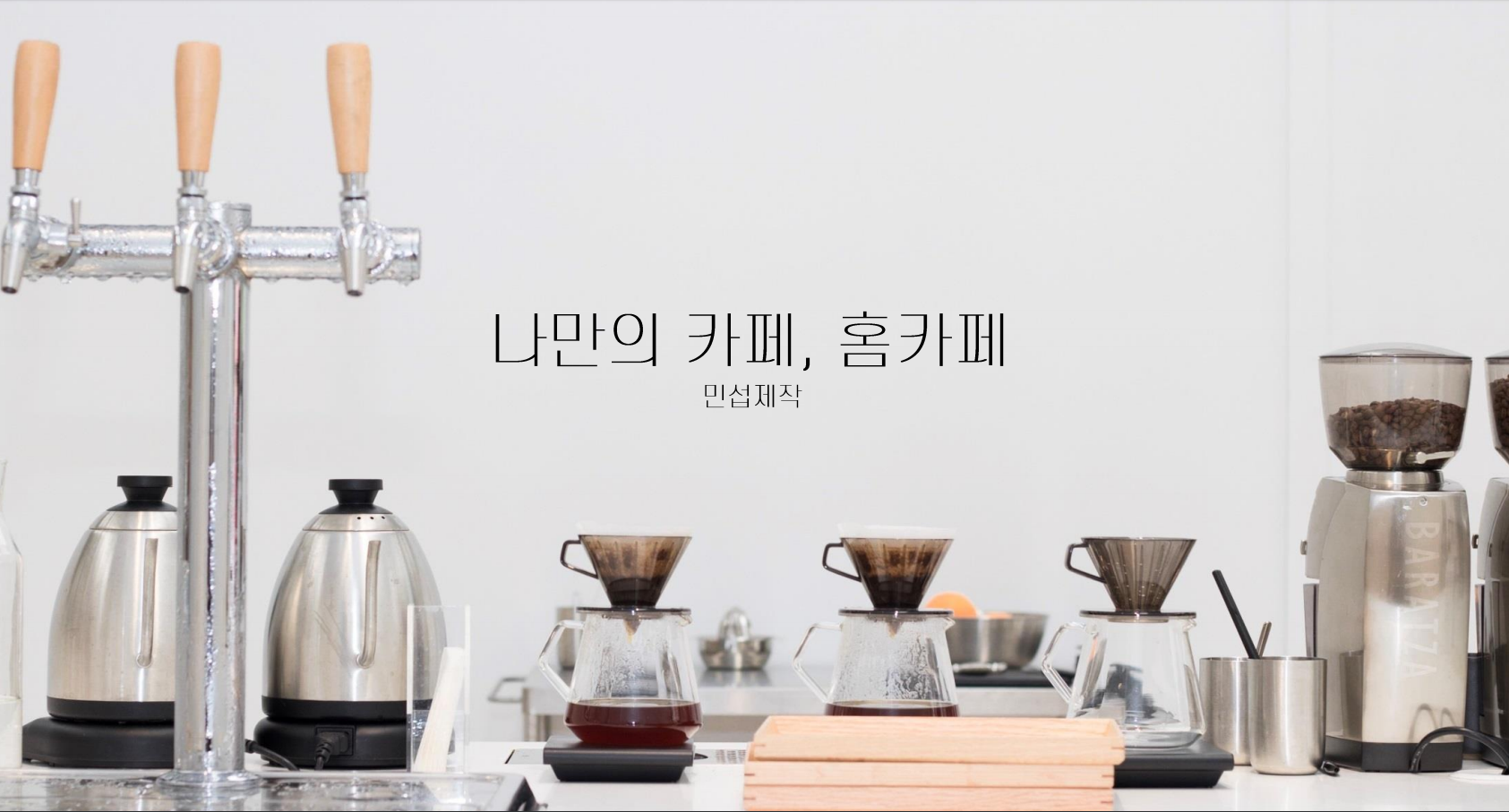
Coffee seems hard because you don't know the process. But once you understand it, nothing is easier than making coffee. We hope this helps you enjoy great coffee at home.
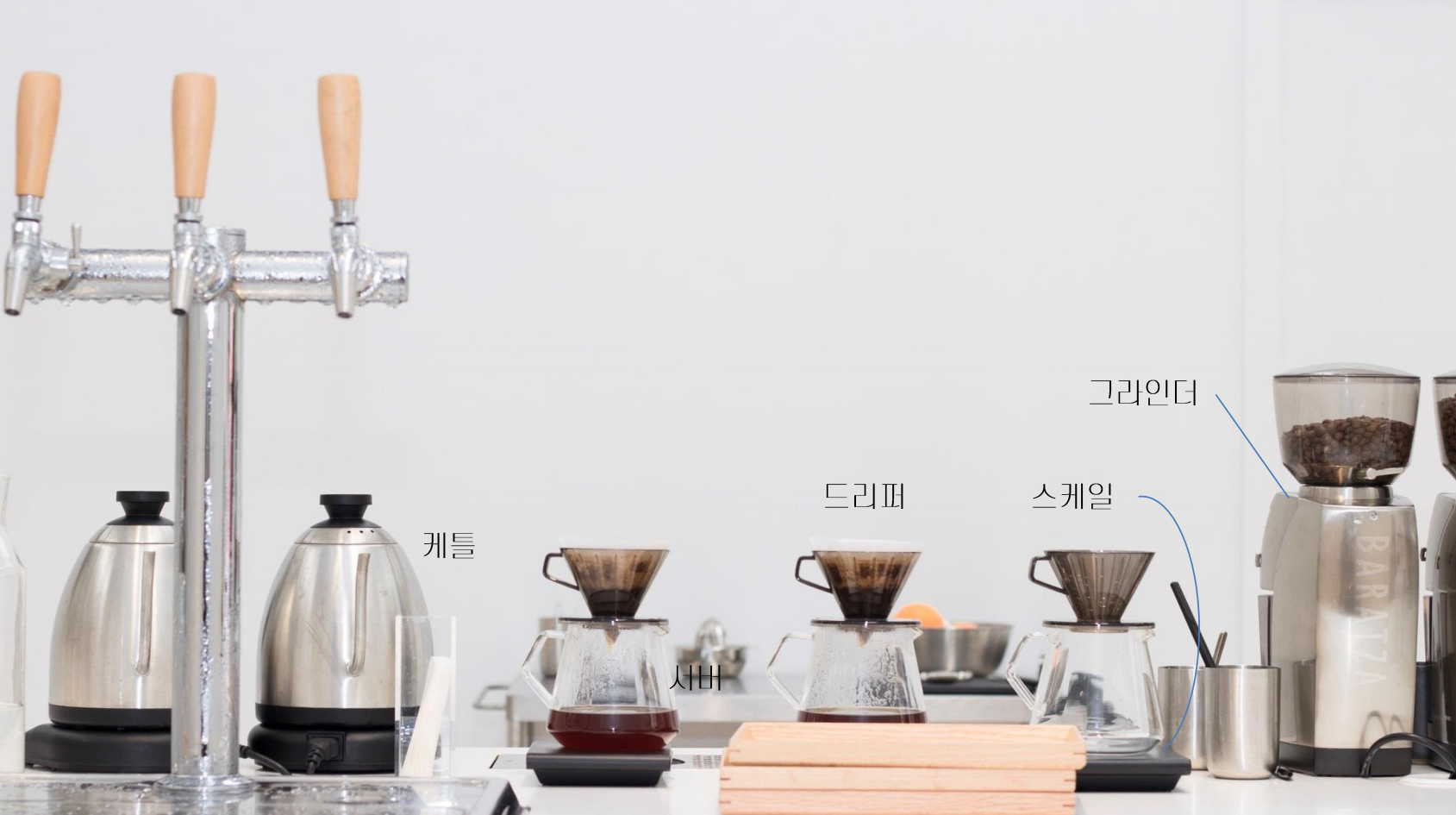
To make coffee, you need a few essential tools. Let's explore what's required and what's optional.

Essential Tools
- Coffee Beans — Roasted green beans, ground with a grinder for extraction.
- Dripper — The space where drip extraction happens. Comes in cone and flat-bottom types.
- Filter — Filters out coffee grounds.
- Grinder — Grinds coffee beans. Has the biggest impact on taste.
- Kettle — For pouring water. Flow control matters.
- Scale — Essential for precise coffee-to-water ratios.
Optional Tools
- Thermometer — Water temperature directly affects flavor. Not needed with an electric kettle.
- Server — Useful for brewing large amounts or sharing.
Drippers
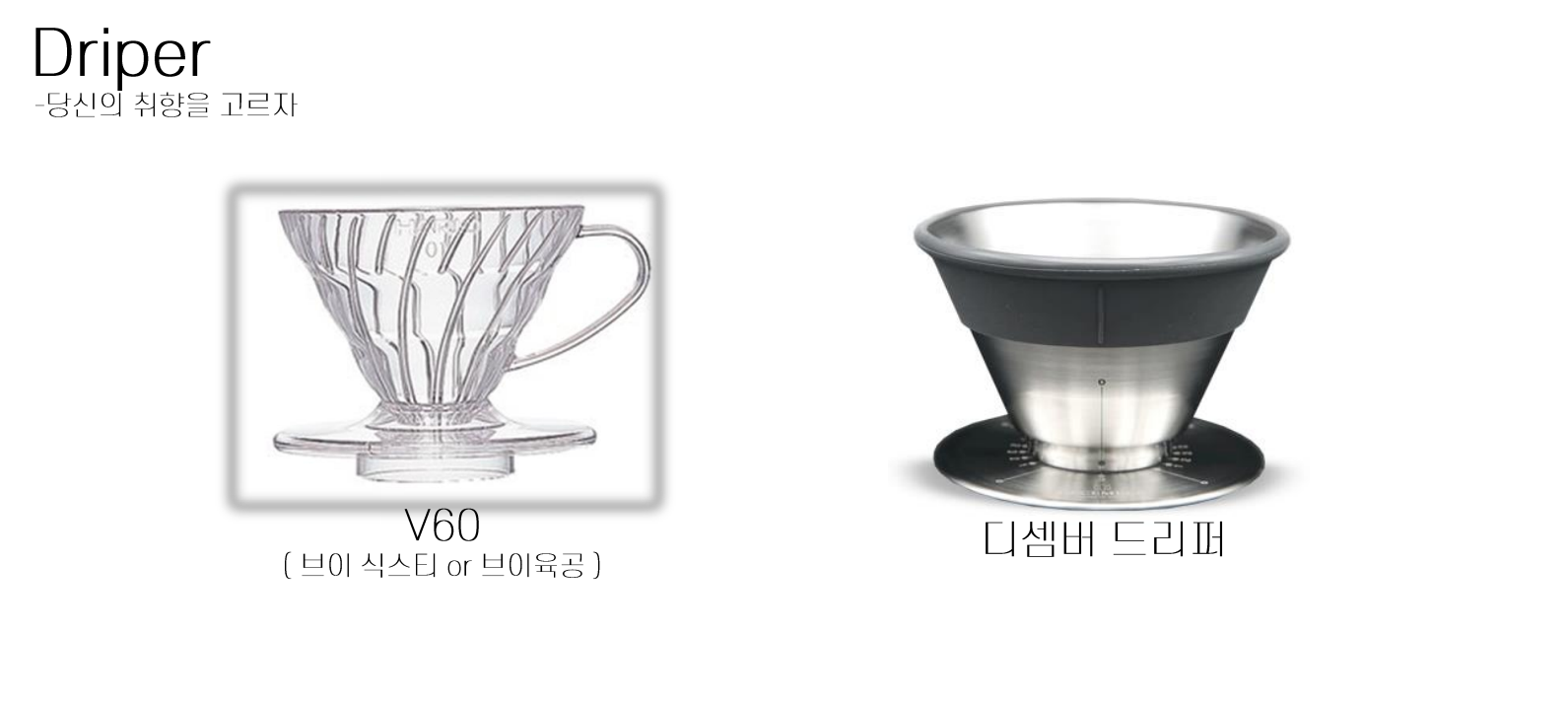
Drippers are broadly divided into cone-shaped and flat-bottom types.
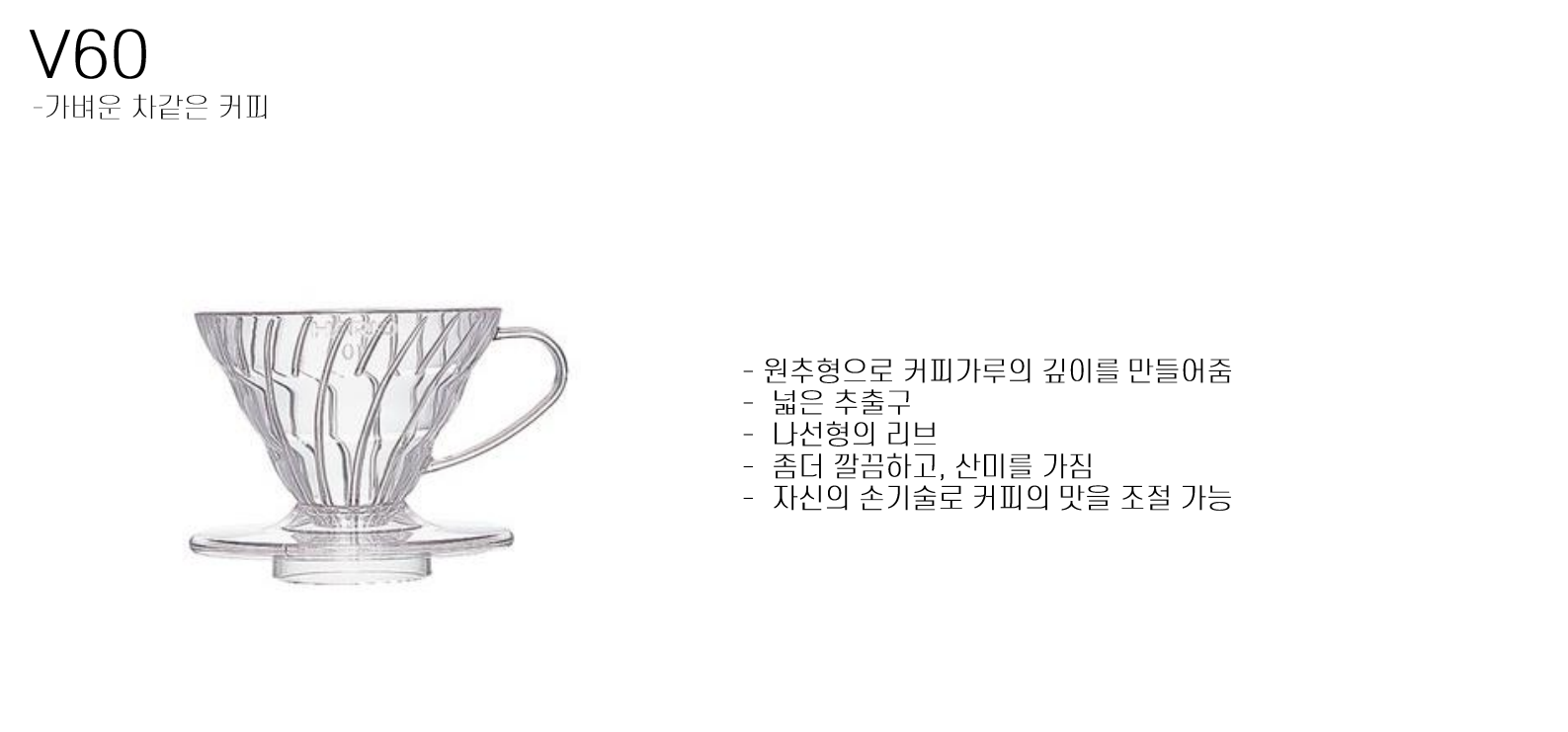
V60 (Cone)
Named for its V-shape and 60-degree extraction angle.
- Deep cone interior for greater coffee bed depth
- Wide outlet → fast extraction possible
- Spiral ribs (internal wall grooves) → smooth water flow
- Clean taste with pronounced aroma and acidity
- Versatile recipe options
Kalita Wave (Flat Bottom)
A flat-bottomed dripper that wets the coffee bed evenly.
- Flat bottom → even extraction, consistency
- Easier to bring out sweetness and body
- Consistent cup-to-cup results → popular in world championships
- Versatile recipe options
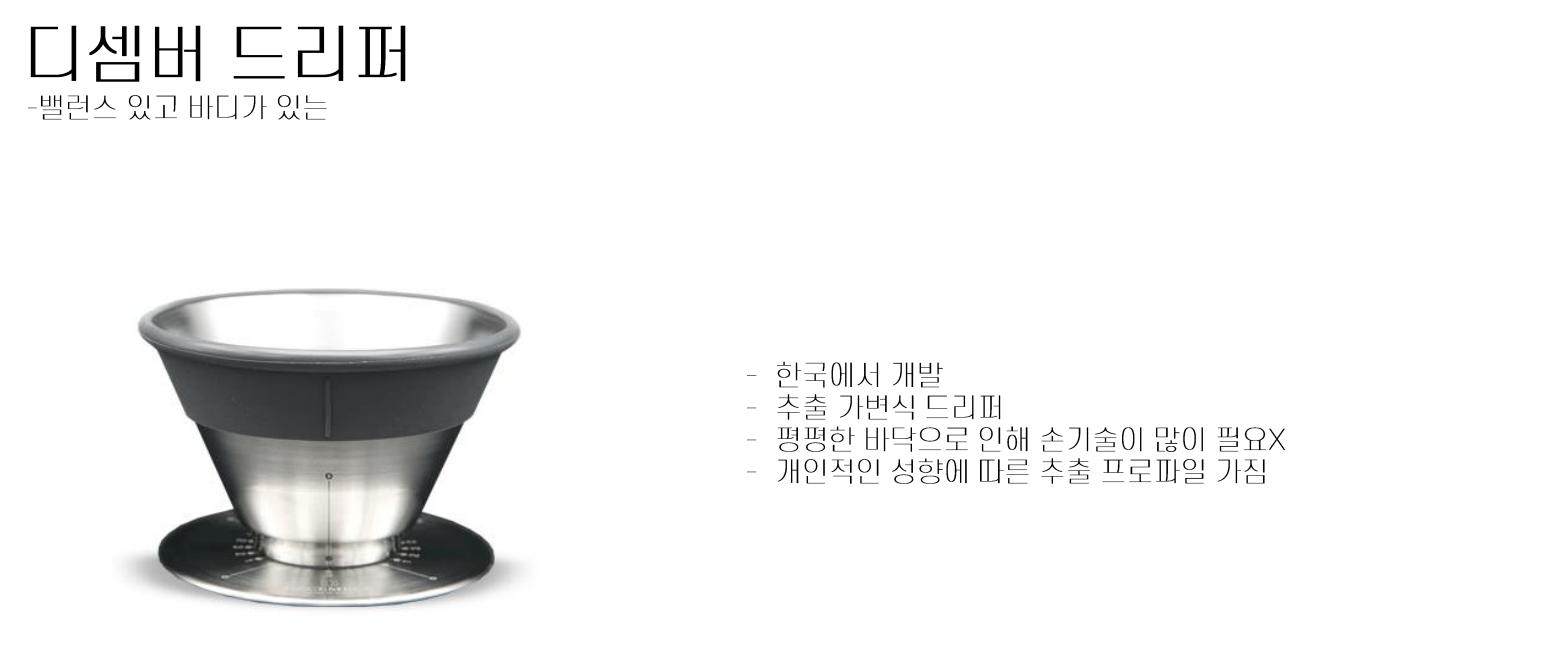
Other Drippers
AeroPress, Clever Dripper, Moka Pot, and many more extraction tools exist.
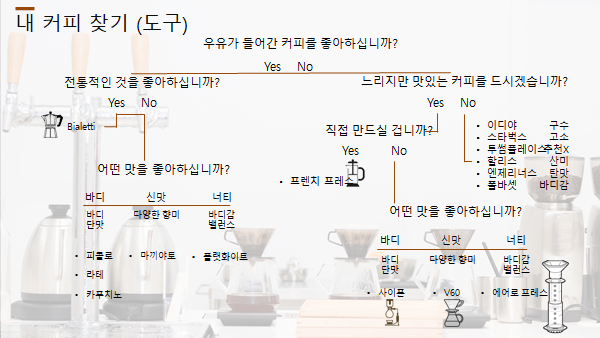
Tip: Don't buy a single-serving dripper just because you drink alone. A 3-cup size is recommended for versatility.
Filters
Filters strain out coffee grounds from your brew.
Bleached vs. Unbleached
- Bleached (white) — Less papery taste. Modern air-bleaching is safe. Recommended.
- Unbleached (brown) — More noticeable paper taste.
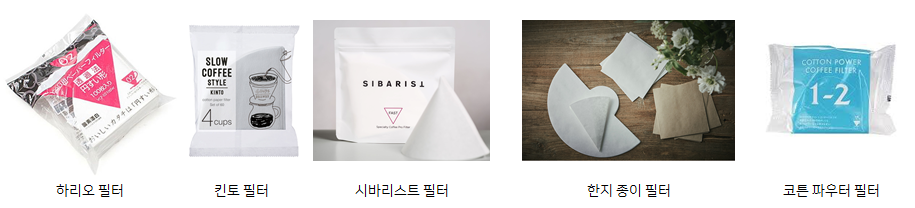
Popular Filter Types
| Filter | Characteristics | Water Taste |
|---|---|---|
| Hario | Standard V60 filter. Japanese-made recommended | Heavy, astringent |
| Kinto | Thicker than Hario. Slower extraction | Sweet, acidic |
| Sibarist | Spanish-made. Fastest extraction speed | Musty aroma |
| Cotton Powder | Made from cotton. Smooth mouthfeel | Sweet, round texture |
| Wave Filter | Kalita Wave exclusive. Corrugated shape | — |
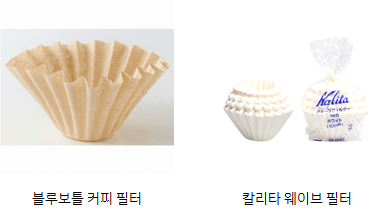
Grinder
The grinder is the most important investment for your home cafe. More than half of your coffee's flavor is determined by the grind.
Types
- Conical Burr — Cone-shaped blades. Less heat, preserves aroma.
- Flat Burr — Flat blades. Uniform grind. Great for espresso.
- Blade — Propeller-style. Uneven grind. Not recommended.
Recommended Grinders
- Wilfa Svart — Best entry-level recommendation. Great value.
- Sette 270 — Mid-range. Fine grind adjustment.
- Comandante — Top-tier hand grinder. Portable.
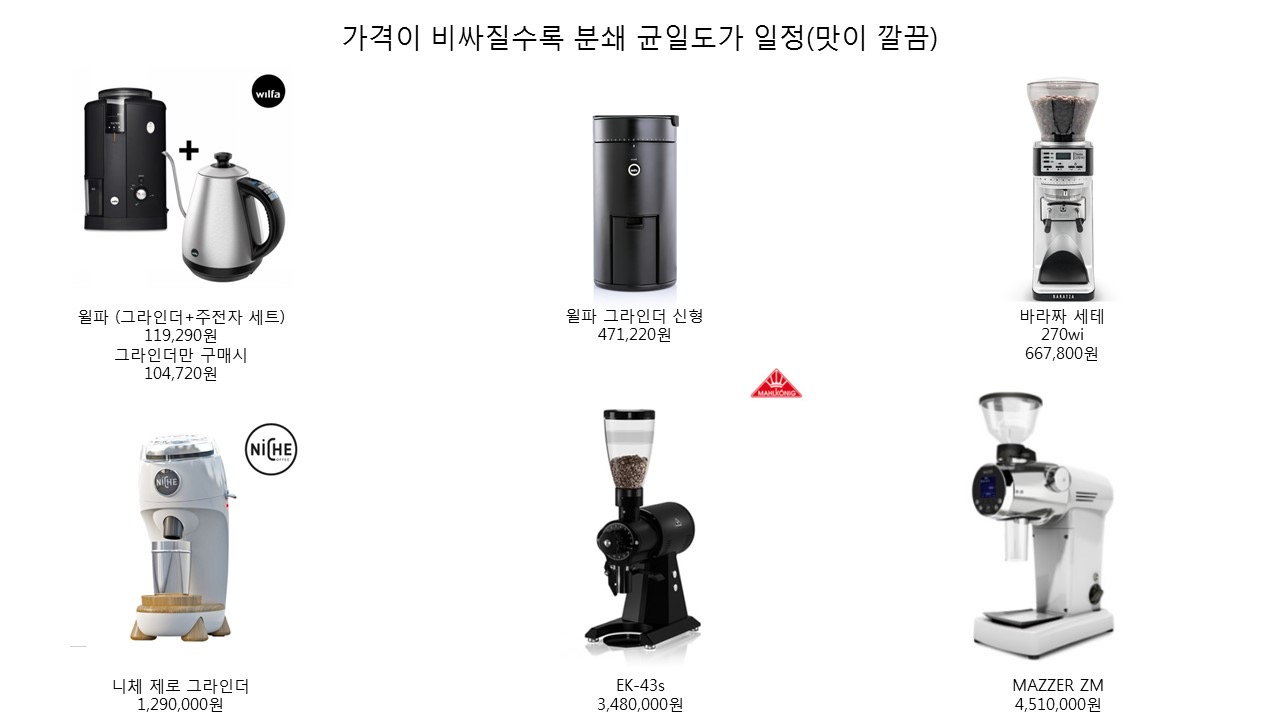
Investing in a grinder is the fastest shortcut to better coffee.
Kettle
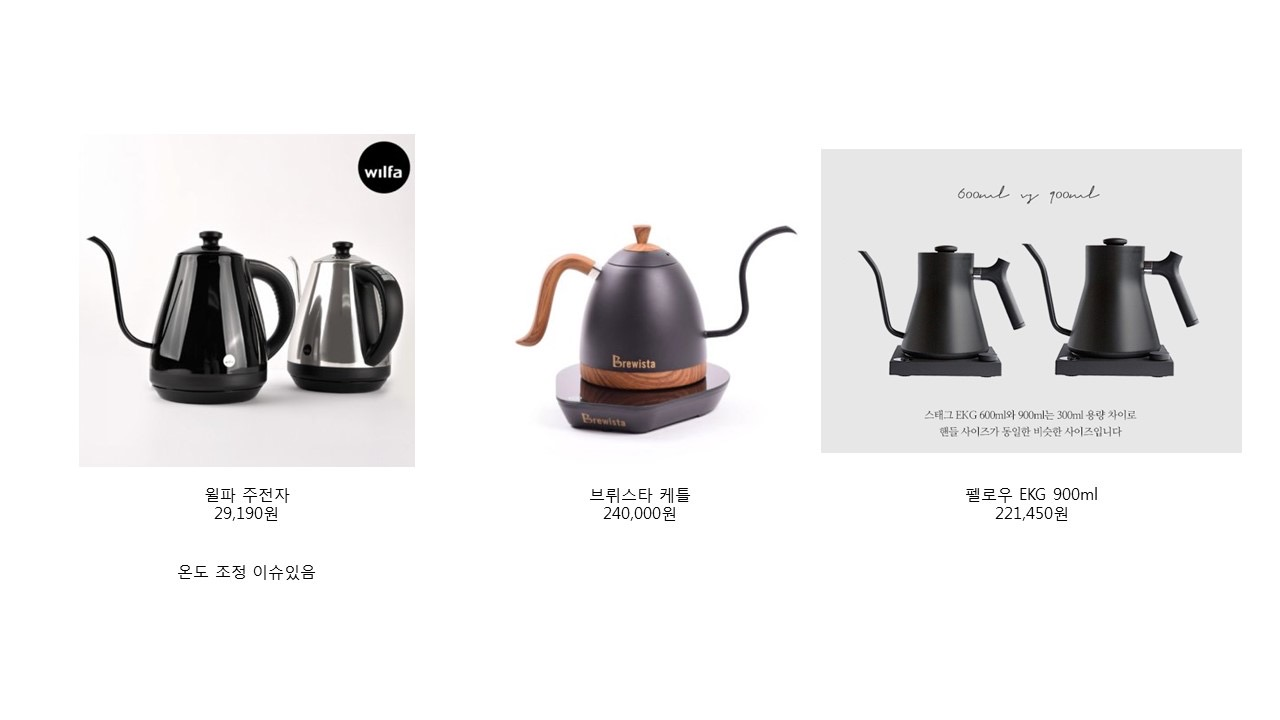
For pouring water. A gooseneck kettle is recommended.
- Thin spout for precise flow control
- Electric kettles allow temperature setting → no thermometer needed
- Recommended: Fellow Stagg, Hario Buono, Brewista
Scale
Essential for precise coffee-to-water ratios.
- Choose one with 0.1g precision
- Built-in timer is a bonus
- Recommended: Hario Drip Scale, Acaia Pearl
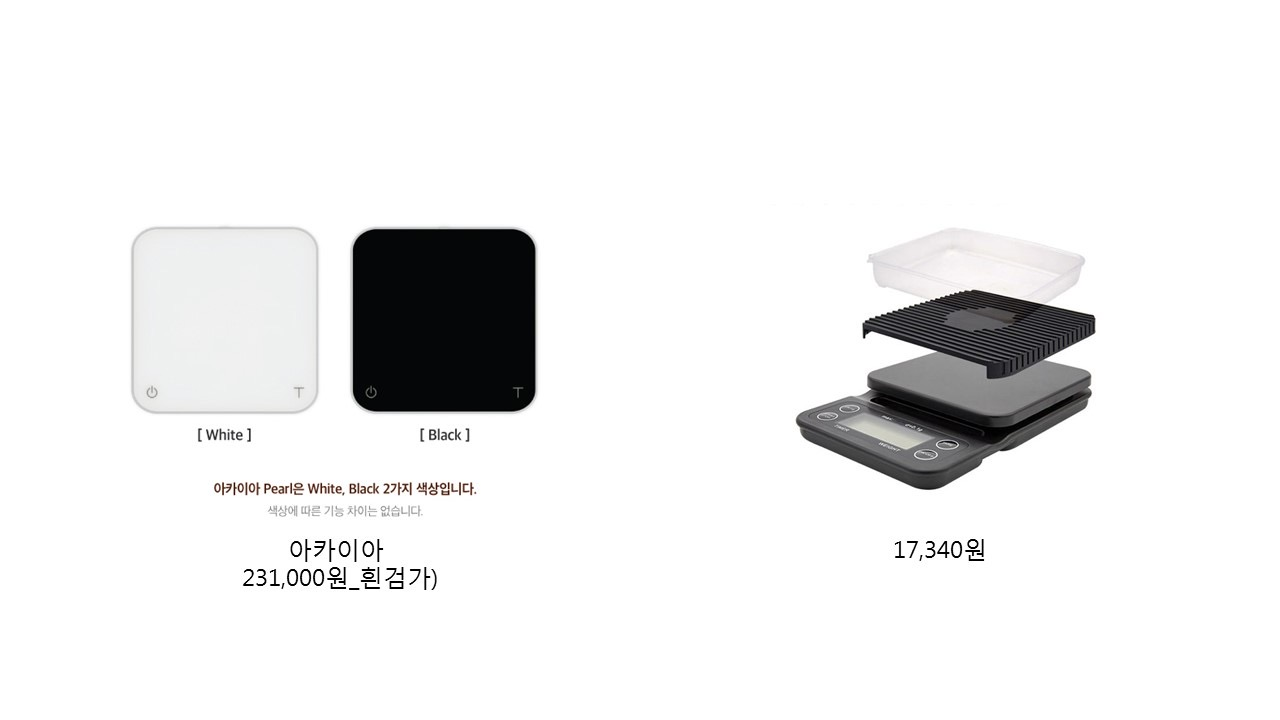
Coffee recipes are measured in grams, not scoops. "15g" is precise; "one spoonful" is not.
Next Chapter
Now that your tools are ready, it's time to learn about coffee beans. Single origins vs. blends, regional characteristics, processing methods — let's sharpen your bean-picking eye.