
Coffee is a complex flavor matrix. The same beans can taste entirely different depending on how you brew them, how hot the water is, or how you grind them. Let's explore how to unlock the flavors inside.
Many people drink coffee every day without knowing what flavors they're tasting. Coffee contains an enormous range of tastes and aromas — and learning to identify them changes the experience entirely.
You'll need: Grinder · Dripper & filter · Kettle (with temperature control or thermometer) · Scale · Coffee beans
No grinder? Ask a local café to grind your beans to a hand drip size when you buy.
Coffee's 4 Taste Components
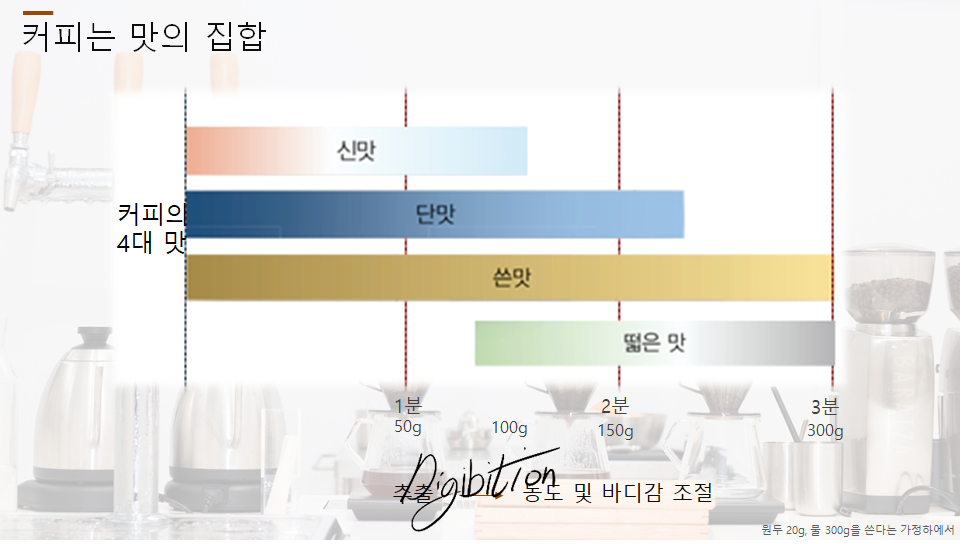
Coffee has 4 primary tastes: acidity, sweetness, bitterness (nutty), and astringency.
Coffee isn't something you can keep brewing indefinitely — beans have a finite amount of desirable compounds, and over-extraction leads to off-flavors (think of how a tea bag gets bitter if steeped too long).
The extraction sequence:
- Acidity → extracts first
- Sweetness → follows acidity
- Bitterness / Nuttiness → follows sweetness
- Astringency → emerges as the good stuff runs out
In practice, all flavors come out simultaneously. Astringency becomes dominant once the desirable compounds are depleted.
Flavor Extraction Practice
The best way to understand this is to taste it yourself.
Set up 2 cups plus all your tools. Use 20g of coffee and 90°C water.
- Rinse your dripper (removes paper taste and preheats)
- Add 20g of coffee to the dripper
- Pour 50ml of water; wait for it to drain, then taste that first cup
- Transfer it to the second cup, then pour another 50ml into the dripper
- Repeat 7 times
- Taste each fraction and mix the rest together to drink
You'll clearly experience the progression from bright acidity → sweetness → nuttiness → drying astringency.
Extraction Variables
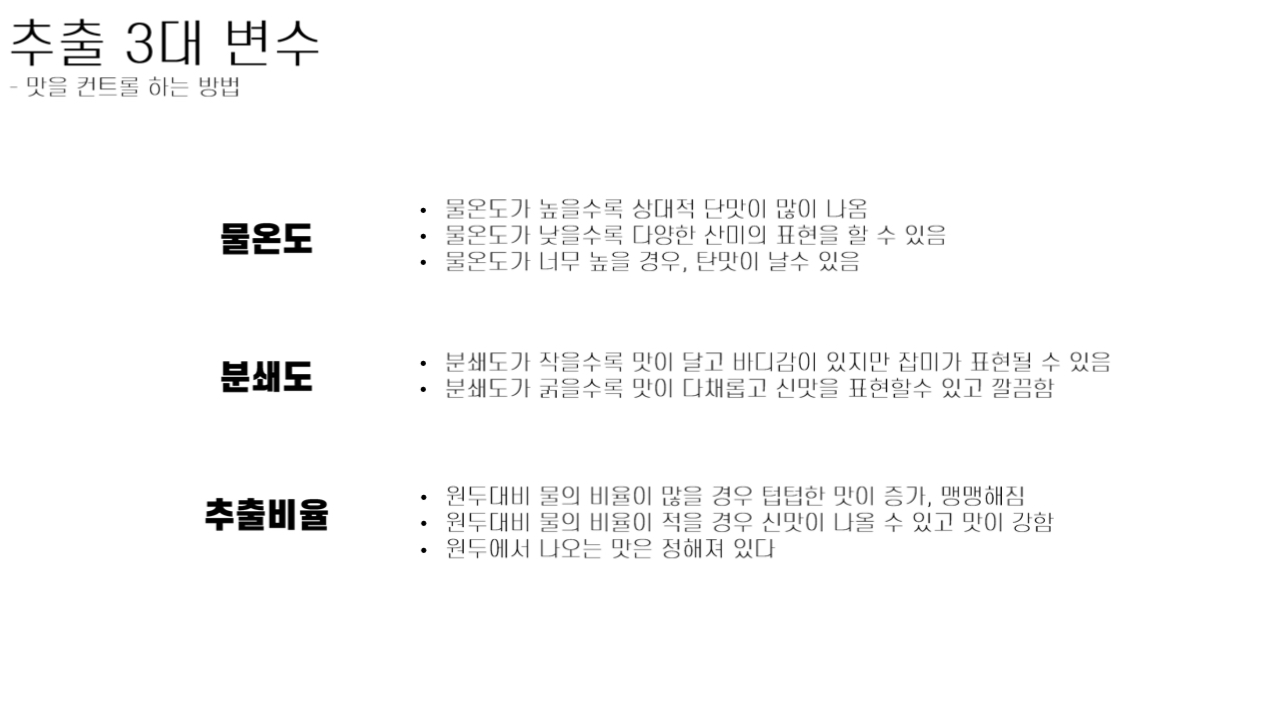
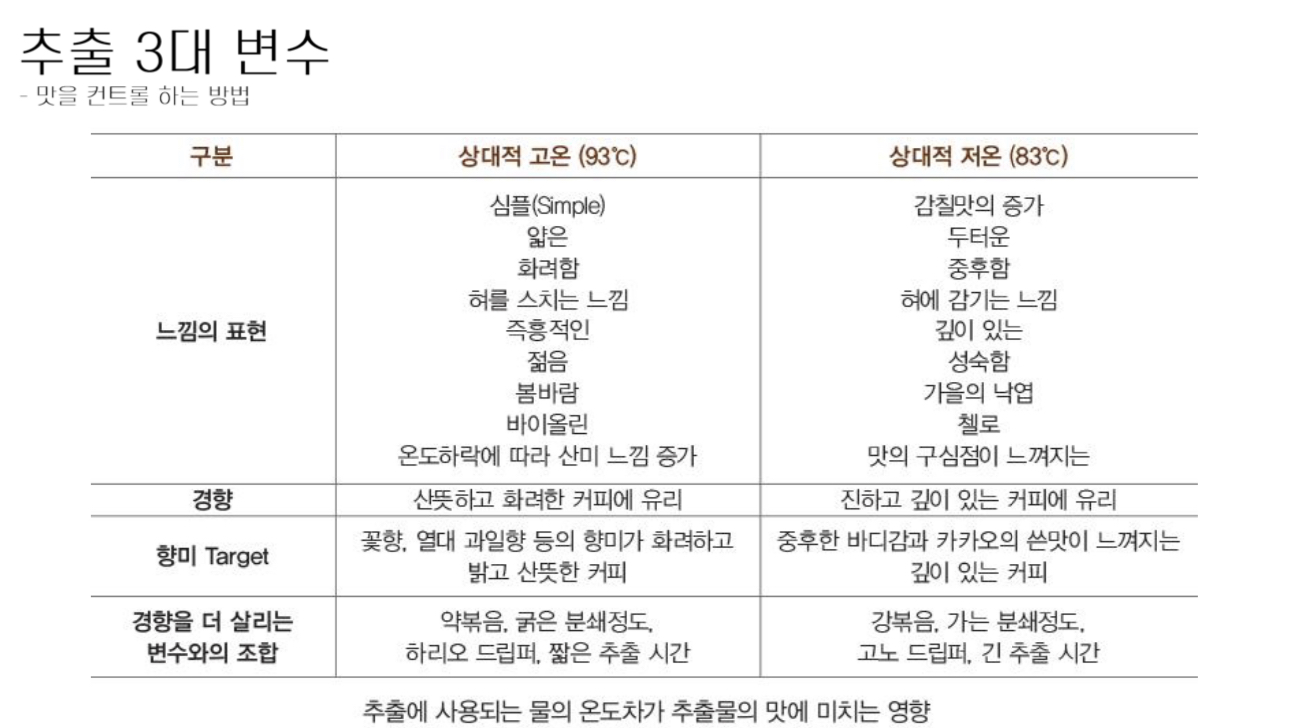
Three core variables control your brew:
Grind Size
Has the biggest impact on flavor. Finer grinds extract more (like table salt dissolving faster than rock salt in water).
- Light roast → pores not fully open → grind finer
- Dark roast → pores fully open → grind coarser, or adjust brew ratio
Water Temperature
93°C is the standard recommendation (SCA cupping protocol). Higher temperature = more extraction.
Brew Ratio
Standard for filter coffee: 1:15 (1g coffee to 15g water).
- Want it weaker → add more water or reduce coffee
- Want it stronger → add more coffee or reduce water
Cupping
Cupping is the simplest way to evaluate coffee: grind, add hot water, steep, and taste. No pouring technique needed. This is how roasters assess what a coffee actually tastes like.
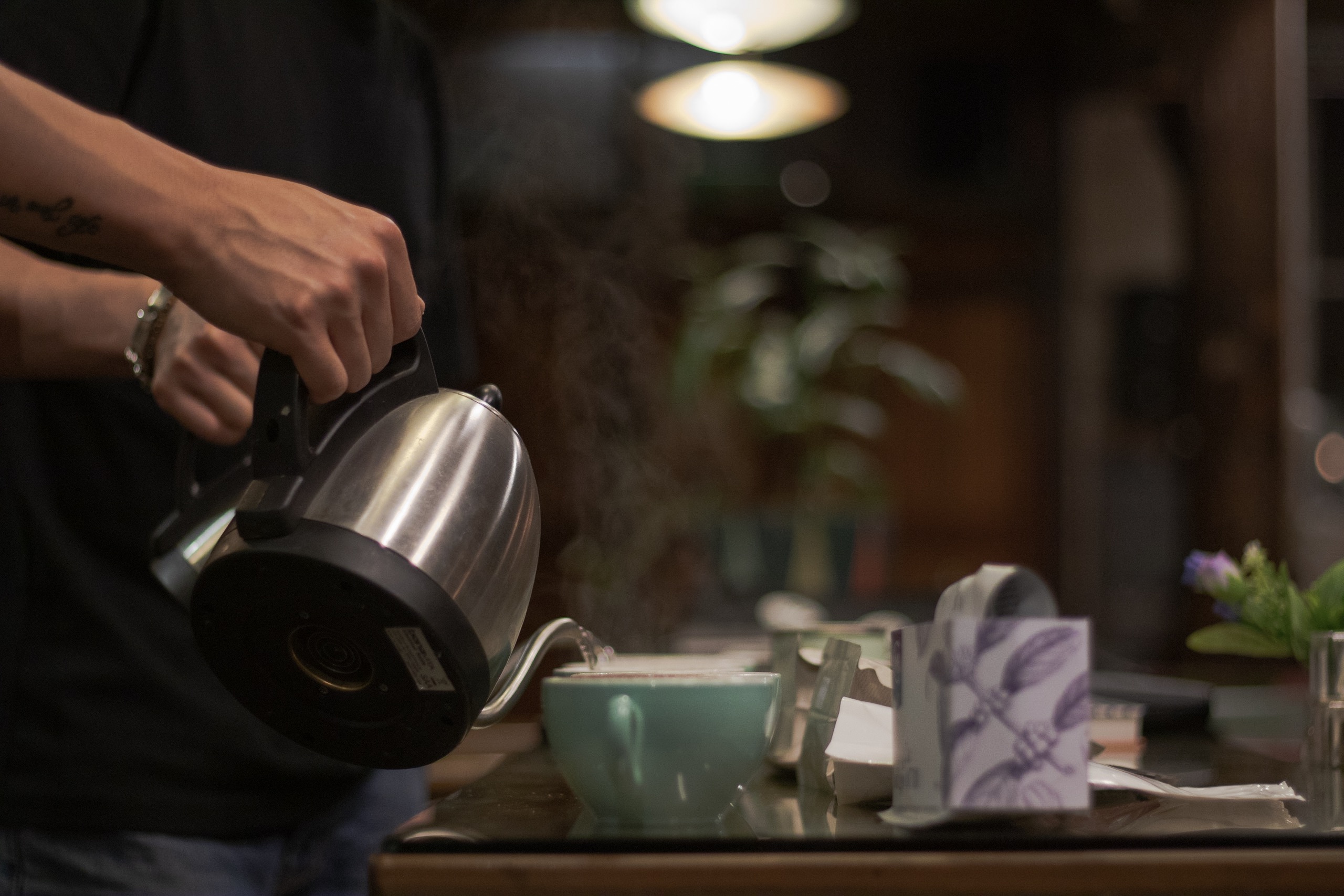
You'll need: 2 spoons, cups, 93°C water, a timer.
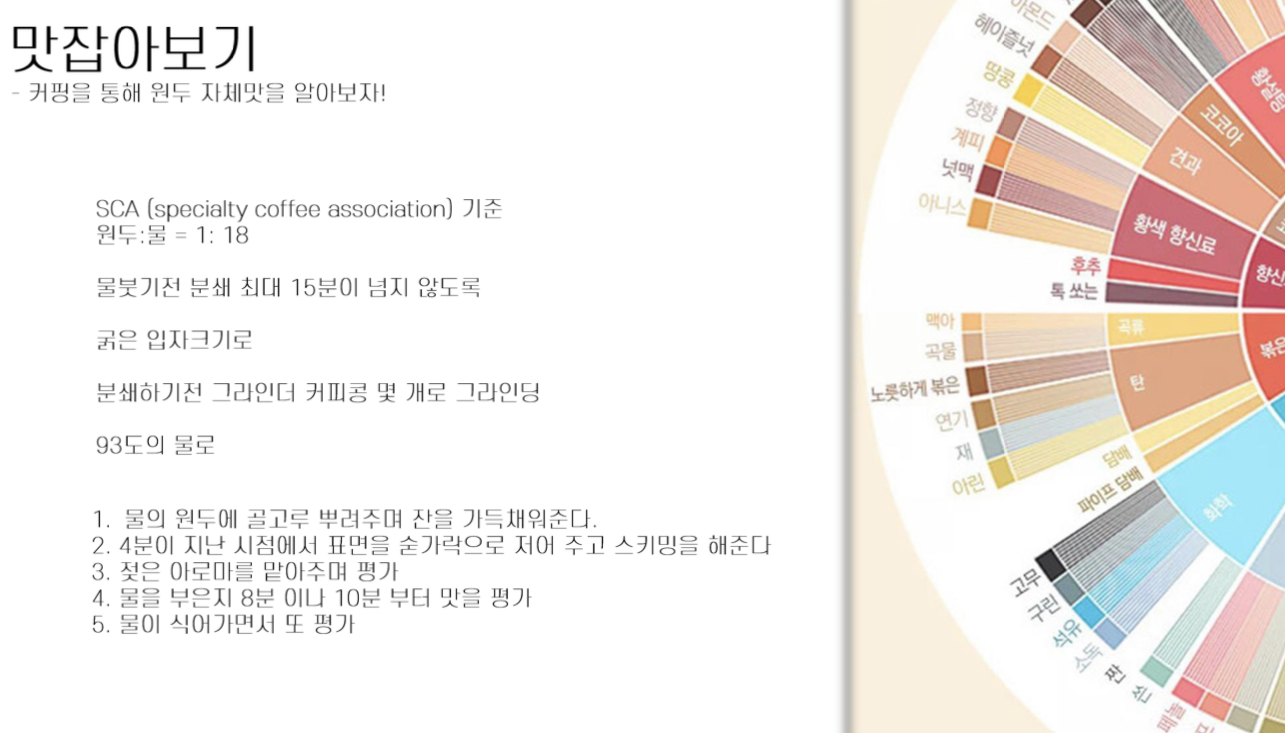
Preheat your cups first. This keeps the water temperature consistent during the brew.
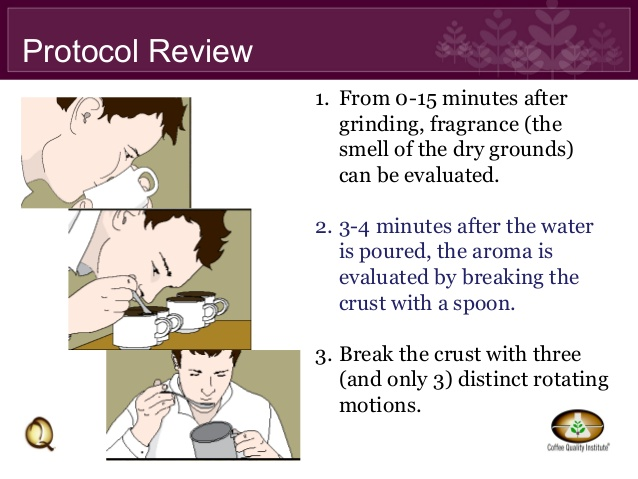
9-Step Cupping Process:
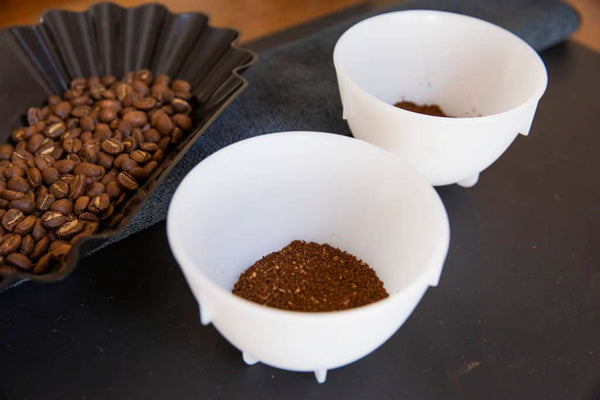
- Flush your grinder with 2g of coffee, then grind each sample coarsely (like coarse sea salt). Use 2 cups per sample.
-
Evaluate the dry aroma (fragrance) of each ground coffee
-
Heat water to 93°C (±2°C)
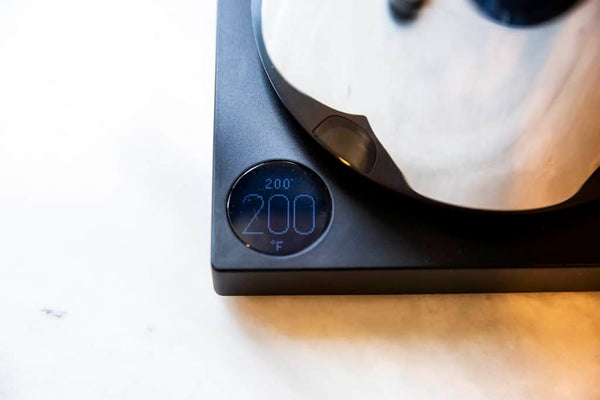
- Start timer, pour water (18× the coffee weight) into each bowl
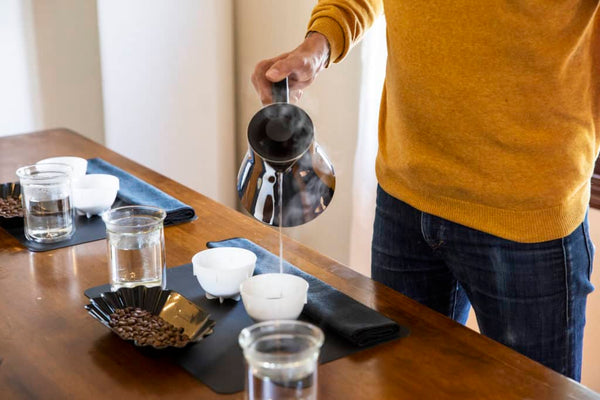
- Evaluate the wet aroma immediately after contact
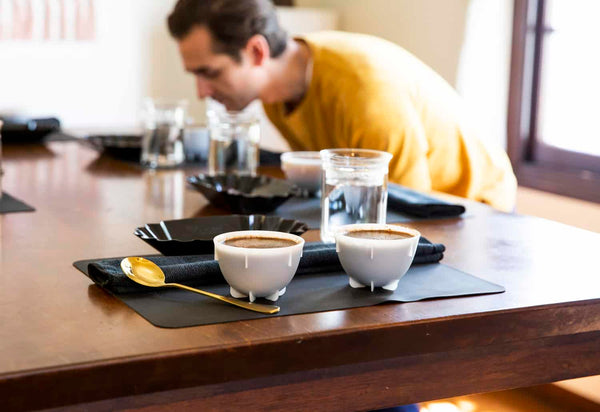
- At 4 minutes, break the crust by pushing grounds to the back of the bowl with a spoon; rinse spoon between each cup
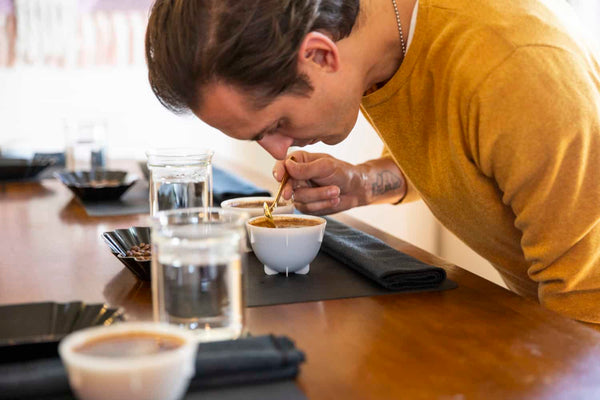
- Remove remaining grounds and foam with two spoons
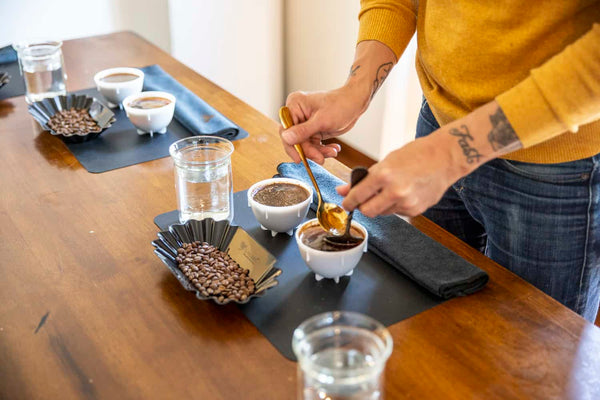
- Start tasting after 13–15 minutes (coffee is too hot to assess flavor before then)

- Slurp the coffee to spread it across your palate and detect the full range of flavors
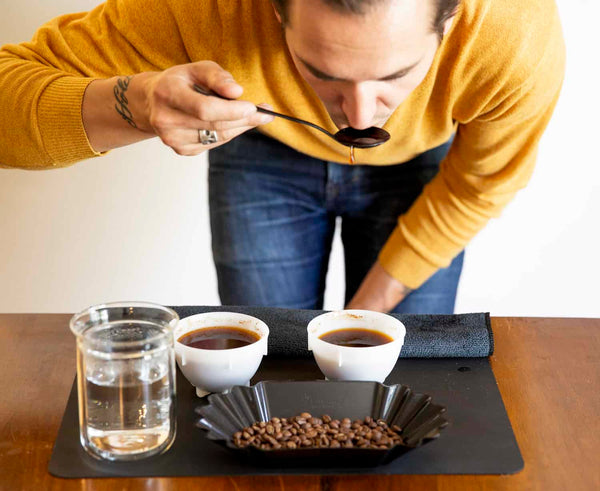
Rinse your spoon in a designated rinse cup between samples to prevent cross-contamination.
The Flavor Wheel
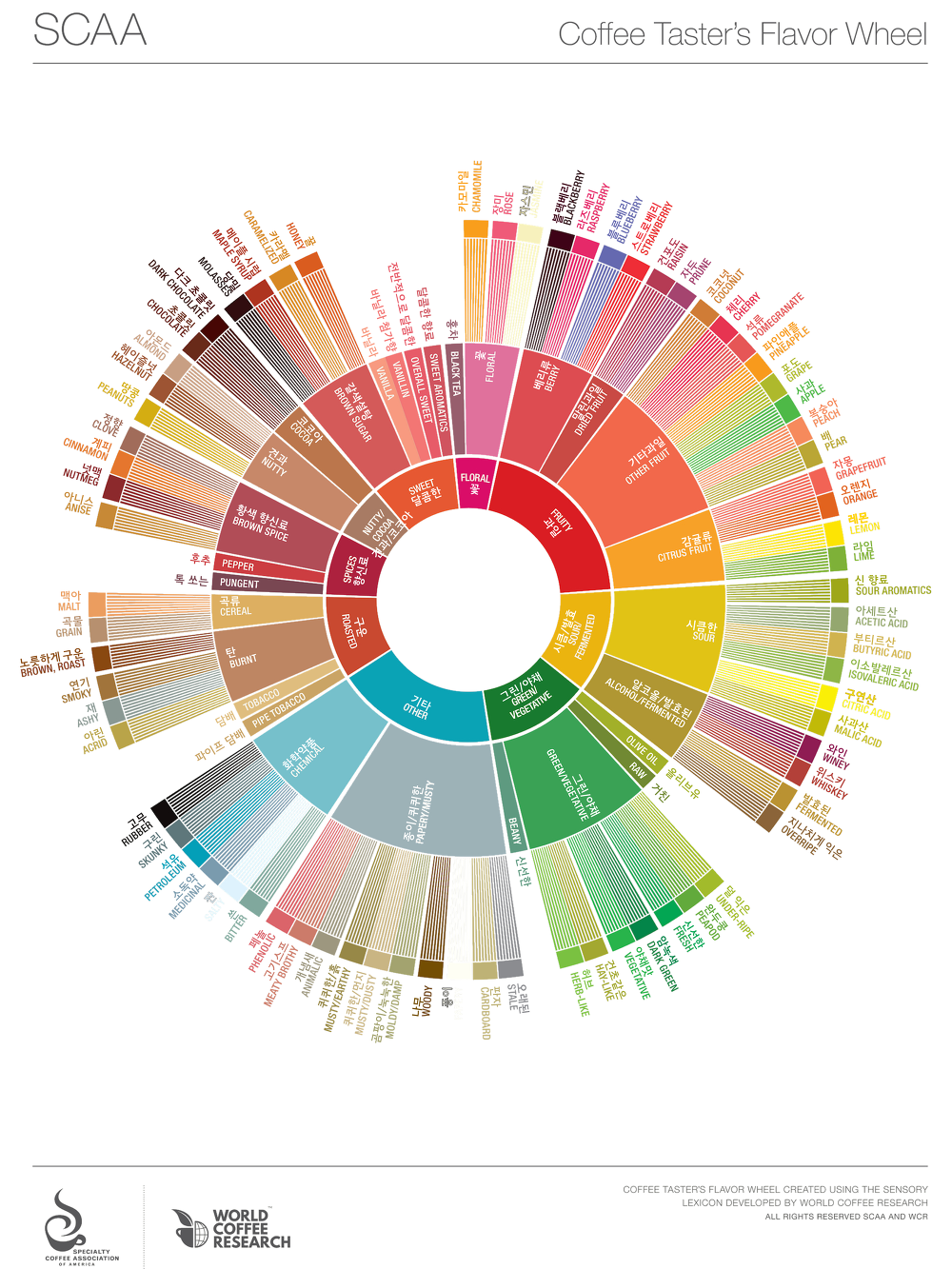
Source: cramadake.tistory.com/1055
The flavor wheel maps the full range of coffee aromas and tastes. Since everyone perceives flavors differently, treat these as reference points rather than absolutes. Comparing against familiar products (specific chocolates, fruits, teas) is a great way to develop your palate.
The flavor formula: Grind size × Water temperature × Extraction time
Under Extraction & Over Extraction
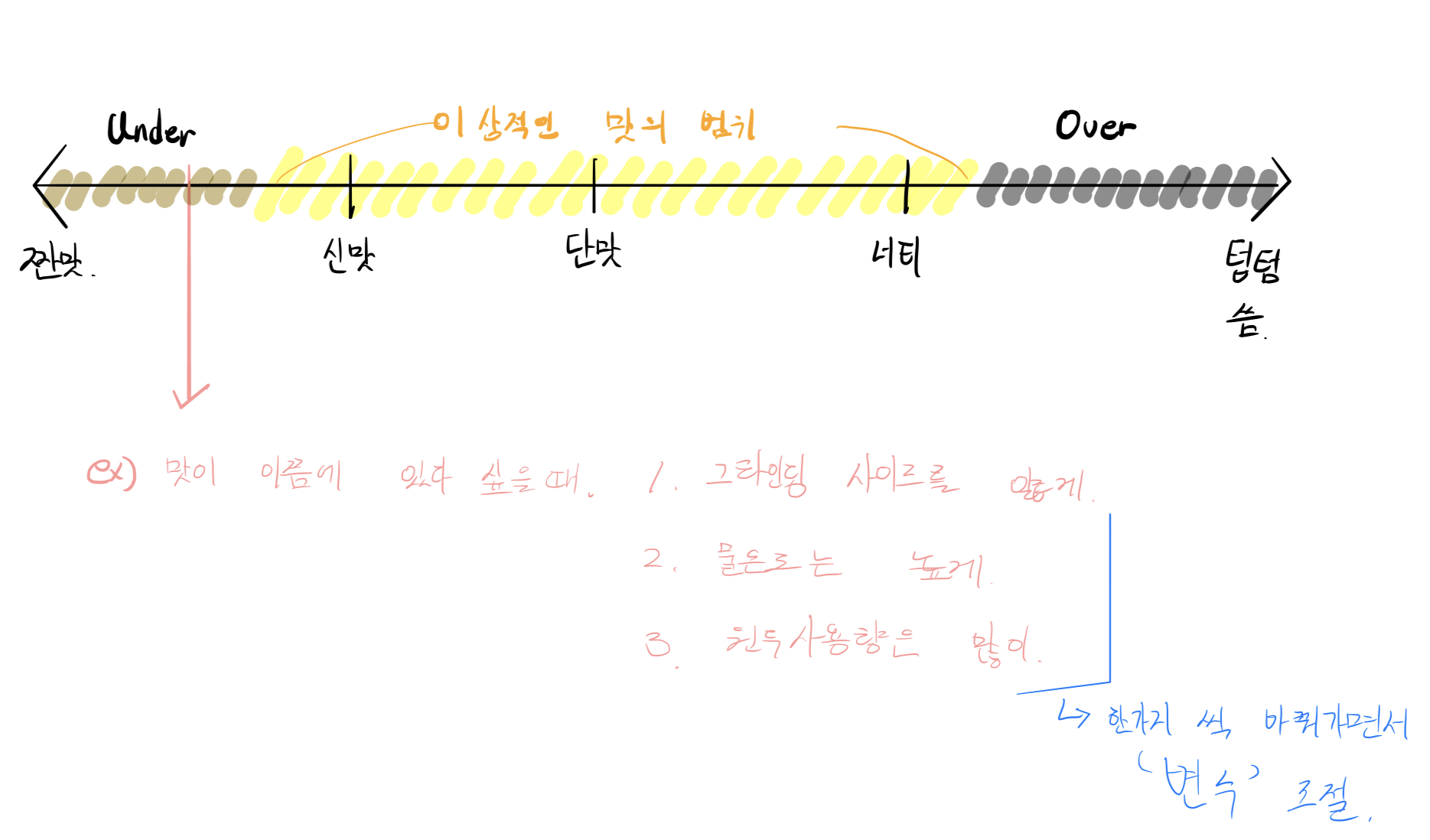
The sequence of compounds extracted: acidity → sweetness → bitterness → astringency.
- Under Extraction — Too few desirable compounds extracted. Results in sharp, salty-sour flavors.
- Over Extraction — Too many compounds extracted, including undesirable ones. Results in heavy mouthfeel and drying astringency.
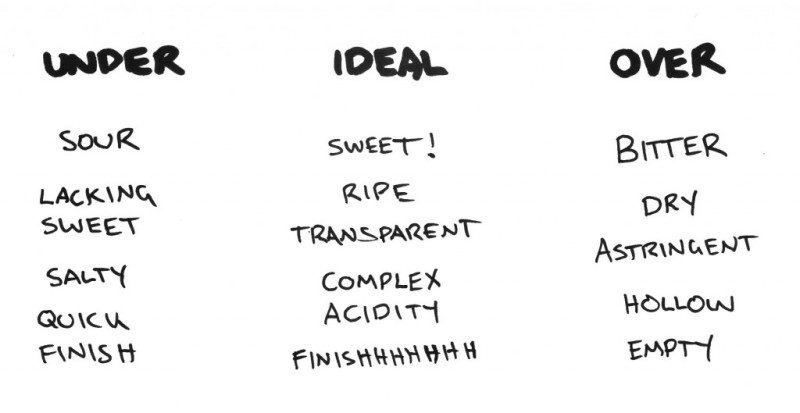
Coffee isn't like bone broth — you can't keep boiling it down. The goal is to extract just the right compounds at the right concentrations.
Finding Your Ideal Cup — Coffee Compass
To move from where you are to where you want to be, use the Coffee Compass.
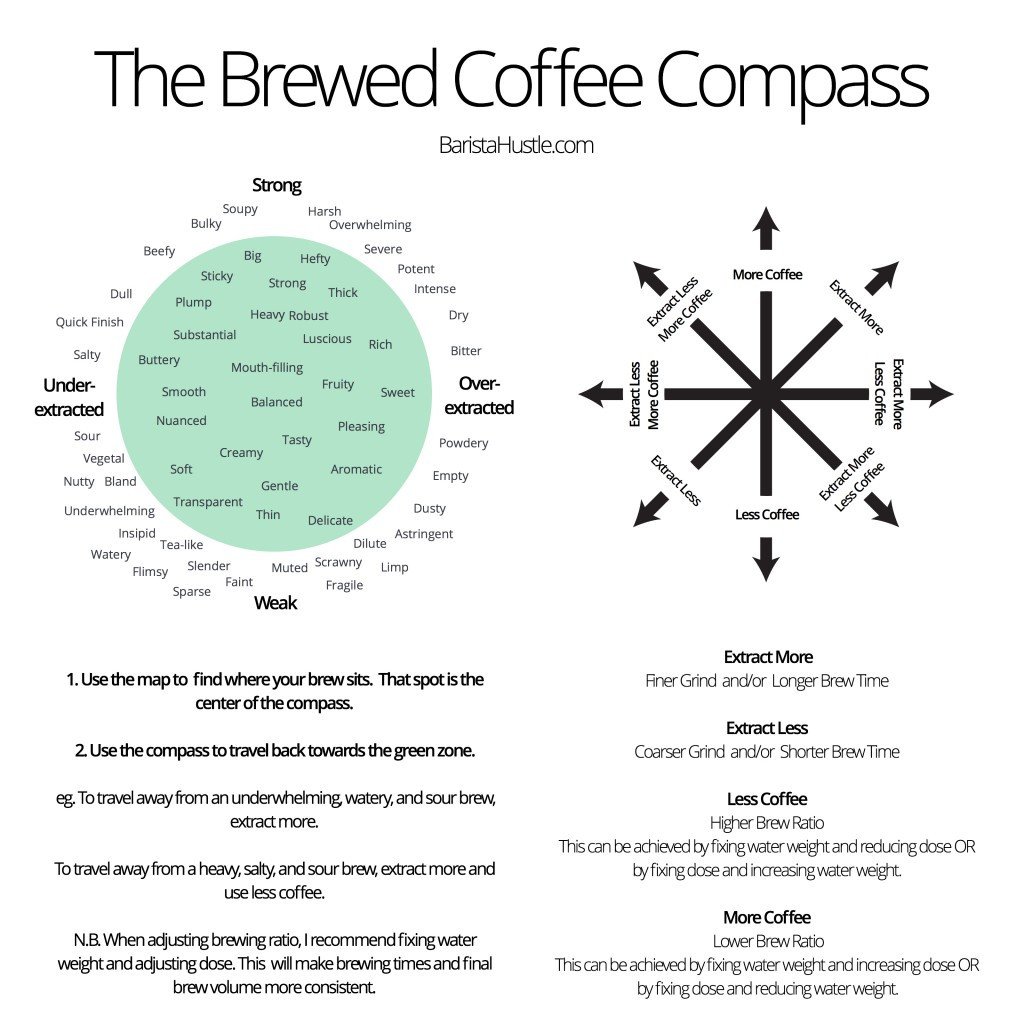
Locate where your current coffee sits on the compass, then find your target flavor. The compass shows which variables to adjust.
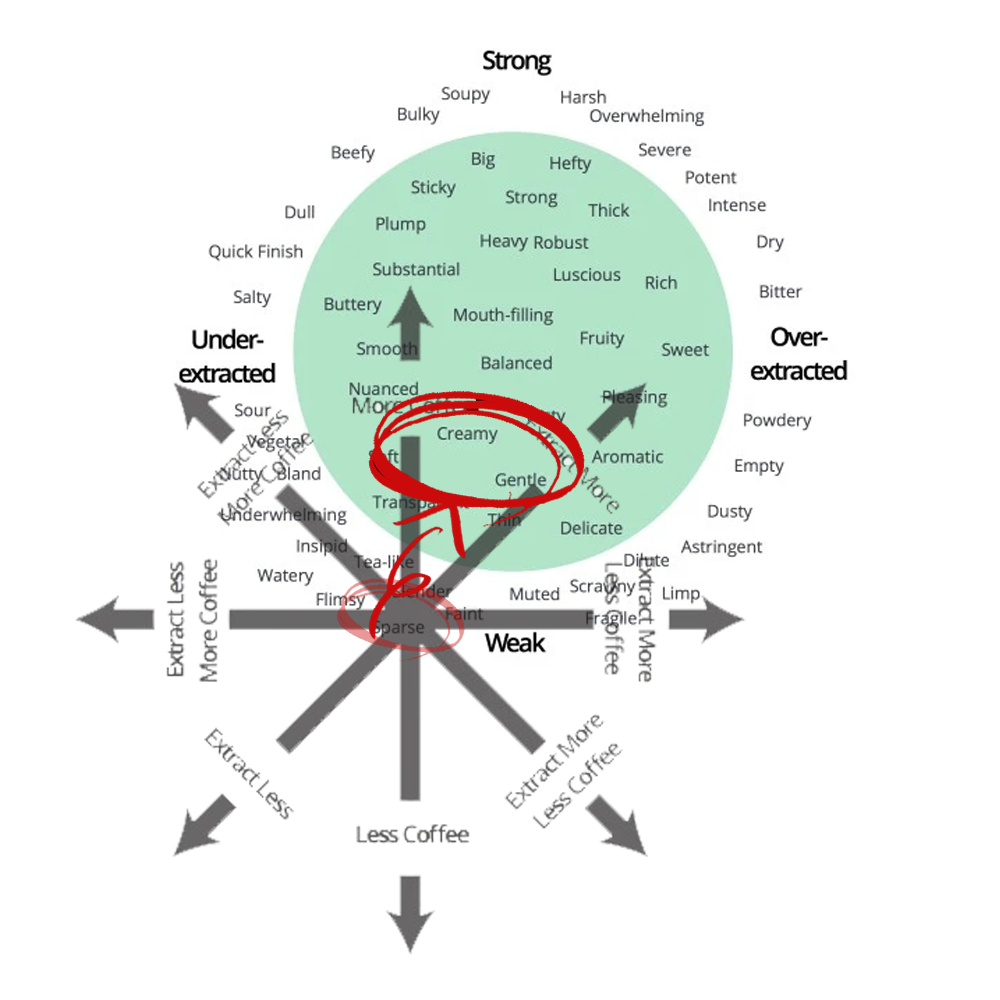
Example: Coffee tastes weak and empty (Weak zone) → Move toward More Coffee (lower brew ratio, i.e., more coffee) + Extract More (grind finer).
Key principle: Adjust coffee dose by 1g, grind size by 1 click, and brew ratio gradually. With experience, you'll detect differences from 0.5g changes and 1°C temperature shifts.
Brewing Reference Guide
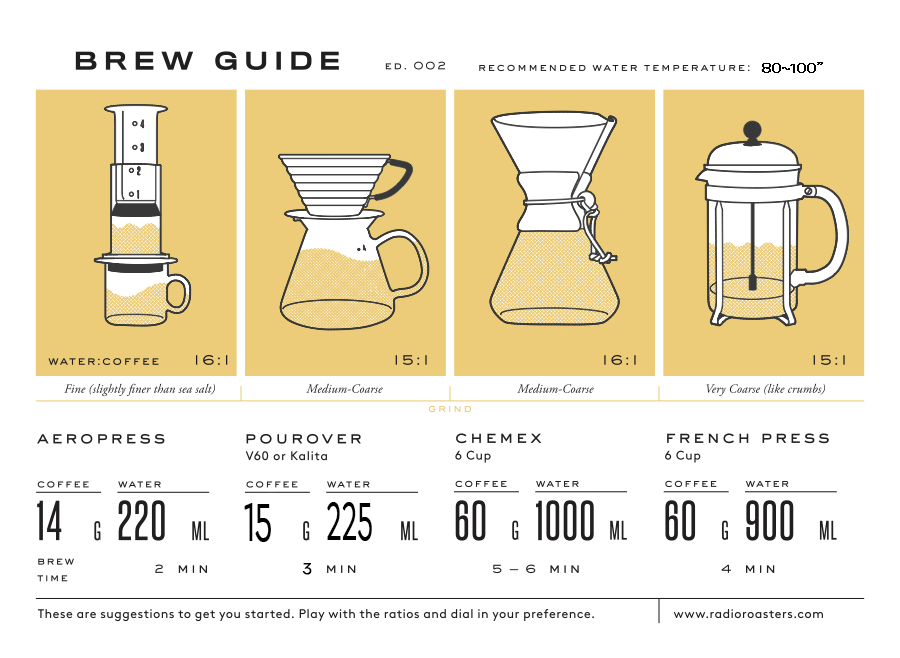
Standard Pour Over:
- 15g coffee → 225g water (1:15)
- For more volume: 20g → 300g (loosen grind slightly)
- Target extraction time: under 3 minutes (medium roast and above)
- Starting water temperature: 93°C
Light roasts may require finer grinding and longer extraction times due to denser bean structure.
Next Chapter
With taste-tuning under your belt, it's time to explore coffee grades and sustainability. What makes a coffee "specialty"? Why does sustainable sourcing matter for your cup?