

Before launch, lock down three things first: your .com and .kr domains, typo variants, and social handles. If someone else already registered the name, you can fight it through UDRP or the .kr dispute mediation process, but you need a trademark and proof of bad faith. On September 29, 2026, the day OpenAI announced Dots, dot.com redirected to a Grok info page from xAI. The case shows this problem clearly. The registration record for this domain had already changed two months before the announcement, on July 28.
Read this first in three lines
- Confirmed: Visiting dot.com sends you to x.ai/bot through a 301 redirect. MCPY checked this directly on September 30, 2026.
- Not confirmed: Whether xAI bought the domain knowing the name Dots, and how much real traffic this redirect captured. xAI has not given an official explanation yet.
- What to apply to your brand: Secure the domain, typo variants, and social handles before the launch name goes public, and turn on monitoring that alerts you to registration changes.
The facts confirmed on September 29 stop here
OpenAI announced Dots, an always-on agent, at DevDay on September 29, 2026. According to TechCrunch, it is built on GPT-6 Astra and opens first to ChatGPT Pro and Business Premium users. MCPY could not confirm from official documents whether it is available in Korea.
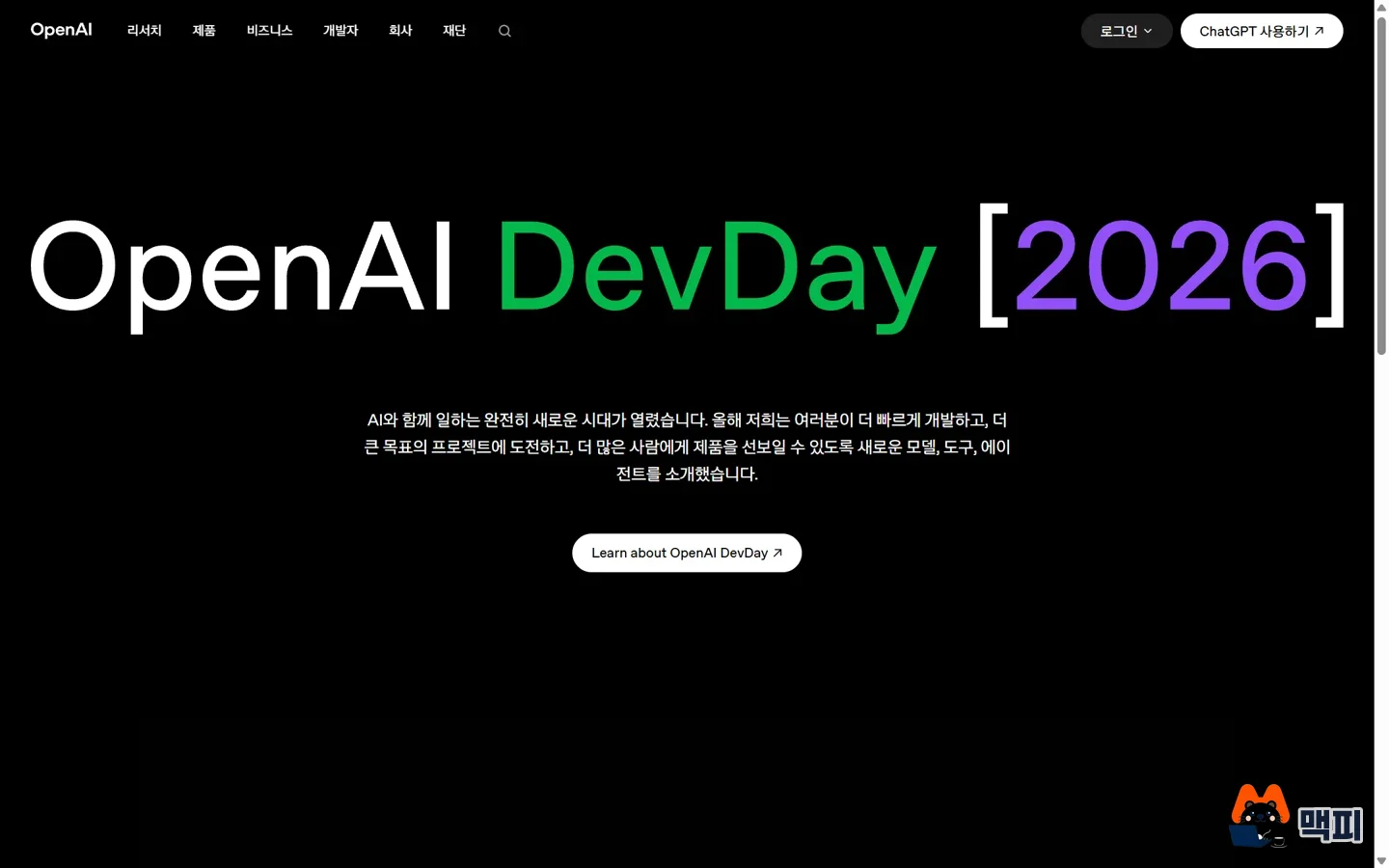
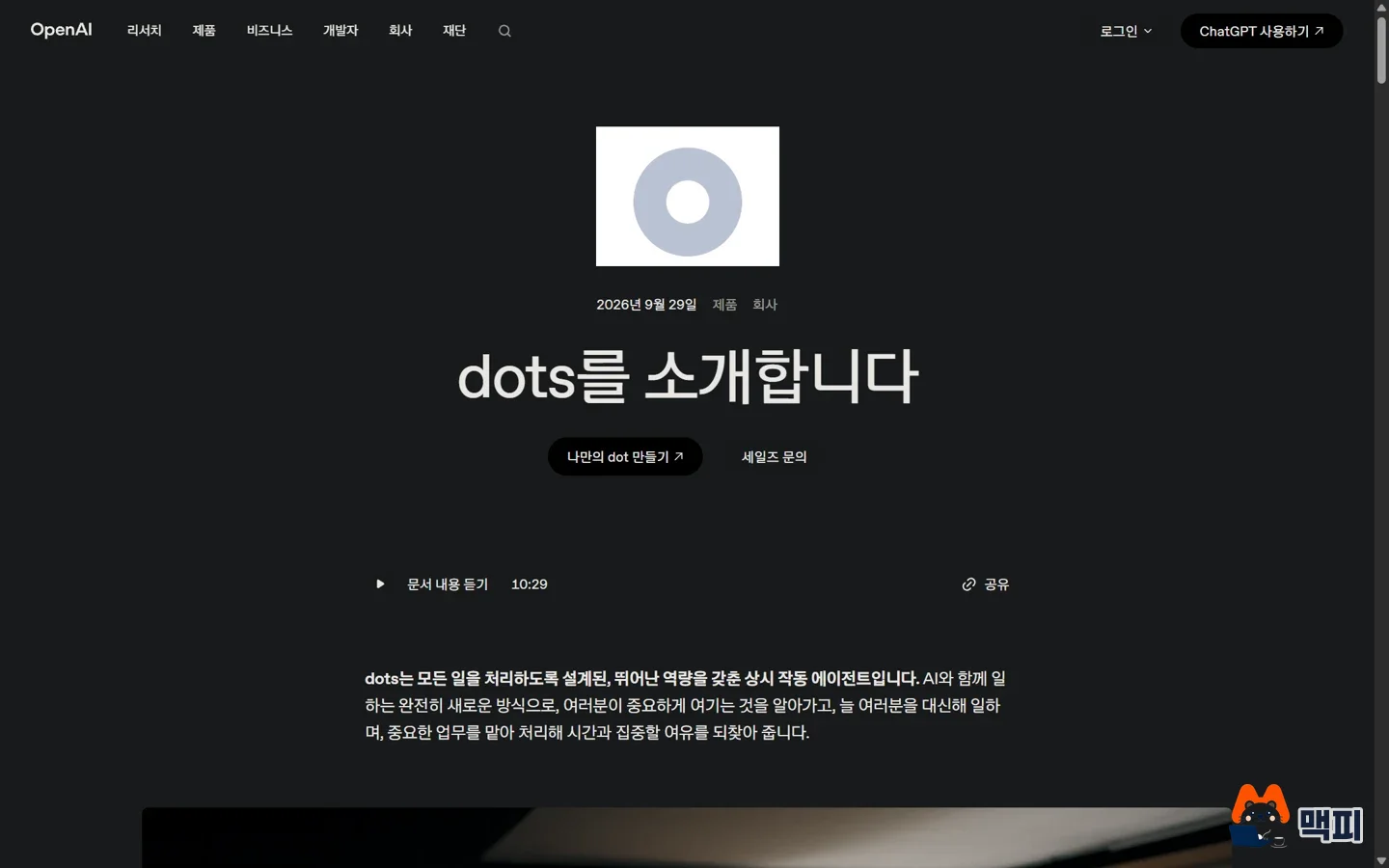
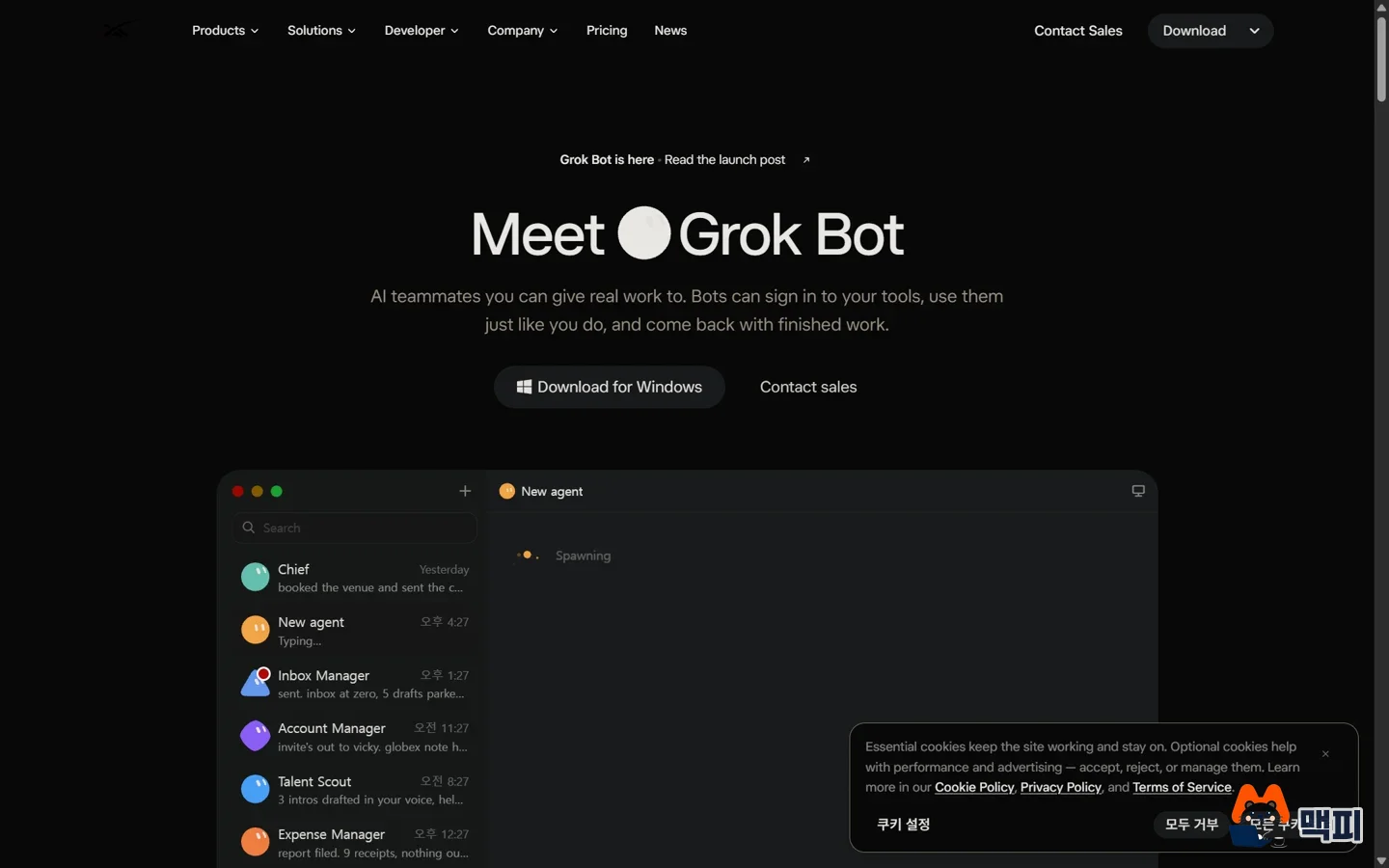
That evening, dot.com became a hot topic on X. People said that typing dot.com into the address bar took you to a Grok app info page. One point is easy to mix up here. The product name is dots, and the domain that redirects is dot.com, not dots.com. It differs by one letter.
Here is what MCPY confirmed directly. dot.com returns an HTTP 301 (permanent move) response and redirects to https://x.ai/bot . A 301 redirect is a setting where the server sends you to B when you type A in the address bar. In Verisign's public registration data (RDAP), the first registration date of dot.com is June 22, 1994, and the last change date is July 28, 2026. The registrant name did not appear in the response MCPY queried. The press based its claim that xAI owns the domain on WHOIS records, and MCPY did not see those records directly.
Some points remain uncertain. TechCrunch wrote that it asked xAI for comment but got no reply. For dots.com, TechCrunch wrote that a long-defunct company owns it, but when MCPY visited, a page titled Dots opened.
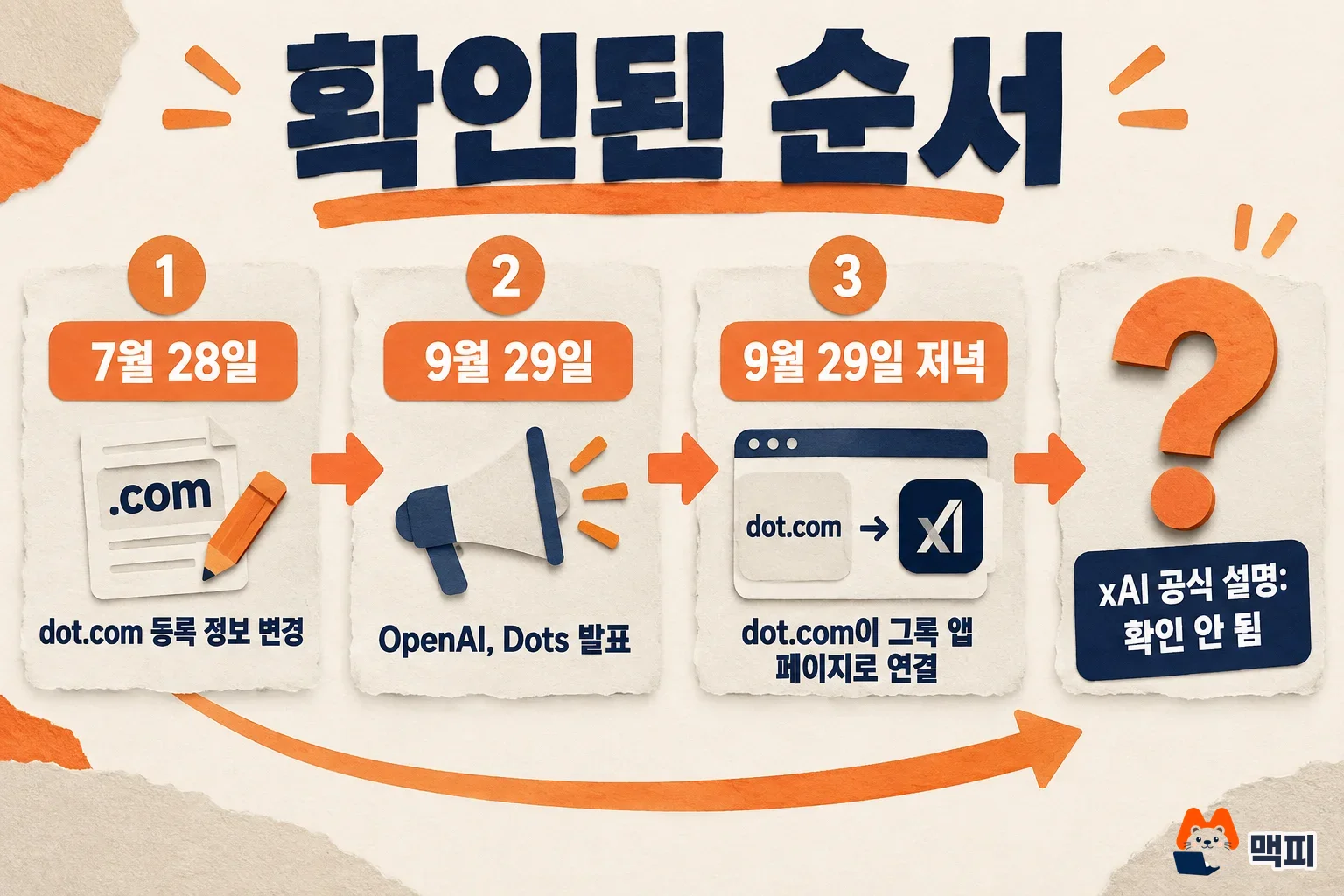
The story that "someone bought the domain right after the announcement and hijacked it" does not fit the timeline. The registration change was on July 28 and the announcement was on September 29. However, MCPY cannot tell whether the change date is when the registrant changed or when some other setting changed. The press reports that the domain moved to xAI in July.
Announcement-riding domains work because of the address bar
When people hear a new product name, they often type it into the address bar before the search box. It is a habit of trying "name.com". Right after an announcement, this direct typing and brand searching spike within a day or two. If another company holds that address, that company receives the visitors.

The press offered two explanations. One is that xAI saw dot as a typo of bot and bought the domain to catch visitors who mistype. The other is that xAI knew about the announcement, bought the domain early, and used it to troll. TechCrunch pointed out that xAI does not own other typo domains such as bot.com or vot.com. Which explanation is right has not been confirmed. dot.com is also a valuable address on its own, because it is a common word.
MCPY believes it cannot say how much traffic moved in this case. Only the owner knows the access statistics. The only certain thing is that within a day of the announcement, this address became the subject of articles in several outlets.
Domains that resemble someone else's trademark are treated differently by law and by ad policy
The international standard for domain disputes is ICANN's UDRP (Uniform Domain-Name Dispute-Resolution Policy). When a trademark holder files a complaint, a review body decides whether to transfer or cancel the domain. The complainant must prove all three of the following.
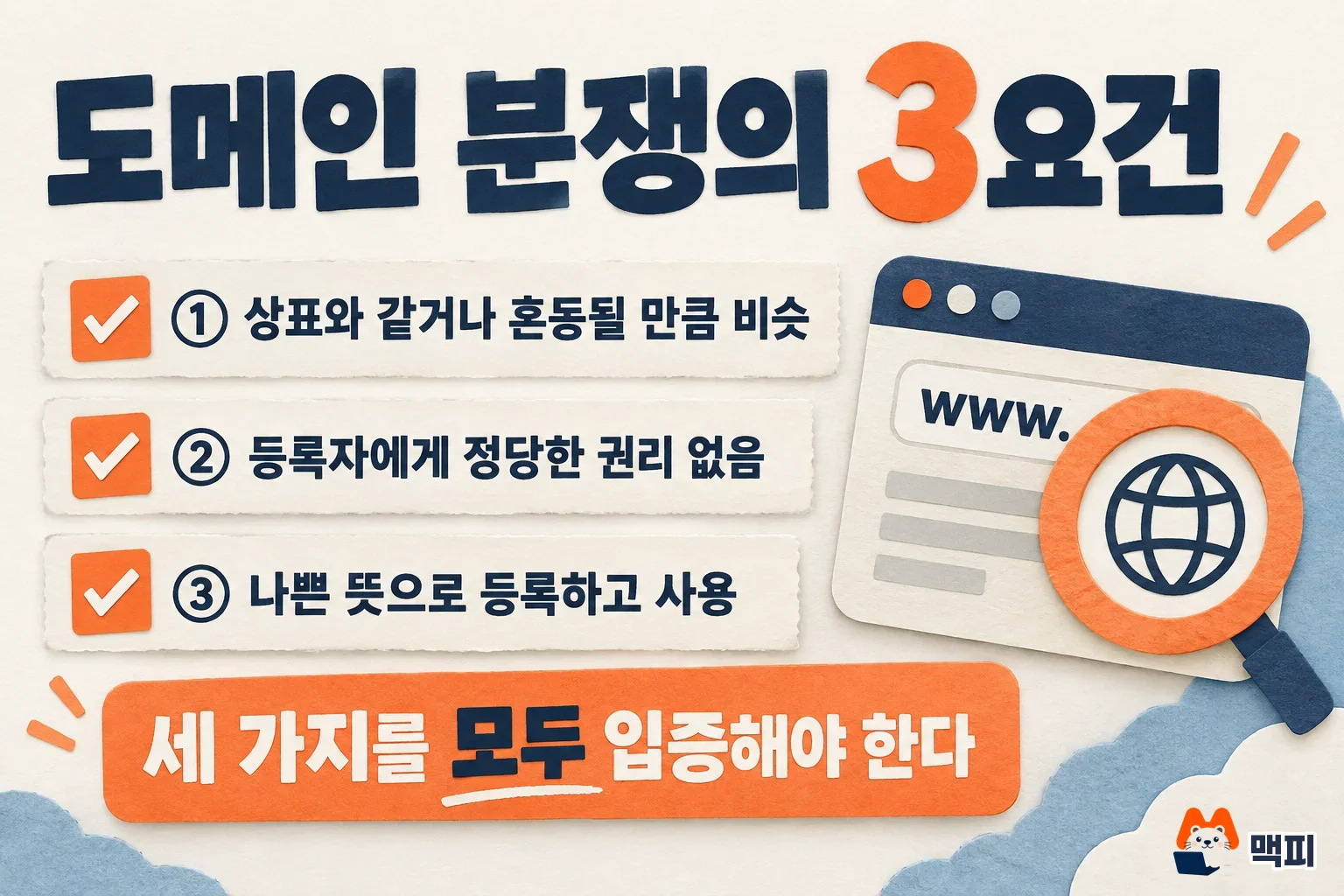
- Relation to the trademark: The domain must be identical or confusingly similar to the complainant's trademark.
- Rights: The registrant must have no legitimate right or interest in using the name.
- Bad faith: The domain must have been registered in bad faith and used in bad faith. Typical cases are buying it to resell to the trademark holder, or buying it to stop the trademark holder from registering it.
Apply this to the case and the hard points show up. This is MCPY's interpretation and not legal advice. Because the registration change came before the announcement, it is not easy to prove "registered in bad faith knowing the announcement." There is also room to argue over whether dot.com is similar enough to Dots to cause confusion.
In Korea, the Unfair Competition Prevention Act covers registering or using a domain that is identical or similar to someone else's mark without proper right. .kr domains are managed by KISA (Korea Internet & Security Agency), and disputes are handled by the Internet Address Dispute Resolution Committee. Ads are a separate matter. Google Ads does not restrict bidding on a trademark as a keyword, but using someone else's trademark in ad copy can be restricted if the trademark holder files a complaint. If you plan to run ads on announcement search terms, check your ad copy first.
Before launch, lock down these six things first
Once the name goes public, the race to grab it begins. So finish before it is revealed. Also remember that if you register a domain or issue an HTTPS certificate under a new product's codename, the record stays in Certificate Transparency logs where outsiders can see it. That means the name can leak from the moment of registration.
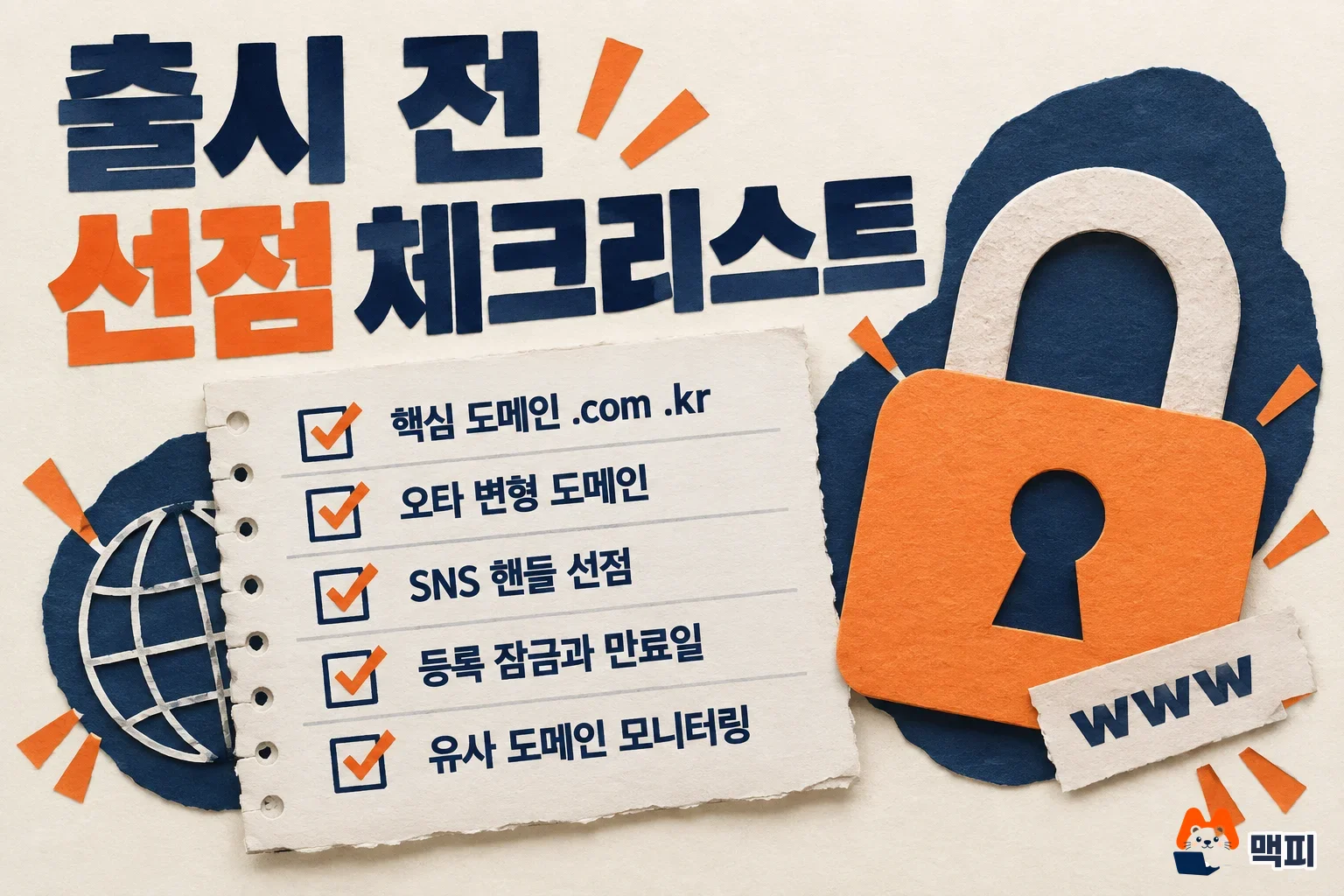
- Core domains: Keep .com and .kr (.co.kr if possible) together at the same registrar.
- Typos and variants: Review hyphenated versions, plurals (such as dots with an s), and the Korean phonetic spelling (romanized as "dachheu"). Buying all of them gets expensive, so pick the two or three most likely to be confused with the product name.
- Social handles: Check and claim the same name on X, Instagram, YouTube, Kakao Channel (Korea's main messenger business channel), and Naver Blog and Cafe (Naver is Korea's largest search engine).
- Registration protection: Turn on the registration lock (transfer lock), set auto-renewal, and put the expiry date on the team calendar. Do not register only under one person's personal email.
- Trademark filing: The first thing you need in a dispute is a trademark. Before buying the domain, search KIPRIS (the Korean trademark database) to see whether the name is already filed.
- Monitoring: Use a service that alerts you to new domain registrations similar to your product name, or check Certificate Transparency log search (crt.sh) weekly.
Korean brands should check .kr and Naver search
Korean users often type a brand name into the Naver search box instead of the address bar. So do not stop at securing the domain. Search your brand name on Naver and check whether someone else's page or ad shows up first. MCPY could not confirm Naver Search Ads' policy on brand-related keywords this time, so ask your ad account manager directly.
Eligibility and procedures for .kr domains differ by domain type. Check with your registrar and the KISA guide. If someone else already holds the .kr, you can file for mediation with the Internet Address Dispute Resolution Committee based on your trademark rights. Results vary by case.
Four common mistakes
- Buying only the product name and missing typos. In this case too, the problem was dot, not dots.
- Buying after the announcement. Right after an announcement, someone may already have registered it.
- Registering under an individual, so the domain leaves with them when they quit. Register domains under a company account.
- Believing a dispute is easy to win. UDRP requires proof of all three elements, and it is especially hard for a common-word domain registered in advance.
MCPY does not conclude that this case was a "hijacking." What is confirmed is the redirect and the date of the registration change. Intent and traffic are not confirmed. If your next launch is coming up, open your domain management screen today and check your .kr registration and expiry date once.
Sources referenced
- TechCrunch, OpenAI launches Dots, its bubbly agentic avatar (2026-09-29)
- TechCrunch, The internet is convinced Elon Musk's xAI trolled OpenAI's Dots launch (2026-09-29)
- Verisign RDAP, dot.com registration data (queried 2026-09-30)
- ICANN, Uniform Domain-Name Dispute-Resolution Policy
- WIPO, domain dispute resolution guide (UDRP procedure)
- Korea Law Information Center, Unfair Competition Prevention and Trade Secret Protection Act
- Boannews, KISA expands scope of internet address dispute mediation
- Google Ads Help, trademark policy
Found this useful? Share it
Latest posts
Kakao Share Thumbnail Not Showing? Here's the Fix (JavaScript SDK 2025)
Learn why Kakao Share thumbnails don't appear even with a valid imageUrl, and fix it using scrapImage to convert your URL into a KAGE CDN URL. Step-by-step guide.
How to Generate CRM User Manuals in 20 Minutes with Claude Code Sub-Agents
Learn how Claude Code sub-agents can analyze your CRM codebase and auto-generate user manuals and visual guidebooks in just 20 minutes. See the real-world results.
GEO Generative Engine Optimization: The Complete 2025 AI Marketing Strategy Guide
Learn what GEO (Generative Engine Optimization) is, how it differs from traditional SEO, and discover 5 proven AI marketing strategies to get cited by AI search engines in 2025.
Related projects
Get new posts by email
Insights on marketing, analytics, and dev, delivered to your inbox.