
CRM (customer relationship management) is a system that records and tracks the information and interactions of existing and potential customers in one place, so you can use it for sales, marketing, and customer support. IBM describes CRM as an integrated technology that organizations use to document, track, and manage relationships and interactions with customers. For marketers, CRM is a tool that uses customer data to decide "who gets which message, and when." The Kakao (Korea's dominant messaging app) sending rules below are as of October 3, 2026. They are operating rules that apply now, not news about an amendment with a future effective date.
CRM meaning and what it does
Salesforce says CRM covers four areas: sales, marketing, customer service, and commerce. The sales team tracks deal stages and expected revenue. The marketing team manages campaigns and customer journeys. The service team checks inquiry history and responds. When this data lives in one place, teams are less likely to tell the same customer different things.
Customer management software and membership management software serve a similar purpose. You can start with a single spreadsheet. But once your customer base grows and you need to view purchase history and inquiry history together, the need for a CRM becomes easy to feel.
CRM types: operational, analytical, and collaborative
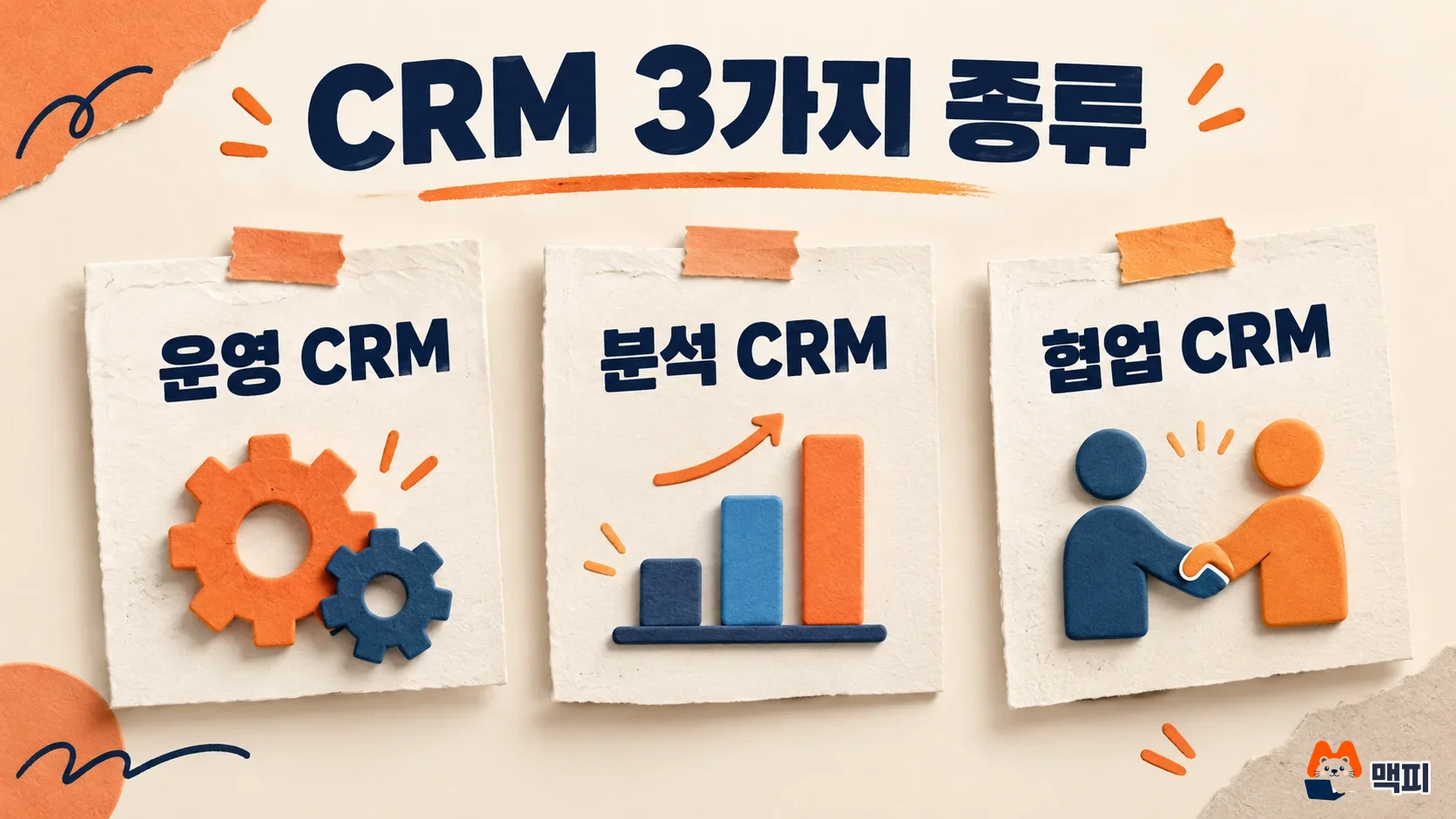
IBM divides CRM into three types: operational CRM, analytical CRM, and collaborative CRM. Which type to look at first depends on the problem your team is trying to solve.
| Type | What it does (per IBM) | Look at it when (example) |
|---|---|---|
| Operational CRM | Automates the sales, marketing, and service work that touches customers directly. Personalized promotional campaigns are also built here. | You want to automate repetitive work such as welcome messages or reorder reminders |
| Analytical CRM | Organizes accumulated customer data and turns it into insights you can use to improve. | You want to know which customers churn and which customers buy a lot |
| Collaborative CRM | Lets multiple teams share customer information. | Sales, marketing, and service each know the same customer differently |
If your team is automating marketing for the first time, start with operational CRM. Analysis only becomes meaningful after you have collected customer data to act on.
4 steps to do CRM marketing
CRM marketing means splitting your audience with customer data and sending a different message to each group. The order below is not an official procedure. It is the general operating order that CRM tools commonly use.
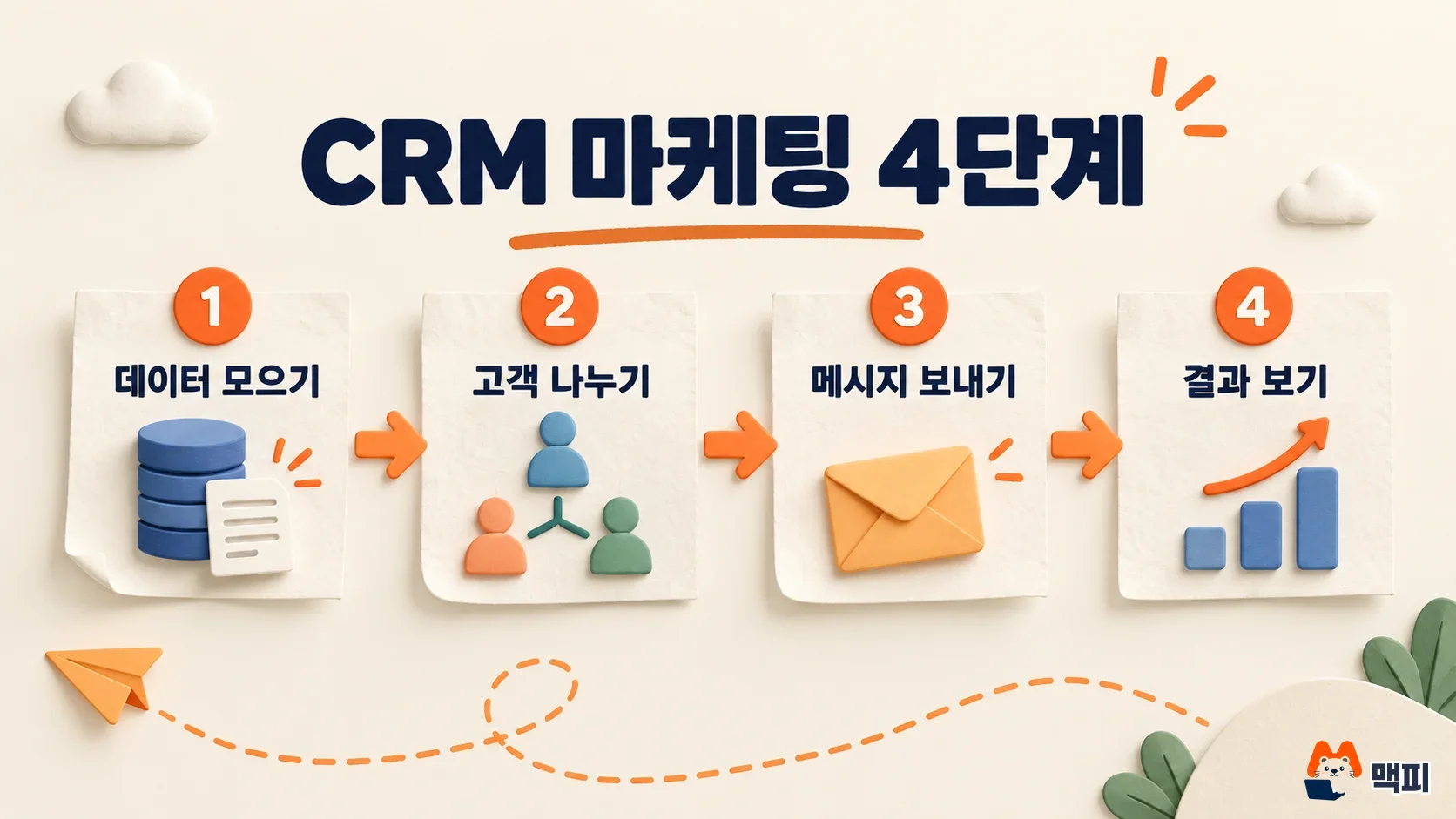
- Collect data. Gather the records customers leave, such as sign-ups, purchases, and inquiries, in one place. Tell customers what purpose the data is collected for.
- Segment customers. Build groups by attributes such as age and region, by numbers such as cumulative purchase amount, or by actions such as purchases and add-to-cart. For web behavior, create audiences in GA4 from dimensions, metrics, and events. You create them under data display in the Admin menu, and you need the Marketer role.
- Set a message for each group. For example, send usage guidance to recent buyers and a come-back message to customers who have not bought in a while. What you can send differs by channel, so read the rules in the next section first.
- Check the results. Do not look only at the number of messages sent. Look at opens or clicks, later purchases, and opt-outs for each group. If you hold out some customers in the same group who do not receive the message, it is easier to compare the effect. To use GA4 audiences for ads too, link to Google Ads and turn on personalized advertising settings. The audiences then appear in the Google Ads shared library.
CRM marketing message rules: Alimtalk and promotional messages
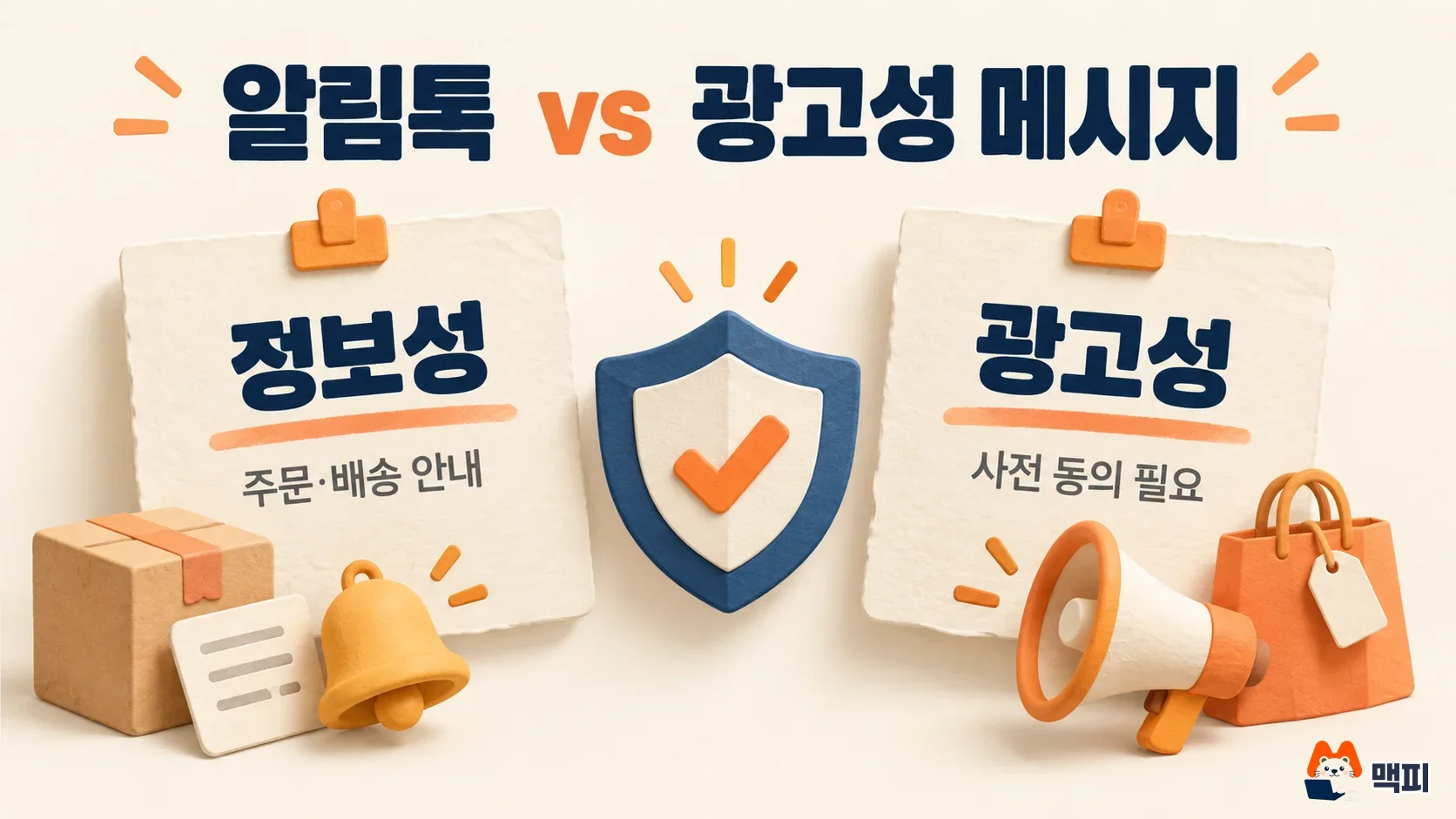
In Korea, the method you can use depends on the nature of the message. Kakao Alimtalk (a business notification message sent through KakaoTalk) can be sent only for informational messages. An informational message means information the recipient must know about concluding or performing a contract, completing a transaction, or using a service. Order confirmations, payment confirmations, and delivery notices are typical examples.
| Category | Examples | Alimtalk sending | Conditions before sending |
|---|---|---|---|
| Informational | Order confirmation, payment confirmation, delivery notice | Allowed (only with templates approved in review) | Use phone numbers collected lawfully |
| Promotional | Discounts, coupons, events, new product promotion | Not allowed | Per the Kakao message ad guide: the recipient's prior consent, a nighttime sending restriction, the (ad) label at the very start of the message, and a stated way to opt out |
Kakao's Alimtalk review guide says a message cannot be sent if all or part of it contains promotional content. Text that pushes an app install is also rejected. So is text that uses a free trial, discount coupon, or points as a condition to push an action such as registering personal information. Adding a discount coupon line at the end of a delivery notice does not work.
Sending promotional information for commercial purposes is subject to the limits of Article 50 of the Information and Communications Network Act. Kakao's message ad guide tells senders to follow the KISA (Korea Internet & Security Agency) guide on this law. It says to get prior consent, restrict sending from 9 PM to 8 AM the next day, and state how to opt out and withdraw consent in the ad body. For conditions that can differ by channel, such as email, check the guide from the KISA Illegal Spam Response Center.
Common mistakes when adopting a CRM
Mixing coupon text into an informational template. It is grounds for rejection in Alimtalk review. Create coupon and discount news separately as promotional messages and send them only to customers who consented.
Sending to all customers without separating consent status. Promotional messages need prior consent. Collect promotional consent as its own item at sign-up, and store the consent status and timestamp in your customer list. Then you can filter them out of the send list.
Picking the tool first. When choosing a CRM, Salesforce advises looking at company size, industry requirements, budget, integration with other systems, and ease of use, and deciding after trying a free trial. Before a feature comparison table, pick one or two repetitive tasks you want to automate.
Frequently asked questions
Can Alimtalk be sent only to customers who added the KakaoTalk Channel?
No. Kakao describes Alimtalk as an informational message that can also be sent to users who have not added the channel. The content is limited to informational messages, and you may use only phone numbers collected lawfully.
If I have GA4 audiences, do I still need a CRM?
GA4 audiences are a feature that splits users into groups by dimensions, metrics, and events. Recording interactions with individual customers, such as sales consultation history or per-customer inquiry records, is the CRM's job. The two tools do not replace each other. You use them together.
What should I decide first when adopting a CRM for the first time?
Decide one task to automate and the customer data that task needs. For example, if the task is sending usage guidance to first-time buyers, you can start with three things: purchase history, a contact method, and consent status.
Today, pick the one message you send most often and sort it as informational or promotional. If it is promotional, check whether consent status is stored. If it is not, start by fixing the consent item on your sign-up screen.
Found this useful? Share it
Latest posts
Kakao Share Thumbnail Not Showing? Here's the Fix (JavaScript SDK 2025)
Learn why Kakao Share thumbnails don't appear even with a valid imageUrl, and fix it using scrapImage to convert your URL into a KAGE CDN URL. Step-by-step guide.
How to Generate CRM User Manuals in 20 Minutes with Claude Code Sub-Agents
Learn how Claude Code sub-agents can analyze your CRM codebase and auto-generate user manuals and visual guidebooks in just 20 minutes. See the real-world results.
GEO Generative Engine Optimization: The Complete 2025 AI Marketing Strategy Guide
Learn what GEO (Generative Engine Optimization) is, how it differs from traditional SEO, and discover 5 proven AI marketing strategies to get cited by AI search engines in 2025.
Related projects
Get new posts by email
Insights on marketing, analytics, and dev, delivered to your inbox.