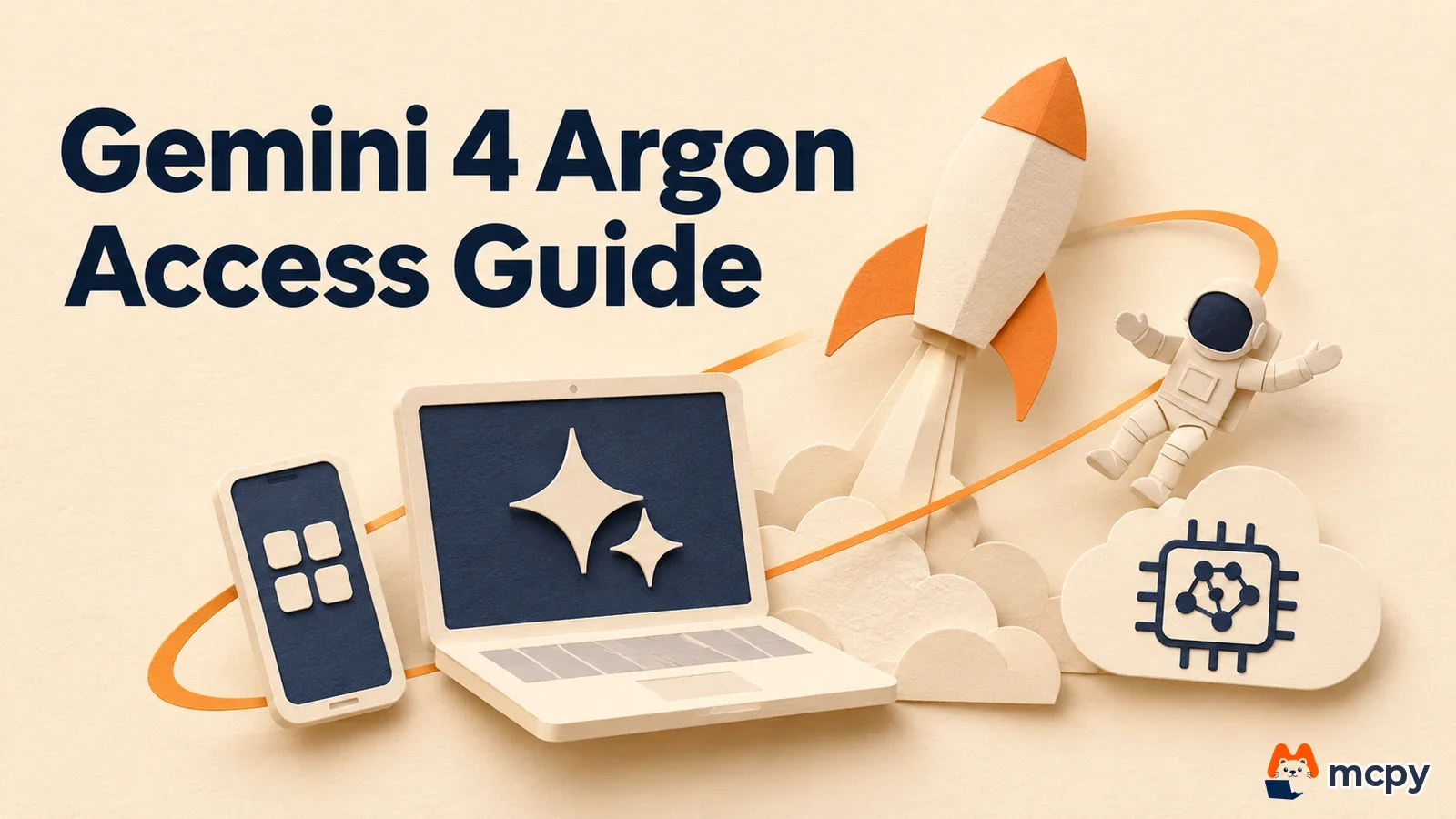
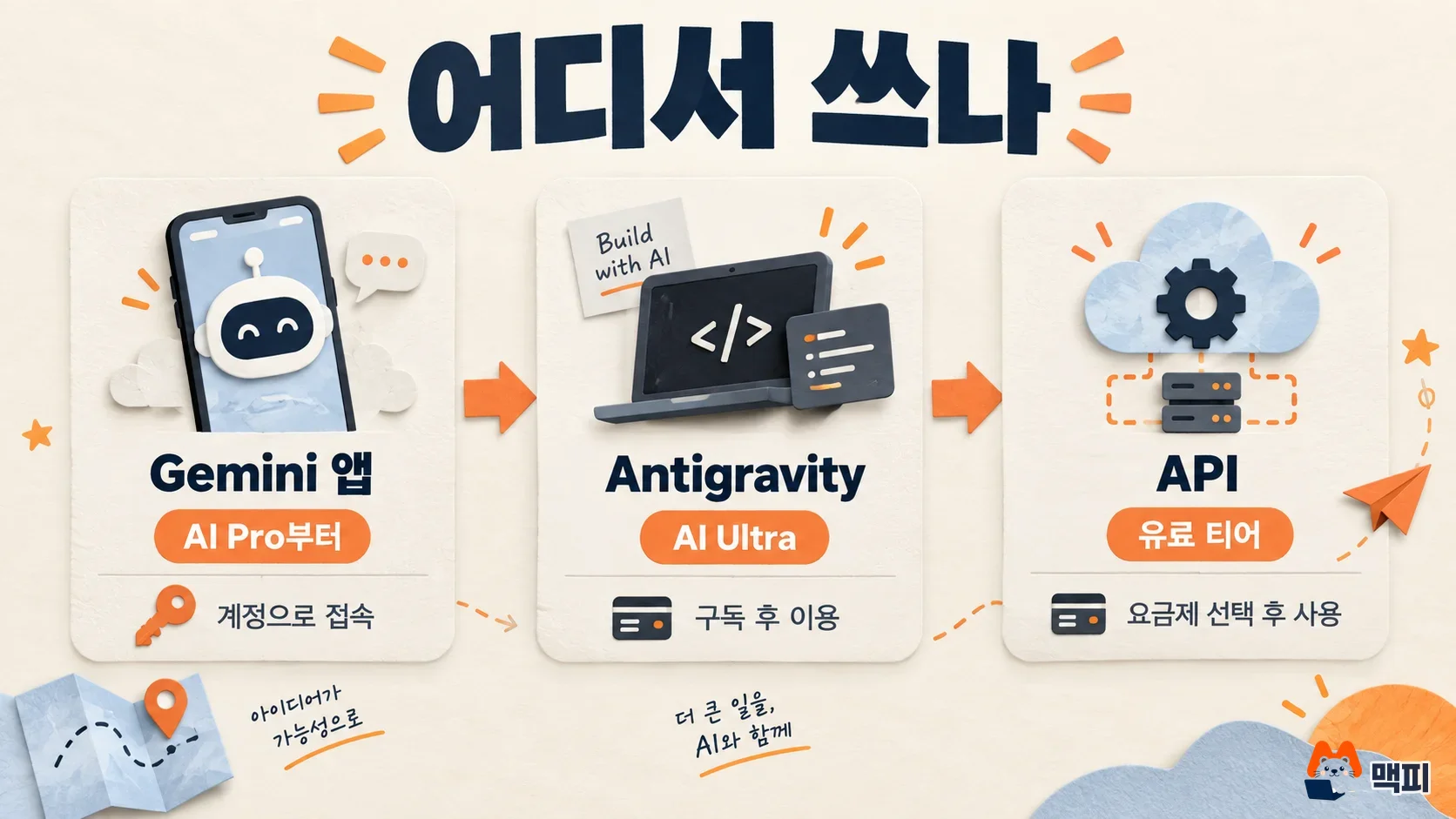
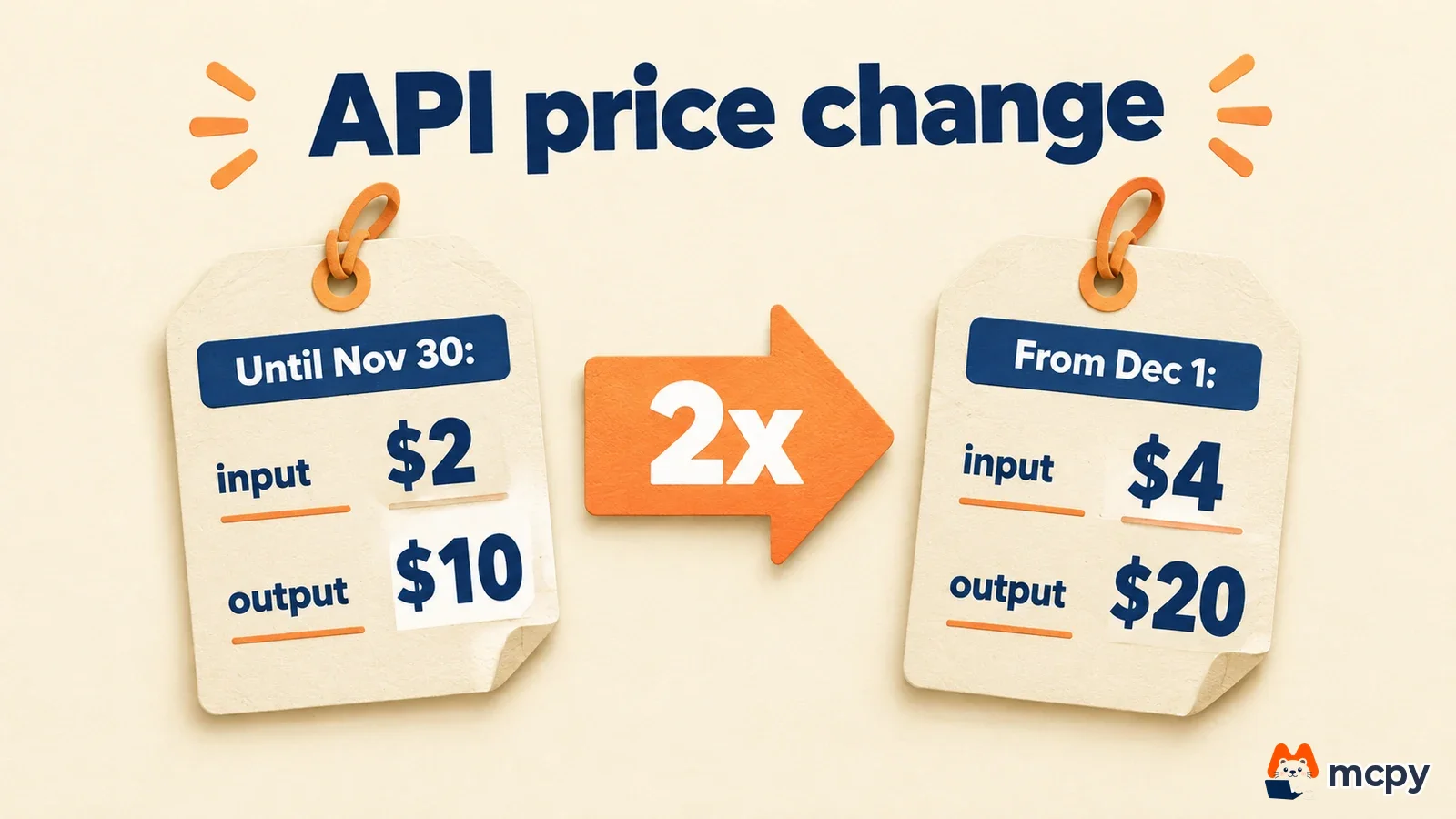
How you use Gemini 4 Argon depends on where you use it, because each place needs a different subscription. On October 13, 2026, Google opened Argon in the Gemini app and Google Search AI Mode (for Google AI Pro and Ultra subscribers), in Google Antigravity (for AI Ultra subscribers), and in the Gemini API (for developers and businesses). According to the official Google blog, the API model name is gemini-4-argon. The price is $2 per 1 million input tokens and $10 per 1 million output tokens until November 30, then $4 and $20 from December 1 (as of October 14, 2026).
Where you can use Gemini 4 Argon
Some places need a subscription account and others need a developer account. Free accounts are not covered in the app, and the API has no free tier.
| Where | What you need | Source |
|---|---|---|
| Gemini app | Google AI Pro or AI Ultra subscription | Gemini app launch notice |
| Google Search AI Mode | Google AI Pro or AI Ultra subscription | Launch announcement |
| Google Antigravity | Google AI Ultra subscription | Developer guide |
| Gemini API (Google AI Studio) | Paid tier, no free tier | Gemini API pricing |
| Gemini platform (Google Cloud) | Cloud billing account | Google Cloud blog |
How to use Gemini 4 Argon in the Gemini app
In the Gemini app, sign in with an AI Pro or AI Ultra account and pick 4 Argon in the model selector of the chat window. According to 9to5Google, the model selector for Pro and Ultra subscribers shows 3.5 Flash-Lite, 3.8 Flash, 3.1 Pro and 4 Argon together. It first opened only to Ultra subscribers and later widened to Pro.
Per the Google announcement, AI Mode in Google Search is open to the same Pro and Ultra subscribers. Based on the Korean-language Gemini subscription page, AI Plus costs 7,500 KRW per month and AI Ultra starts at 119,000 KRW per month. The announcement did not mention AI Plus as eligible for Argon.
To check that access is open, see whether 4 Argon appears in the model selector. If it does not, first confirm that the subscription tier of the signed-in account is AI Pro or higher.
How to use Gemini 4 Argon in Antigravity
Antigravity is Google's AI coding environment, and Argon works there only with an AI Ultra subscription account. In its developer guide, Google said Google AI Ultra subscribers can try Argon in Antigravity. The Gemini subscription page says AI Pro can also use Antigravity with a basic limit, but Argon is a model opened to Ultra subscribers.
Sign in to Antigravity with an Ultra account and set 4 Argon as the model to use. According to Google support documents, the AI Ultra subscription includes priority access to new models and higher usage limits. If you have a Pro account, try Argon in the Gemini app or the API instead of Antigravity.
Gemini 4 Argon API model name and price
In the API, you call the model name gemini-4-argon. The Google model documentation lists a Stable version, a context window of 1,048,576 tokens, inputs of text, image, video, audio and PDF, and text output. A default response is up to 65,536 tokens, and with the long decode mode it can reach up to 1 million tokens. A token is the unit in which a model reads and writes text, and the context window is the combined limit for input and output in one request.
The price doubles after November 30. The values below are per 1 million tokens from the Gemini API pricing page.
| Processing mode | Input to 11/30 | Output to 11/30 | Input from 12/1 | Output from 12/1 |
|---|---|---|---|---|
| Standard | $2.00 | $10.00 | $4.00 | $20.00 |
| Batch | $1.00 | $5.00 | $2.00 | $10.00 |
| Flex | $1.00 | $5.00 | $2.00 | $10.00 |
| Priority | $3.60 | $18.00 | $7.20 | $36.00 |
| Cached input (Standard) | $0.10 | N/A | $0.20 | N/A |
The output price also covers the thinking tokens the model uses to reason. Caching supports only the implicit kind, which automatically reuses the same input, and does not support explicit caching. Batch is for large jobs where you do not need results right away. Flex lowers the price in exchange for weaker response-speed guarantees. Priority costs more so your requests are handled first. Batch and Flex cost half the Standard price.
| Item | ~11/30 | 12/1~ |
|---|---|---|
| Standard input | 2 | 4 |
| Standard output | 10 | 20 |
| Batch input | 1 | 2 |
| Batch output | 5 | 10 |
| Priority input | 3.6 | 7.2 |
| Priority output | 18 | 36 |
The price exactly doubles in every processing mode. Even if you move to Batch or Flex, budget twice today's cost for the period after December 1.
Steps for your first API call
- Create a key on the API keys page of Google AI Studio and save it as the
GEMINI_API_KEYenvironment variable. - You need a paid tier, so link a billing account through Set up billing on the API keys or Projects page. The quickstart guide states a minimum prepayment of 5 dollars.
- Install the library with
pip install -U google-genai, then change themodelvalue in the quickstart example togemini-4-argonand run it. - Open Usage in the AI Studio Dashboard and check that token usage is recorded. If a response arrives and the usage graph goes up, the connection works.
The call code below is the official quickstart example with only the model name changed to gemini-4-argon.
from google import genai

client = genai.Client()

interaction = client.interactions.create(
    model="gemini-4-argon",
    input="이번 주 광고 성과를 세 줄로 요약해 줘"
)
print(interaction.output_text)
In an enterprise setup, you can also use the same model name in the Gemini platform console on Google Cloud. The quick-open link in the Google Cloud blog sets the region to global.
Gemini 4 Argon API price compared with Claude and GPT
Until November 30, Argon costs the same $2 and $10 as Claude Sonnet 5.5 and GPT-6.1 Sol (OpenAI pricing). From December 1, it costs the same $4 and $20 as Claude Opus 5.5. The table below shows per 1 million token values from each company's official pricing page, as of October 14, 2026.
| Company | Model | Input | Output | Note |
|---|---|---|---|---|
| Gemini 4 Argon (~11/30) | $2 | $10 | $4 and $20 from 12/1 | |
| Gemini 3.8 Flash | $0.75 | $3.75 | $1.50 and $7.50 from 2027/1/1 | |
| Gemini 3.1 Pro Preview (200K tokens or less) | $2 | $12 | Over 200K: $4 and $18 | |
| Anthropic | Claude Fable 5.1 | $10 | $50 | 50% batch discount |
| Anthropic | Claude Opus 5.5 | $4 | $20 | 50% batch discount |
| Anthropic | Claude Sonnet 5.5 | $2 | $10 | 50% batch discount |
| Anthropic | Claude Haiku 5.5 (prompt 100K tokens or less) | $0.10 | $0.50 | Over 100K: $0.50 and $2.50 |
| OpenAI | GPT-6 Astra (272K tokens or less) | $10 | $50 | Over: $20 and $75 |
| OpenAI | GPT-6.1 Sol (272K tokens or less) | $2 | $10 | Over: $4 and $15 |
| OpenAI | GPT-6 Luna (272K tokens or less) | $0.10 | $0.50 | Over: $0.20 and $0.75 |
Sources: Google Gemini API pricing, Claude pricing, OpenAI API pricing. Each company handles context-length tiers, caching and batch discounts differently, so the same unit price does not always mean the same cost.
Compared with the existing Gemini 3.8 Flash, the Argon launch price is about 2.7 times higher for both input and output, and about 5.3 times higher after December 1. To check whether the quality gain justifies that gap, test it on your own work using the steps below.
What changed since the September 30 reveal
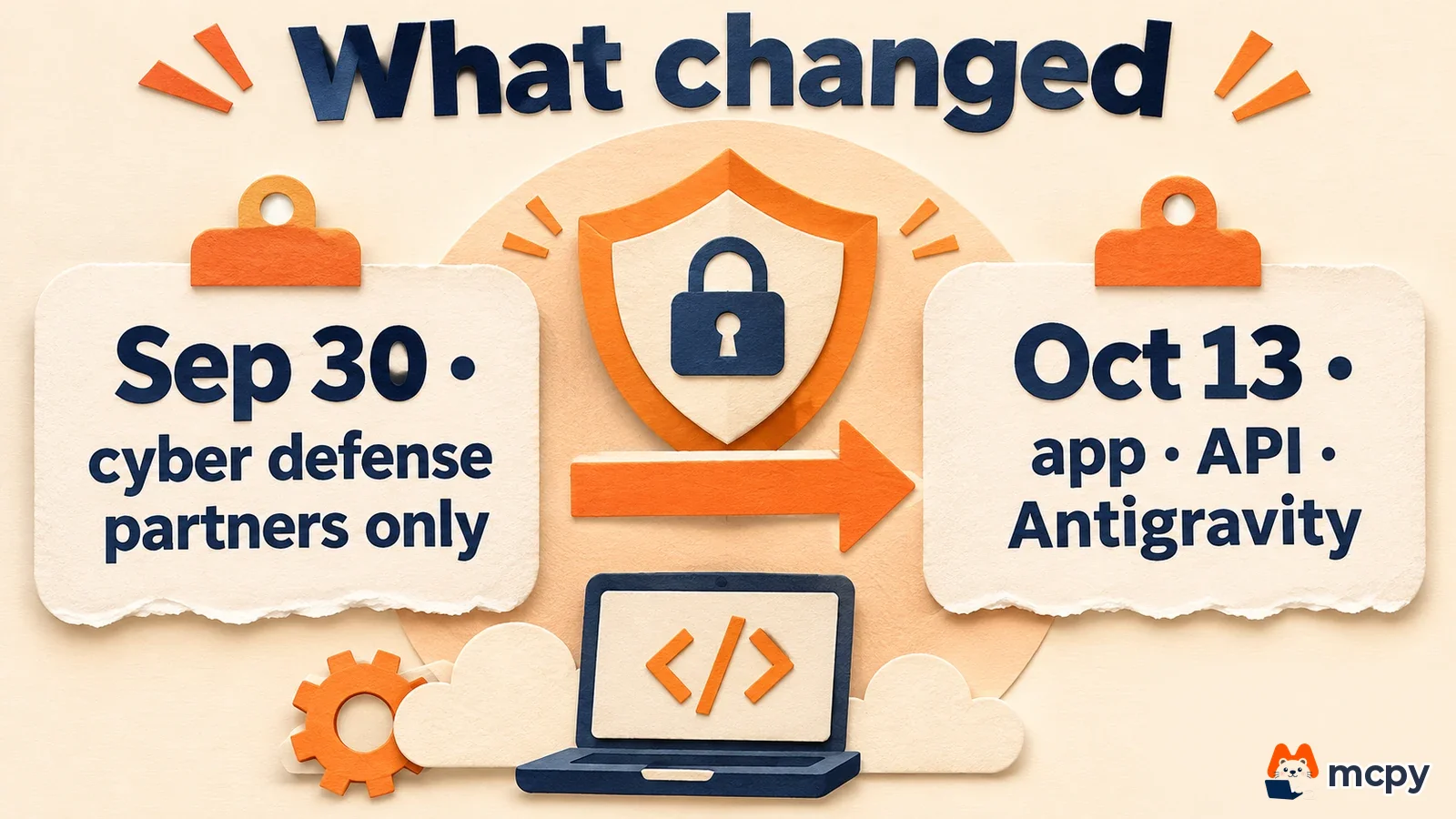
At the first Google announcement on September 30, only trusted cyber defense partners could use Argon. From October 13, subscribers and developers can use it. The pricing and performance details from that time are kept in the price and launch summary as of September 30. The table below lists only the items that changed between the two dates.
| Item | September 30 | October 13 |
|---|---|---|
| Who can use it | Fairwind Program partners | Subscribers, developers and businesses |
| Gemini app and AI Mode | No announcement | AI Pro and Ultra subscribers |
| Antigravity | No announcement | AI Ultra subscribers |
| API | Not for general developers | Paid tier, gemini-4-argon |
| Launch price end date | Not disclosed | November 30, 2026 |
Fairwind is a program for cybersecurity defenders. In the October 13 announcement, Google said hundreds more partners will join. Google is rolling out Argon without cyber guardrails only to these partners. The same announcement says the Argon offered to general users has layered defenses made of jailbreak resistance, monitoring and enforcement.
What marketers and practitioners should try now
Before adopting Argon, compare it with your current model on one real task, and finish the decision before November 30 to keep costs lower. This is the order McPy recommends.
- If you have a Pro or Ultra subscription, take one task you already run in the Gemini app (for example, a weekly ad report draft or a search terms report analysis). Enter the same prompt into your current model and into Argon.
- Record the quality of each result. For a task you will run through the API, multiply the input and output token counts on the usage screen by the unit prices, and also calculate with the post-November 30 price ($4 and $20). For example, a job with 1 million input tokens and 100,000 output tokens costs $3 at the launch price and $6 after.
- Run bulk jobs that do not need instant results (product descriptions, ad copy variations and so on) in Batch to cut the cost in half.
- Decide whether to keep using Argon by how much editing time it saves compared with your current model. Finish this comparison before December 1, when the price doubles.
A common mistake is to assume an app subscription also covers the API. The app subscription and API billing are charged separately, and the API can call Argon only on a paid tier, with no free tier. Putting the launch price of $2 and $10 into a budget as if it will last is another mistake, and it understates costs after November 30 by half.
Frequently asked questions
Can I use Gemini 4 Argon for free?
No. The app is for Google AI Pro or higher subscribers, and the API pricing page states that Argon is not offered on the free tier.
Can I use Gemini 4 Argon in Korea?
Google's launch announcement lists no country restrictions, and the Korean-language subscription page shows Argon as an included model under AI Pro and AI Ultra. Check the final amount, including Korean won billing and VAT, on the subscription payment screen.
Should I switch from Gemini 3.8 Flash to Argon?
The unit price is more than 2.7 times higher, so there is no reason to switch everything. Send only tasks where the quality gap outweighs the cost, such as long reasoning or coding, to Argon, and keep repetitive work like summarizing and classification on Flash.
Found this useful? Share it
Latest posts
Kakao Share Thumbnail Not Showing? Here's the Fix (JavaScript SDK 2025)
Learn why Kakao Share thumbnails don't appear even with a valid imageUrl, and fix it using scrapImage to convert your URL into a KAGE CDN URL. Step-by-step guide.
How to Generate CRM User Manuals in 20 Minutes with Claude Code Sub-Agents
Learn how Claude Code sub-agents can analyze your CRM codebase and auto-generate user manuals and visual guidebooks in just 20 minutes. See the real-world results.
GEO Generative Engine Optimization: The Complete 2025 AI Marketing Strategy Guide
Learn what GEO (Generative Engine Optimization) is, how it differs from traditional SEO, and discover 5 proven AI marketing strategies to get cited by AI search engines in 2025.
Related projects
Get new posts by email
Insights on marketing, analytics, and dev, delivered to your inbox.