Gemini 4 Argon is the new flagship model Google announced on September 30, 2026, but general users cannot use it yet. According to the official Google blog, access is currently limited to the Fairwind Program for cyber defense partners and the US government's early access process. The API price is $2 per 1 million input tokens and $10 per 1 million output tokens (launch promotional price).
Quick summary in three lines
- Who can use it now: trusted cyber defense partners in the Fairwind Program. For general developers, businesses and consumers, the official announcement only says "as soon as possible" and gives no date.
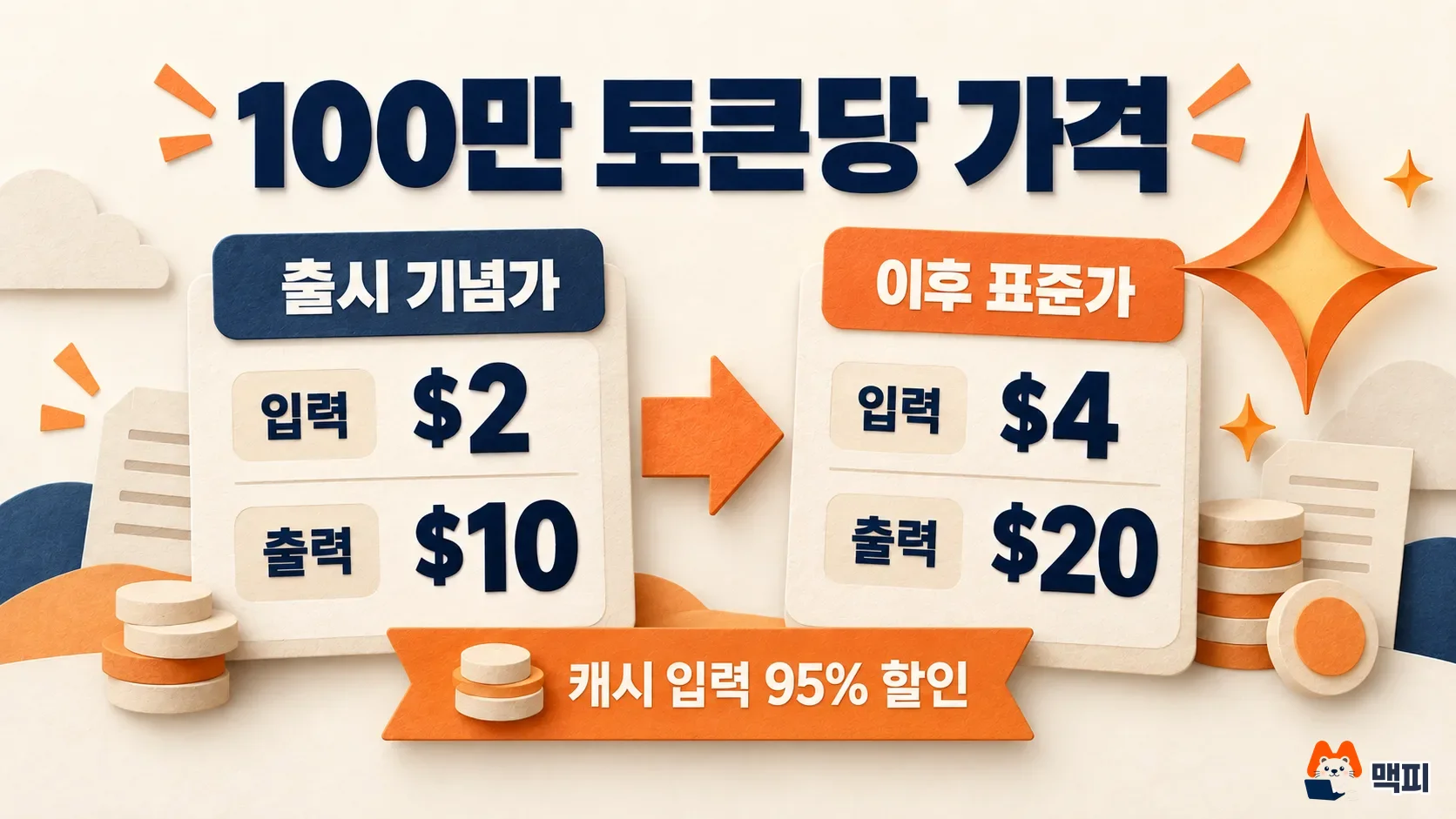
- Price: $2 input and $10 output per 1 million tokens at the launch promotional price. After the promotion ends, it is $4 input and $20 output. Cached input is 95% cheaper than the input price.
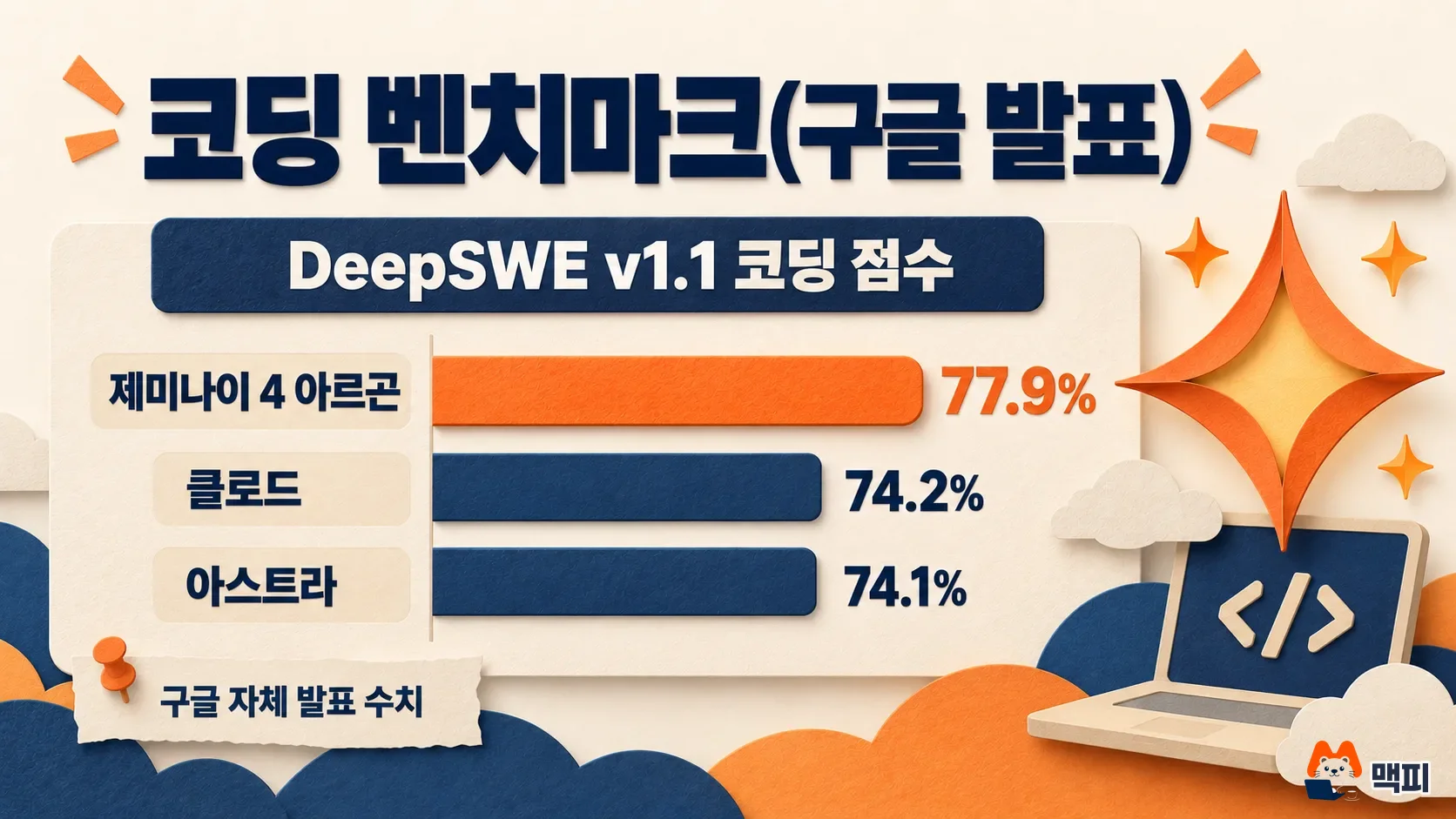
- Performance: 77.9% on the DeepSWE v1.1 coding benchmark, as announced by Google. This is Google's own figure, so treat it as a reference until you test the model yourself.
Gemini 4 Argon is a model built for long, deep workflows
Google describes Argon as a model "built to sustain deep reasoning across long workflows." The target work is real software development, enterprise knowledge work such as legal and finance, and cybersecurity defense. The output limit is 1 million tokens, a big jump from the previous 64,000 tokens.
A token is the unit a model uses to read and write text. Korean text often counts as more tokens than its character count suggests, so the same amount of content can cost more than in English. An output limit of 1 million tokens means one response can write a very long piece of code or a very long document to the end. Real response time and quality can only be judged once the model is available.
Who can use it now and when access widens
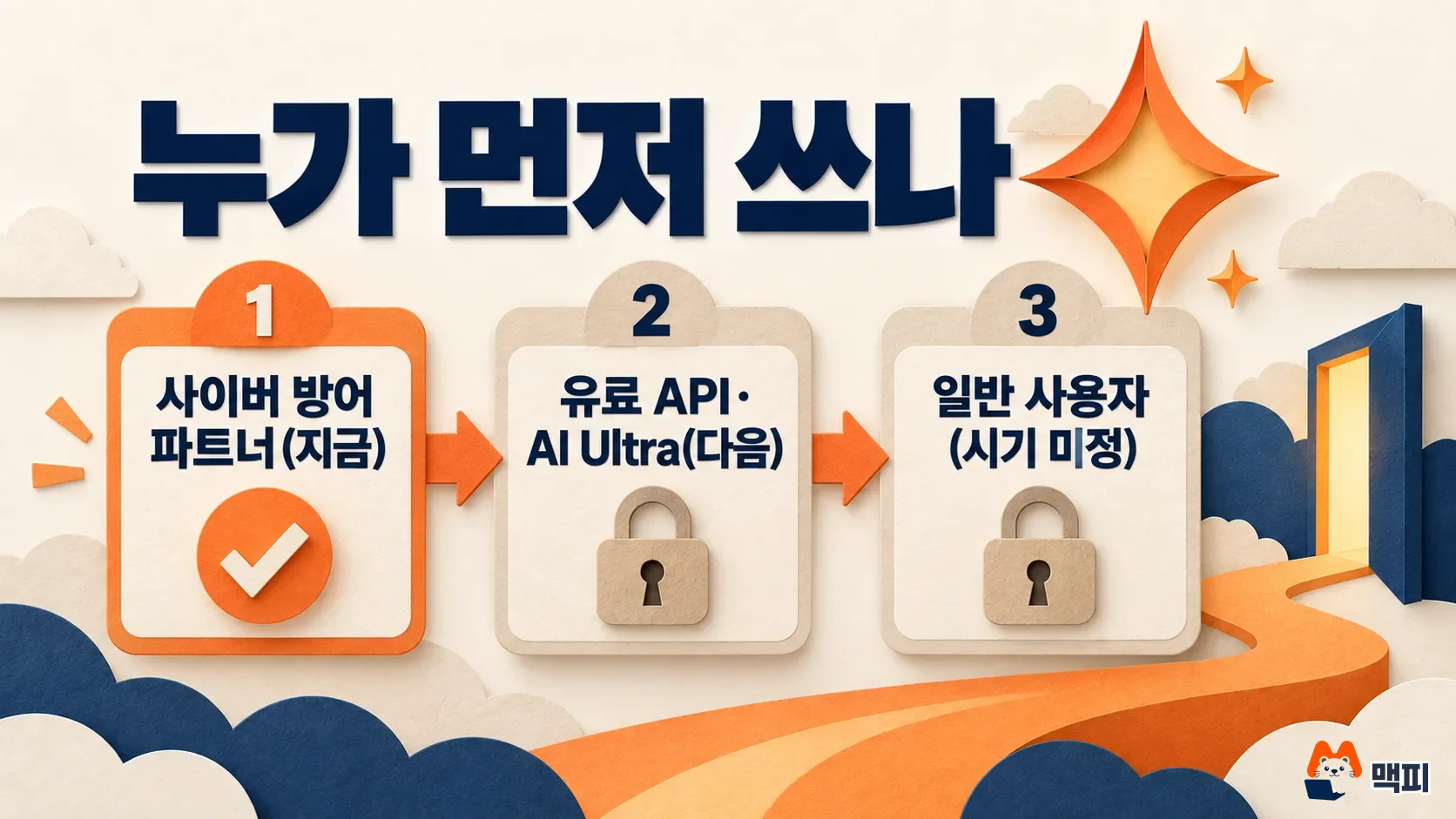
The official blog states three things. First, it is offered first to trusted cyber defense partners through the Fairwind Program. Second, Google is taking part in the US government's voluntary early access process. Third, it will widen to developers, businesses and consumers "as soon as possible," starting with paid API customers and Google AI Ultra subscribers.
Google explained the staged rollout by saying that safeguards struggle to keep up if a powerful model is released all at once. So "launch" does not mean it is open to everyone. There is no notice yet that you can select Argon in the Gemini app or the API console.
How much does it cost
Argon's API price has two tiers. The launch promotional price is $2 input and $10 output per 1 million tokens. After the promotion ends, the standard price is $4 input and $20 output. The official announcement does not say when the promotion ends. The standard price is exactly double the promotional price.
Cached input means storing the front part of a long document and reading it cheaply when you send the same material repeatedly. It is 95% off the input price, which comes to $0.1 per 1 million tokens at the promotional price. If your work keeps asking questions about the same document, this value drives the total cost.
Calculation example (assumption): for a job that uses 1 million input tokens and 100,000 output tokens, the promotional price is $2 for input plus $1 for output, which is $3. The standard price is $4 plus $2, which is $6. These are not real token counts for any job. They are numbers for practicing how to read a price table.
| Tier | Input (per 1M tokens) | Output (per 1M tokens) |
|---|---|---|
| Launch promotional price | $2 | $10 |
| Standard price after the promotion | $4 | $20 |
| Cached input (at promotional price) | $0.10 | N/A |
API price comparison with Claude and GPT
These are per-model unit prices checked on each of the three companies' official pricing pages. All figures are dollars per 1 million tokens, as of October 1, 2026. Argon's values come from the official Google blog.
| Company | Model | Input | Output |
|---|---|---|---|
| Gemini 4 Argon (promotional price) | $2 | $10 | |
| Gemini 4 Argon (standard price) | $4 | $20 | |
| Gemini 3.8 Flash | $0.75 | $3.75 | |
| Gemini 2.5 Pro (200,000 tokens or less) | $1.25 | $10 | |
| Anthropic | Claude Fable 5.1 | $10 | $50 |
| Anthropic | Claude Opus 5.5 | $4 | $20 |
| Anthropic | Claude Sonnet 5.5 | $2 | $10 |
| Anthropic | Claude Haiku 4.5 | $1 | $5 |
| OpenAI | GPT-6 Astra (short context) | $10 | $50 |
| OpenAI | GPT-6.1 Sol (short context) | $2 | $10 |
| OpenAI | GPT-6 Luna (short context) | $0.10 | $0.50 |
Argon's promotional price of $2 and $10 matches Claude Sonnet 5.5 and GPT-6.1 Sol. Its standard price of $4 and $20 matches Claude Opus 5.5. Gemini 3.8 Flash's $0.75 and $3.75 apply through December 31, 2026, and from January 1, 2027 it becomes $1.50 input and $7.50 output.
GPT-6 Astra rises to $20 input and $75 output for long context. Anthropic and OpenAI have published a 50% discount for batch processing. Cached input prices differ by company, so they are not in this table. Check each page directly.
Subscription price comparison
These are subscription prices for using the models in the apps, as of October 1, 2026. The official announcement does not say whether Argon is included in these plans.
| Company | Free | Mid-tier plan | Premium plan |
|---|---|---|---|
| $0 | AI Pro: not disclosed (not shown on the Korean price list) | AI Ultra: $99.99 or $199.99 per month | |
| Anthropic (Claude) | $0 | Pro: $20 per month ($17 per month with annual billing) | Max: from $100 per month |
| OpenAI (ChatGPT) | $0 | Go $8 per month, Plus $20 per month | Pro: choose $100, $200 or $500 per month |
Google's Korean prices are AI Plus at KRW 7,500 per month and AI Ultra at KRW 119,000 or KRW 300,000 per month. The monthly dollar price of Google AI Pro does not appear on the official pages checked, so it is listed as "not disclosed."
The price reference date is October 1, 2026. Sources: Google Gemini API pricing, Google AI subscriptions guide, Gemini subscriptions page, Claude pricing, OpenAI API pricing, ChatGPT plans.
How far you can trust the performance numbers
The figures from the Google blog are 77.9% on DeepSWE v1.1, 91.7% on LVBench (a long video understanding benchmark) and 51.3% on AutomationBench (Zapier), a work automation benchmark. A benchmark is a test that scores a model on a fixed set of problems. Model makers tend to pick tests that favor their own models, so treat announced figures only as a starting point.
According to VentureBeat, Claude scores 74.2% and GPT-6 Astra scores 74.1% on DeepSWE v1.1. The report does not say which Claude model it is. The gap from Argon is about 3.7 percentage points. There is no way to know whether a gap this size would be noticeable in your own work. MCPY does not use these numbers to declare a winner and records them only as "values announced by Google from the same test."
What to check in Korea
The official announcement has neither a Korean launch schedule nor a Korean won price. A dollar price multiplied by the exchange rate is only a reference value. Whether overseas payment fees or VAT apply must be checked on the payment screen. Even if Google AI Ultra subscriptions or API billing are open in Korea, there is no guarantee that Argon is included on the same day.
What follows is not an official announcement but a recommendation from MCPY. MCPY sees no reason to put Argon into your work at this stage. Instead, do the following four things.
- Write down the input and output prices and the output limit of your current model in one line.
- Pick one repeatable task (for example, a weekly ad account report draft) and record the current model's result and cost.
- When Argon appears in the model list of Google AI Studio or Vertex AI, run the same task and compare.
- When the promotion end date is announced, recalculate with the standard price ($4 and $20).
Common mistakes
- Reading "launched" as "available from tomorrow." Right now it is a partner-only release.
- Budgeting with the promotional $2 and $10 as if it will last. When the promotion ends, the price doubles.
- Taking first place on a benchmark as first place in work quality. It is Google's own announcement, and results differ by task.
- Mistaking an existing model name in the Gemini app for Argon. Before the official notice, it is normal not to see Argon on the model selection screen.
Update (October 13, 2026)
On October 13, 2026, Google widened Gemini 4 Argon to the Gemini app and Google Search AI Mode (AI Pro and Ultra subscribers), Google Antigravity (AI Ultra subscribers) and the Gemini API (developers and businesses). This changes the September 30 status, when it was limited to cyber defense partners, into a full launch that subscribers and developers can use. According to the Google announcement, the promotion ends on November 30, 2026, and from December 1 the price of $4 input and $20 output applies.
Usage conditions for the app, Antigravity and the API, the model name gemini-4-argon, and prices by processing mode are covered separately in the new article "How to Use Gemini 4 Argon: App, Antigravity and API Pricing."
When to check next
This article is based on the official blog as of September 30, 2026. When the rollout schedule, the promotion end date and Korean prices are announced, this article will be updated. If you are considering adoption, check the pricing section of the official blog and the model list in the API console once more before use.
References
Found this useful? Share it
Latest posts
Kakao Share Thumbnail Not Showing? Here's the Fix (JavaScript SDK 2025)
Learn why Kakao Share thumbnails don't appear even with a valid imageUrl, and fix it using scrapImage to convert your URL into a KAGE CDN URL. Step-by-step guide.
How to Generate CRM User Manuals in 20 Minutes with Claude Code Sub-Agents
Learn how Claude Code sub-agents can analyze your CRM codebase and auto-generate user manuals and visual guidebooks in just 20 minutes. See the real-world results.
GEO Generative Engine Optimization: The Complete 2025 AI Marketing Strategy Guide
Learn what GEO (Generative Engine Optimization) is, how it differs from traditional SEO, and discover 5 proven AI marketing strategies to get cited by AI search engines in 2025.
Related projects
Get new posts by email
Insights on marketing, analytics, and dev, delivered to your inbox.