
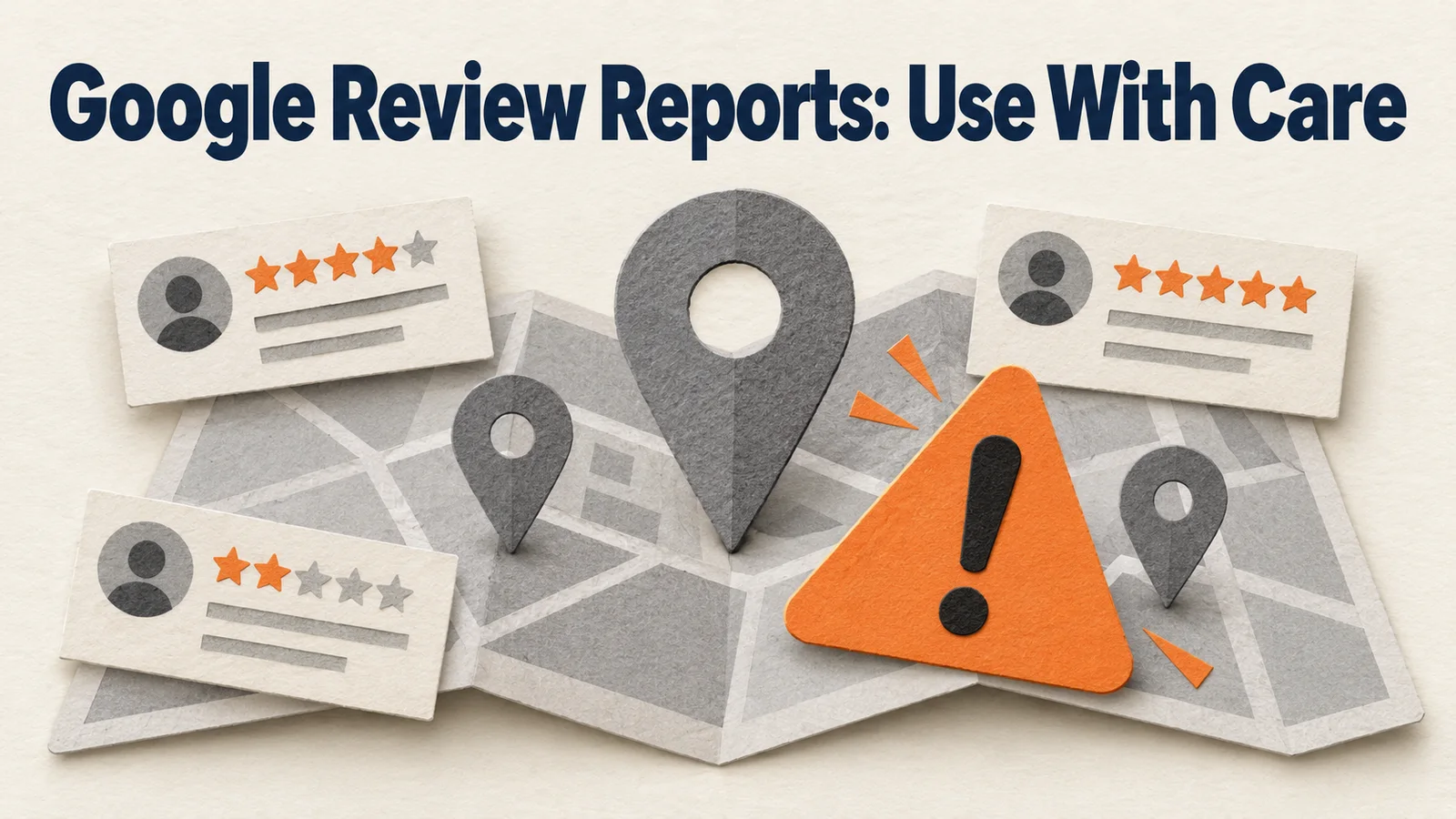
The 'misuse of support channels' clause sits on the Google Business Profile policy page for agencies and third-party partners. It says that repeated baseless reports can lead to later reports being rejected without review. If you manage your own store profile as a business owner, this page does not directly cover you. Owners still have an official process to follow when they report a bad review. We could not find an official Google announcement. News of the clause came on September 29, 2026, in a Search Engine Roundtable report. The policy page shows no change date or effective date, so we could not confirm either one.
The short version in three lines
- The clause is under 'Prohibited practices' on Business Profile third-party policies. That page is aimed at agencies and partners who manage other people's profiles.
- The process for owners to report a bad review is in a separate review reporting help page. Each review gets one appeal.
- Official documents do not confirm whether the same penalty applies to business owners. Still, repeated baseless reports are something the help page discourages.
The clause is on the agency policy page
The policy page is titled 'Business Profile third-party policies'. Its opening says it is for organizations that manage profiles of businesses they do not own. The table of contents runs Definitions, Transparency requirements, Insights, Prohibited practices. The clause is the fourth of five subheadings under Prohibited practices. Before it come bans on registering businesses without consent, making false or exaggerated claims, and harassment or malicious conduct.
If you are an agency handling many client profiles, read this clause as written. If you are a business owner managing your own store profile, this page does not directly apply to you.

The clause says 'all users', but the page is for agencies
Here is the gist of the English text. To keep support services available to everyone, all Google Business Profile users must use support channels responsibly. It gives two examples of violations: false or misleading reports, and reports made in bad faith. The tip sentence ends like this: if baseless submissions repeat, all later complaints may be rejected without evaluation.
The wording sounds like it covers every user. But the clause sits on a policy page for agencies and partners, so this article reads it as aimed at them. The wording alone cannot confirm whether it applies to business owners.
Some things are missing from the text. It does not say how many reports count as 'repeated', or how long a rejection lasts. We could not find a threshold.
We also opened the Korean page. When we checked on September 29, the Korean version did not show this section. It looks like only the English version was updated first, but that is a guess.
Business owners have a separate process for reporting reviews
A business owner who wants a Google review removed should follow the official help page. The direct method, starting from the Business Profile, has five steps.
- Open your Business Profile.
- Select Read reviews.
- Click Report next to the review you want to report.
- Choose the reason for the violation. The help page gives spam and abusive language as examples.
- Submit with Send report.
In the help page's words, review takes several days. If the result is 'Report reviewed - no policy violation', you can appeal once per review. You can reopen your report history in the Reviews Management Tool.

Before you report, decide whether the review broke a policy
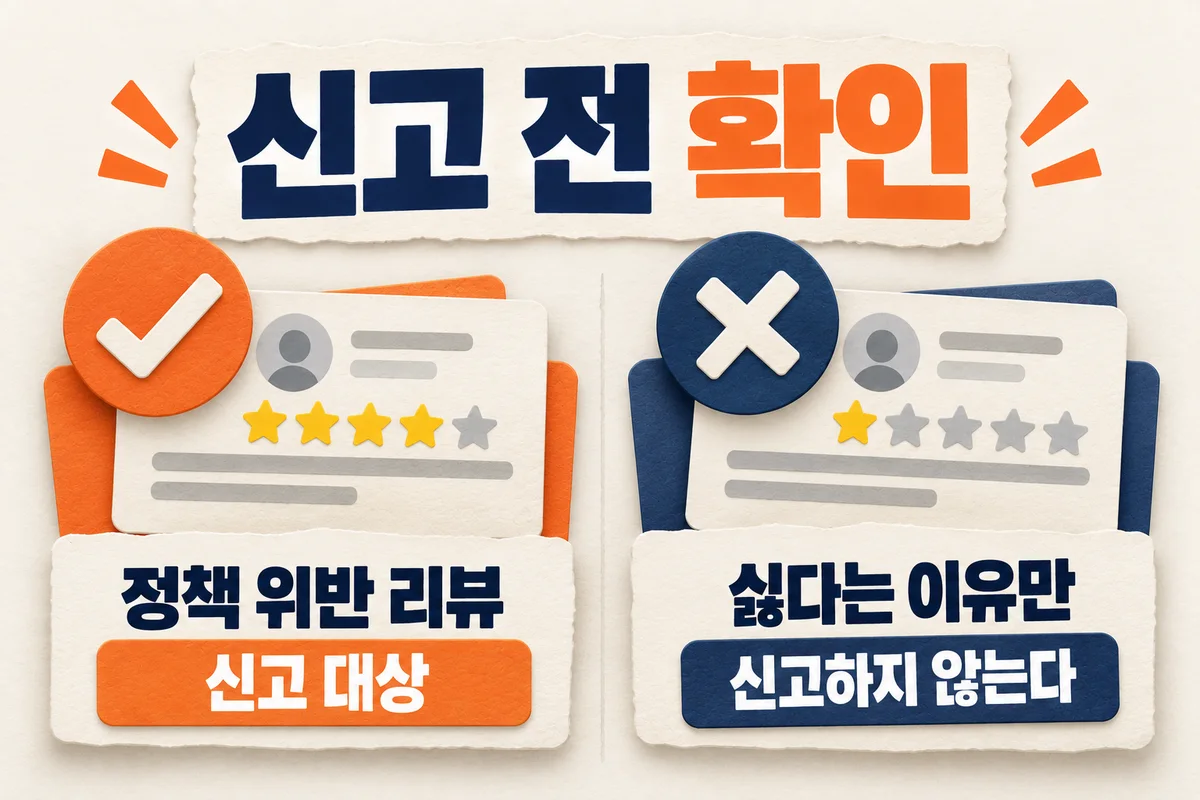
The help page has a line on this. Do not report a review just because you dislike it. Google says it does not get involved in disputes between businesses and customers. Only reviews that break the content policies are eligible for removal.
For example, a 1-star review that only says "the staff was unfriendly" is unpleasant, but it most likely does not violate policy. A public reply that sets out the facts is a better move than a report. On the other hand, a review from someone who never visited your store, with a competitor's link pasted in, is worth reporting as spam. This judgment is the author's interpretation of the help page.
Agencies should keep a report log in this table
This table is not an official form. It is a record-keeping method the author suggests. To avoid looking like repeated baseless reporting, note which policy item each report is based on.
| Date | Client / review link | Violation reason | Result | Appeal |
|---|---|---|---|---|
| 2026-10-01 | Store A / review URL | Spam: contains competitor link | Under review | N/A |
| 2026-10-05 | Store B / review URL | Abusive language | No violation | Used once |
The goal of this table is to avoid resubmitting a review for the same reason after it ended as no violation. Each review gets only one appeal, so record it next to the result.
Confirmed facts, inference, and what we don't know yet
Confirmed facts. The clause exists on the English policy page. It sits under prohibited practices on a page for agencies and partners. The review reporting help page bans reports made only out of dislike, and sets the appeal at one.
Inference. Business owners may also face penalties for repeated baseless reports. This guess comes from the clause's 'all users' wording. The page is not officially aimed at owners, so we do not state it as fact.
Unknowns. The date the clause was added and its effective date, the number of reports that triggers a penalty, when the Korean version will reflect it, and any real cases of enforcement.
Frequently asked questions
I manage my own store profile. Does this clause apply to me?
The clause is on the third-party policy page, so agencies and partners are the direct target. Whether it applies to business owners is not confirmed. Still, the spirit of the help page is that when you report on your own, you should report only reviews with a clear violation.
If a report is rejected, can I report again?
For the same review, one appeal is the official route. Filing a new report for the same reason looks close to the repeated submissions the clause discourages. This is an interpretation.
What should I ask an agency I hire for review removal?
Ask whether they record the reason for each review report, and how they handle reviews that were rejected.
Official sources
- Business Profile third-party policies
- Report inappropriate reviews on your Business Profile
- Manage customer reviews
- Search Engine Roundtable report
Official documents checked on September 29, 2026. The policy page shows no change date. Images are generated illustrations that explain concepts, not actual Google screens.
Found this useful? Share it
Latest posts
Kakao Share Thumbnail Not Showing? Here's the Fix (JavaScript SDK 2025)
Learn why Kakao Share thumbnails don't appear even with a valid imageUrl, and fix it using scrapImage to convert your URL into a KAGE CDN URL. Step-by-step guide.
How to Generate CRM User Manuals in 20 Minutes with Claude Code Sub-Agents
Learn how Claude Code sub-agents can analyze your CRM codebase and auto-generate user manuals and visual guidebooks in just 20 minutes. See the real-world results.
GEO Generative Engine Optimization: The Complete 2025 AI Marketing Strategy Guide
Learn what GEO (Generative Engine Optimization) is, how it differs from traditional SEO, and discover 5 proven AI marketing strategies to get cited by AI search engines in 2025.
Related projects
Get new posts by email
Insights on marketing, analytics, and dev, delivered to your inbox.