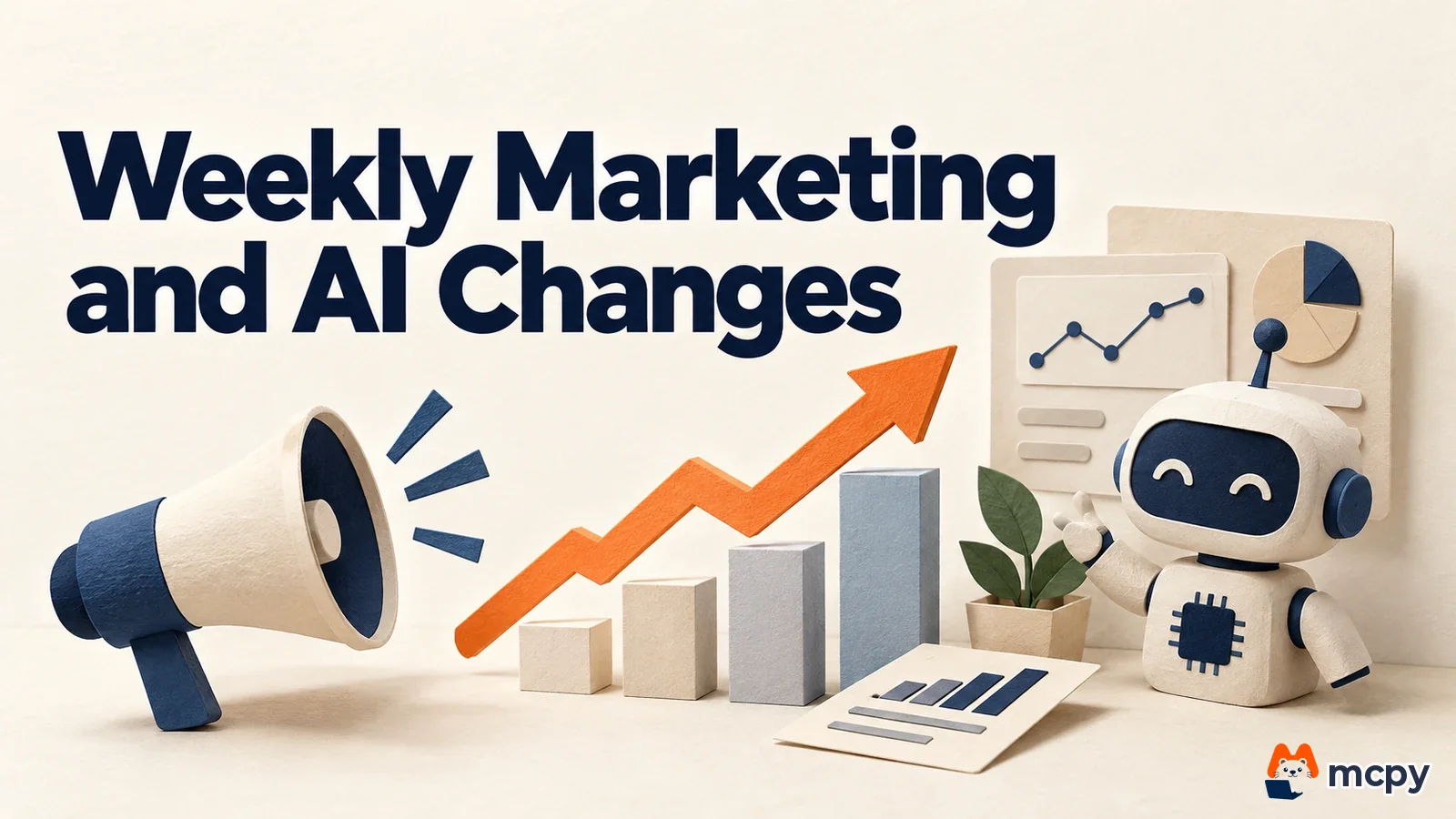
In week 3 of October 2026 (October 12 to 18), a run of announcements in ads, search and AI tools called for a second look at your settings. Google Ads added budget control by channel, and Google AI Mode increased the number of links it shows. Naver, Korea's largest search engine, changed its search screen from October 15. Meta added a website scraping clause to the terms that take effect on October 30.
On the AI side, ChatGPT Voice gained new voices including Korean, and Meta released two Muse models. Below, the seven updates follow the same order each time: what changed, who should check what, the official link, and the related MCPY article.
By scope of impact, the seven updates fall into three groups: ad settings, search exposure and AI tool choice. Start with the ones that apply to your work.

Google Ads adds channel priority and budget allocation
Google Ads added settings to set a priority for each channel and a cap on the daily budget share.

In campaigns that share a budget across several channels, it was hard to tell which channel spent first. According to the official blog from Google, you can set a channel or a group of channels to high or low priority. Within your target CPA or target ROAS, the high-priority channel spends budget first and the rest goes to the low-priority channel. For low-priority channels, you can also cap what percentage of the daily budget they may use. It applies to Search, Shopping, Performance Max and Demand Gen campaigns, and it rolls out worldwide over several months.
Who should check? Advertisers who have the Display Network turned on in Search campaigns. Google said it will remove the existing spend allocation method for this combination from February 2027. To keep your current setup, it advised setting the Display Network to low priority with a 50% allocation. For the setting location and eligible campaigns, continue with the Google Ads channel priority and budget allocation guide.
Google overhauls link display in AI Mode and AI Overviews
On October 15, Google announced that it will add more links in AI Mode and AI Overviews answers and change how they are shown.

The official blog says Google will greatly increase inline links in answers and place them higher up. It is testing an area at the top of some answers that shows one or two official sites with context, and it will expand the latest-articles carousel to more regions and languages. Related article links at the end of an answer will get thumbnails. Google is also testing a feature in video results where tapping a creator's name opens their search profile.
Who should check? Site owners who get traffic from Google. The official post has no single launch date and no country list, so the timing for Korea is not set. It is worth watching how clicks that pass through AI features change in Search Console. The detailed checklist is in the Google AI Mode links update article.
Naver search screen redesign takes effect October 15
From October 15, Naver shows web, blog, cafe, Jisik iN (its Q&A service) and video search results in the same screen layout.

According to a notice that Naver's search team posted on the official search blog, Naver had been running A/B tests since June. A test across five document types in early October showed users found the documents they wanted more easily, so Naver applied the change to everyone. Different types of documents now show the title, body, image and source in a consistent form, and documents from related channels appear individually in rank order instead of in a group.
Who should check? Operators who get traffic from Naver blogs and cafes. The notice does not say the ranking criteria changed. Only the screen layout is different. Pick three or four core keywords and look at how your posts appear, whether titles get cut off and whether the main image is readable. The order of checks is in the Naver search screen redesign article.
ChatGPT Voice adds new Korean voices
ChatGPT Voice switched to GPT-Live-1.1 on October 15, and new voices including Korean were added.

The OpenAI release notes say the voice model was replaced with GPT-Live-1.1 and a mini version, and that French, German, Hindi, Japanese, Korean and Mexican Spanish voices were added. You pick a voice in the voice section of settings. According to the OpenAI help page, usage over the last 24 hours is 3 hours for Go and Plus, 15 hours for the $100 per month Pro, and unlimited for the $200 per month Pro.
Who should check? People who use voice conversations often, for example for meeting notes or English practice. The table on the help page lists the model name as GPT-Live-1, which differs from the release notes. The release notes also do not give the number or names of the Korean voices. A comparison by plan is in the ChatGPT Voice new Korean voices article.
Meta releases Muse Wonder and Muse Spark Open
Meta released Muse Wonder on October 12 and the open-weights model Muse Spark Open on October 15.

The Meta newsroom describes Muse Wonder and Muse Wonder Pool as its most capable models, tuned for agent tasks. According to the Meta Research post, Muse Spark Open has 816 billion parameters in total, of which 42 billion are used for each response, and it supports a 1 million token context. The Hugging Face model card says the NVFP4 format needs more than 700GB of GPU memory, so it is hard to run on a personal PC.
Who should check? Developers who want to build the model into a service. Muse Spark Open has a license condition that requires a "Built with Muse Spark Open" notice on your product. Details are split between the Muse Spark Open article and the Muse Wonder API article.
Meta commercial terms add a website scraping clause
From October 30, Meta's commercial terms include a clause that authorizes scraping of websites linked to a business account.

The Meta terms preview contains wording that the user agrees Meta, or parties acting for Meta, may access and collect pages on domains tied to the user's products and services using bots and crawlers. The collected content may be used to provide, improve and research products. Meta explains that it merged clauses that were spread across several terms and that the scraping method itself is the same. In contrast, legal experts cited by Nieman Lab believe the terms could justify scraping the content of news sites.
Who should check? Advertisers who have linked an online store or landing page to Meta Ads Manager or a Page. If you do not accept the terms, you must stop using Meta for business purposes. To block crawlers, see the crawler list and the robots.txt guidance in the Meta developer docs, and check the settings in the Meta commercial terms crawling clause article.
Google removes the Indexing API approval process
On October 16, Google removed the usage approval and quota increase request forms from the Indexing API documentation.
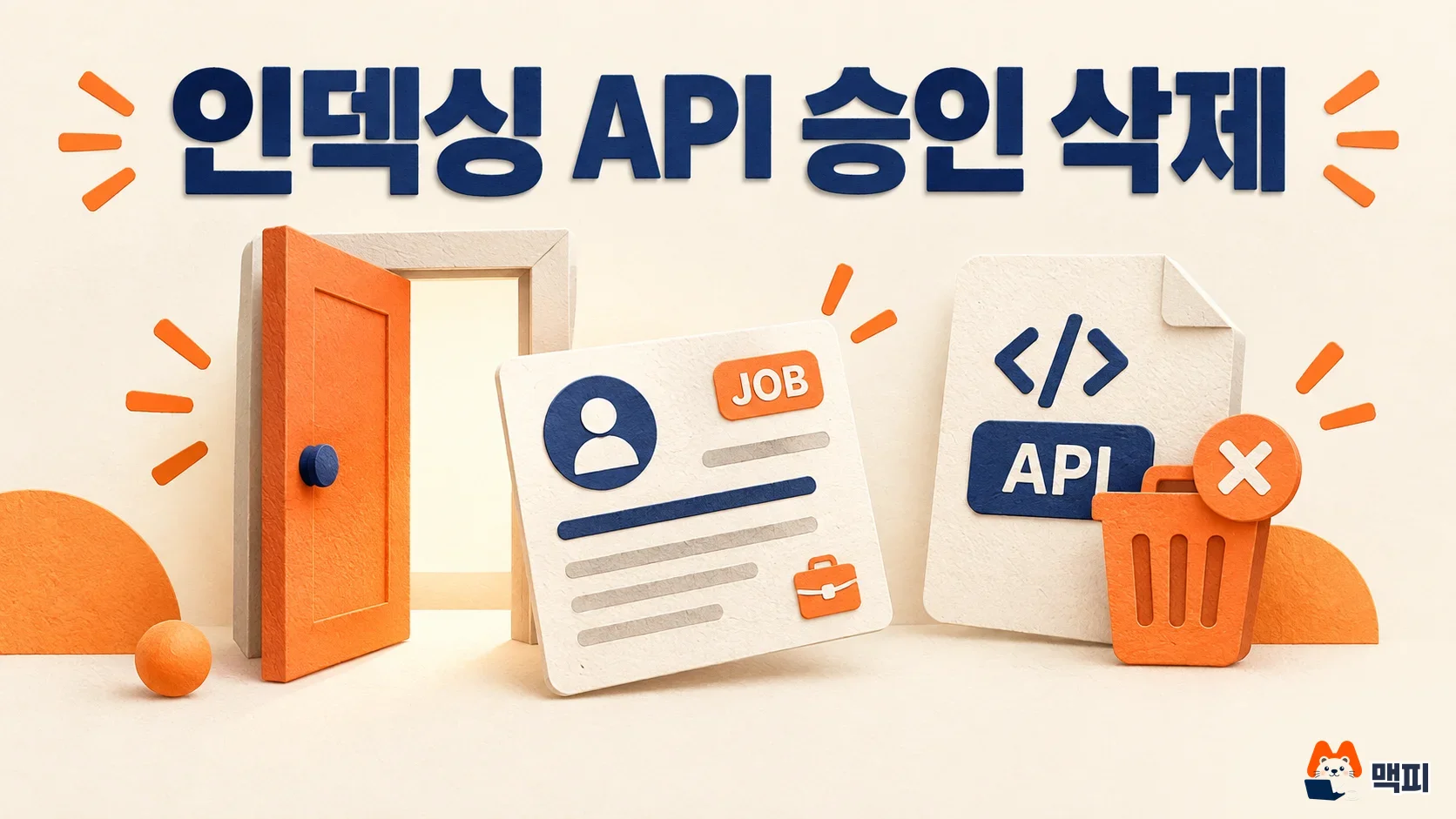
The Google quota documentation lists a default of 200 publish requests per day per project and has no description of a separate approval process. According to the usage guide, this API is for job posting (JobPosting) and livestream video (BroadcastEvent) pages, so ordinary blog posts and product pages are not eligible.
Who should check? Operators of job sites that post many job listings. Sites that are not eligible can manage indexing with sitemaps and the Search Console URL Inspection tool. Google has not said separately whether the approval process is truly gone. The order of checks is in the Indexing API approval removal article.
What to follow up on next week
October 30, the effective date of the Meta terms, is the closest deadline. The timing of Google Ads channel priority differs by account, so first check whether it appears on your settings screen. The official post does not say whether the Google AI Mode link changes reach Korea, so confirm it through Search Console trends.

Found this useful? Share it
Latest posts
Kakao Share Thumbnail Not Showing? Here's the Fix (JavaScript SDK 2025)
Learn why Kakao Share thumbnails don't appear even with a valid imageUrl, and fix it using scrapImage to convert your URL into a KAGE CDN URL. Step-by-step guide.
How to Generate CRM User Manuals in 20 Minutes with Claude Code Sub-Agents
Learn how Claude Code sub-agents can analyze your CRM codebase and auto-generate user manuals and visual guidebooks in just 20 minutes. See the real-world results.
GEO Generative Engine Optimization: The Complete 2025 AI Marketing Strategy Guide
Learn what GEO (Generative Engine Optimization) is, how it differs from traditional SEO, and discover 5 proven AI marketing strategies to get cited by AI search engines in 2025.
Related projects
Get new posts by email
Insights on marketing, analytics, and dev, delivered to your inbox.